Category: Market Forecast

  • Top 12 strategic materials most exposed to chinese export controls in 2026: Latest Developments and

    Top 12 strategic materials most exposed to chinese export controls in 2026: Latest Developments and

    Top 12 Strategic Materials Most Exposed to Chinese Export Controls in 2026

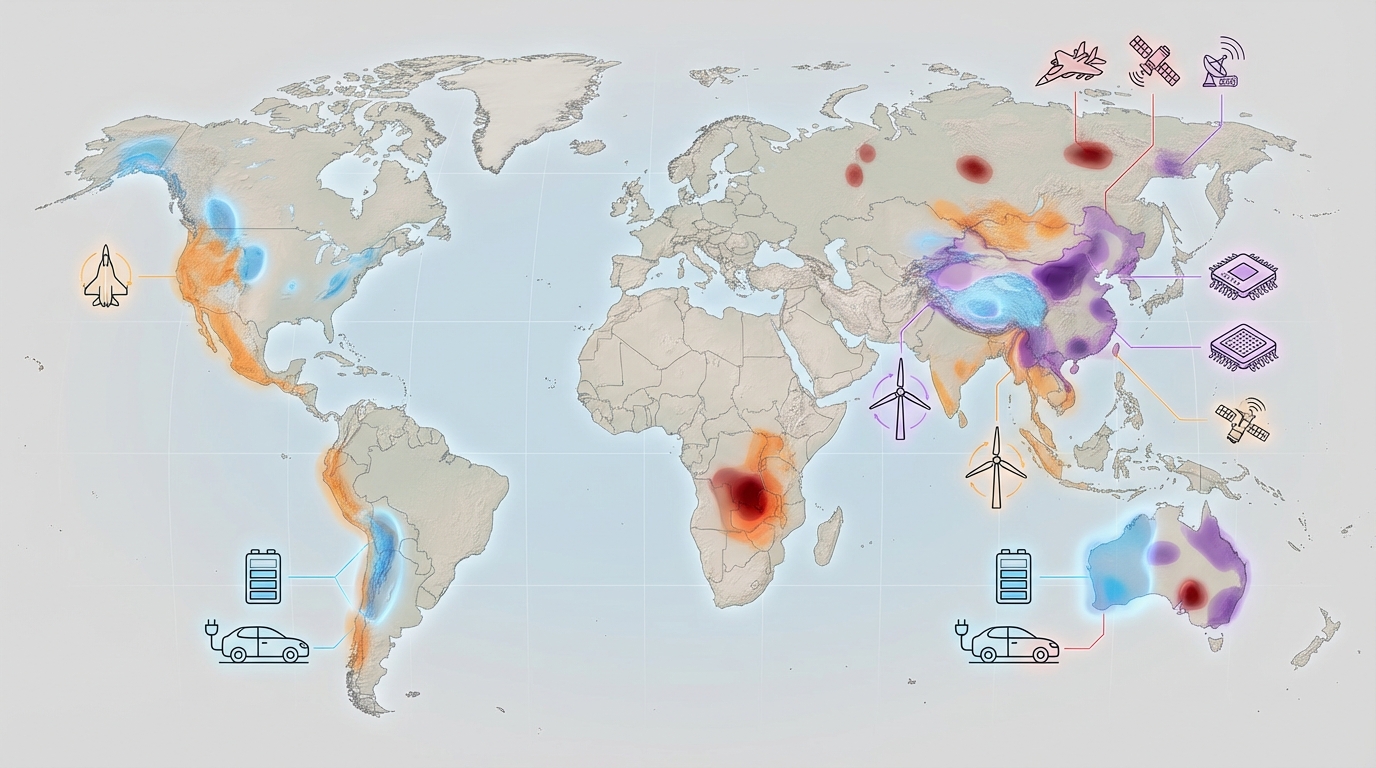
    China’s export control regime for strategic metals enters a harder phase in 2026. Fixed exporter lists for tungsten, antimony and silver sit alongside ongoing licensing for rare earth elements (REEs), gallium, germanium, graphite and others. The result isn’t a theoretical policy risk; it’s a live constraint that’s already reshaping procurement in defense, semiconductors, EVs and grid-scale renewables.

    Materials Dispatch ranks the Top 12 strategic materials most exposed to Chinese export controls in 2026 by one metric that matters operationally: control risk. That means not just how dominant China is, but how tight the current rules are, how long the November 2026 rare-earth “pause” can realistically last, and how fast non-Chinese capacity can credibly scale.

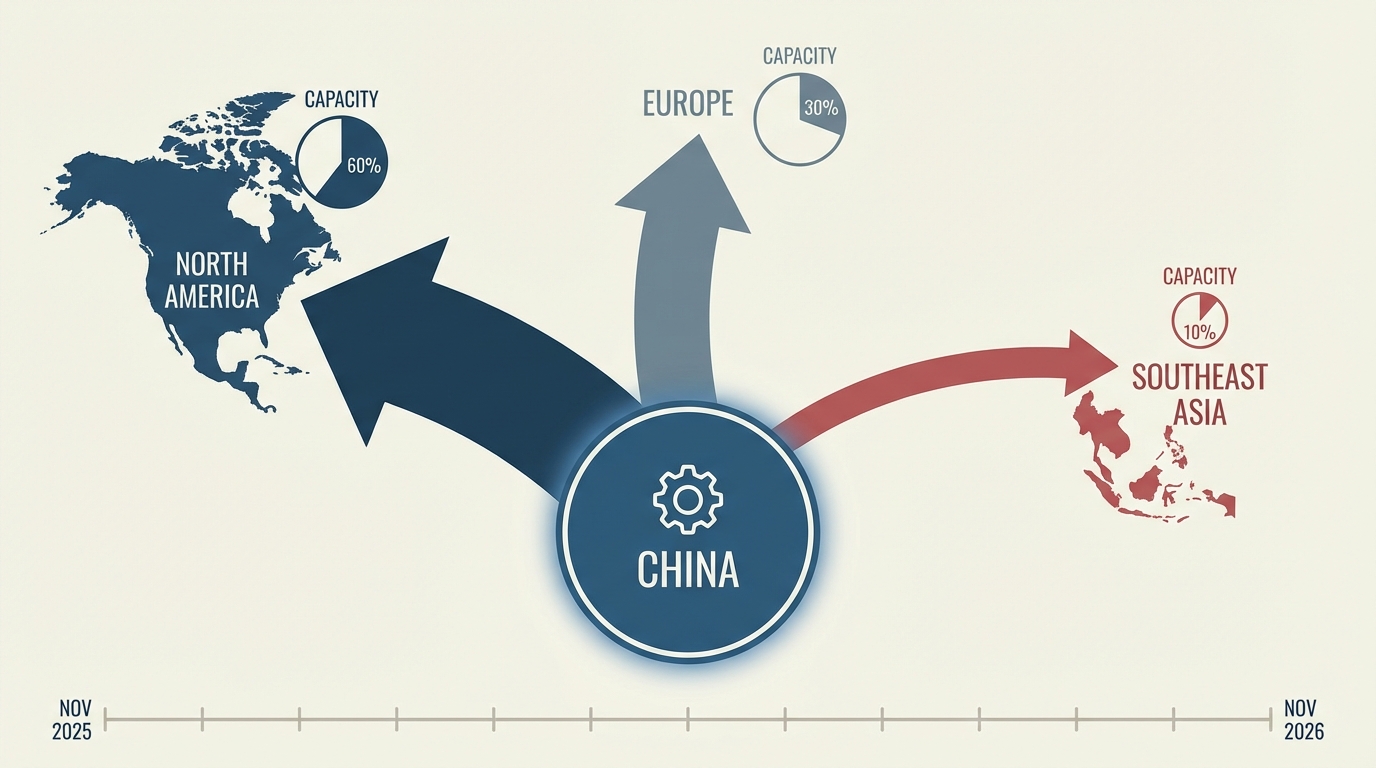
    Across these 12 materials, China typically accounts for more than 70% of global production or processing. For some, like antimony and heavy rare earths, the figure is over 80-90%. Fixed exporter slots for 2026-2027 effectively cap many metals at around 80-90% of 2025 export volumes. In parallel, rare-earth and semiconductor-material licensing will resume after the current truce window that runs to 10 November 2026, with no binding commitment to relax volumes.

    On the factory floor, this translates into very concrete problems: battery plants redesigning chemistries, defense primes pulling forward orders, and semiconductor fabs quietly lengthening lead times for GaAs and GaN devices. One European procurement head told Materials Dispatch that 2026 is “less about price and more about whether material shows up at all.” This briefing is built for that reality: which materials break first, what that does to production schedules, and which alternatives are actually bankable within an 18‑month horizon.

    Ranking Methodology

    Control risk scores (1–10, higher = greater exposure) integrate five dimensions:

    • Dominance factor: China’s share of global production and especially processing (USGS and industry data). Many entries exceed 80%.
    • Policy stringency: Quotas, non-automatic licenses, exporter lists and outright bans as reflected in MOFCOM and related announcements through 2025.
    • Geopolitical friction: Use of controls as leverage in response to tariffs, chip restrictions and defense-tech sanctions.
    • Supply impact: Documented export declines (e.g., tungsten exports down 13.75% Jan–Sep 2025; gallium exports down roughly 30% in 2025).
    • Strategic multiplier: Degree of dependence in defense, semiconductors, critical energy and systems with few or no substitutes.

    We also differentiate by time frame. Some controls, like the REE and semiconductor-material licensing pause, are formally relaxed until November 2026 but remain structurally in place. Others, such as fixed exporter lists, are already constraining 2025 shipments and are effectively hard ceilings for 2026–2027. In most cases, we model 2026 export volume reductions versus 2025 in the 10–30% range, absent aggressive diversification.

    The ranking prioritizes materials where a 2026 disruption translates directly into missed defense-readiness milestones, idled semiconductor lines or EV and solar buildout delays. Each entry sets out the asset and risk, the strategic context, the bottleneck, and a verdict on criticality and signals to track.

    1. Antimony (Control Risk: 10/10)

    Antimony (Control Risk: 10/10) – trailer / artwork
    Antimony (Control Risk: 10/10) – trailer / artwork

    The asset and risk. Antimony is the most exposed material in 2026 because it combines extreme Chinese dominance with fresh, tight controls. China supplies around 84% of global antimony, and for 2026–2027 has confirmed a small, fixed roster of exporters, unchanged from 2025. Antimony is not just a minor alloying metal: it’s central to flame-retardant formulations, lead-acid and some advanced batteries, and specialty military applications. For defense users in particular, antimony concentrates and trioxide are already treated as “go/no-go” inputs for munitions production.

    Strategic context and bottleneck. Antimony was pulled into China’s export-control net in late 2024 under non-automatic licensing. Licensing reviews have historically produced 2–4 month pauses, and since early 2025, export statistics show sharp declines in shipments. For 2026, fixed exporter lists and a security framing around munitions-grade materials mean Beijing can prioritize domestic demand — including a rapid ramp in ammunition output, widely estimated to be running at several times U.S. throughput. Non-Chinese supply is thin: Mandalay Resources’ Hillgrove restart in Australia and small volumes from Russia-linked assets cannot offset even a low double-digit percentage shock.

    Verdict and signals. Materials Dispatch assigns antimony a 10/10 control risk. For many NATO-aligned defense supply chains, existing stocks likely cover 6–12 months at current burn rates. After that, unless Hillgrove and other projects clear permitting and ramp smoothly, munitions and specialty flame-retardant capacity is exposed to outright curtailment. Key signals to watch in 2026: changes in China’s exporter list, any security-designation language in MOFCOM circulars, and restart timelines or offtake announcements from Hillgrove and other non-Chinese assets. Antimony is the material that defense ministries and ammunition makers are already triaging first.

    2. Tungsten (Control Risk: 9.5/10)

    Tungsten (Control Risk: 9.5/10) – trailer / artwork
    Tungsten (Control Risk: 9.5/10) – trailer / artwork

    The asset and risk. Tungsten’s combination of ultra-high melting point, hardness and density makes it indispensable in armor-piercing munitions, cutting tools, aerospace turbine components and some semiconductor processes. China controls over 80% of global tungsten production and an even higher share of downstream processing. For 2026–2027, Beijing has locked in a finite number of approved exporters, while maintaining licensing on powders and many dual-use products.

    Strategic context and bottleneck. Since China tightened tungsten export administration in early 2025, exports have fallen by around 13.75% (Jan–Sep 2025 year-on-year). Fixed exporter slots, combined with conservative licensing, are expected to cap 2026 export volumes at roughly 80–90% of 2025 levels. For Western buyers, the shortfall is magnified because domestic Chinese demand for tools and defense applications continues to climb. Non-Chinese supply exists but is fragmented: Spain’s Barruecopardo mine and Portugal’s operations add thousands of tonnes per year, while Almonty Industries’ Sangdong project in South Korea is targeting >5,000 t/year WO3 equivalent from 2026. Each comes with its own risks — Iberian logistics bottlenecks, Korean labor action, and ramp-up uncertainties.

    Verdict and signals. With limited substitutability (alternatives often add 20–30% cost or degrade performance), tungsten earns a 9.5/10 control risk. Tooling, aerospace and ammunition lines are already shifting to multi-year offtake contracts with non-Chinese producers, sometimes at significant premia. The critical watchpoints in 2026: Sangdong’s actual ramp profile versus nameplate, any further tightening of export licenses on tungsten powders and carbides, and evidence of Chinese material being laundered through third-country processors. If Sangdong or key European mines slip, expect a second round of price spikes and, more importantly, allocation-based selling favoring strategic sectors over general industry.

    3. Dysprosium (Control Risk: 9/10)

    Dysprosium (Control Risk: 9/10) – trailer / artwork
    Dysprosium (Control Risk: 9/10) – trailer / artwork

    The asset and risk. Dysprosium is a heavy rare earth (HREE) used in small quantities to transform the performance of NdFeB permanent magnets, especially at high temperatures. It improves coercivity, allowing magnets to operate reliably in EV traction motors and precision-guided munitions. China dominates dysprosium not just in mining but in separation and processing, with >99% of separated supply effectively under Chinese control.

    Strategic context and bottleneck. In April 2025, China extended export licensing to seven key rare earths, including dysprosium. A subsequent diplomatic “truce” led to a licensing pause for some U.S.-bound flows, currently scheduled to run to 10 November 2026. But the legal architecture of the controls remains intact. Defense and EV manufacturers report that dysprosium-containing magnet purchases already come with origin and compliance caveats, and some lots have been delayed during licensing reviews. Outside China, true heavy-REE capacity is minimal. Lynas’ Mt Weld provides limited dysprosium oxide via Malaysia, but heavy-REE separation in North America has slipped to at least 2026–2027, and early volumes will be small.

    Verdict and signals. Dysprosium is rated 9/10 control risk because once the pause ends, licensing can be tightened very quickly without passing new laws. A 20–40% reduction in dysprosium exports would translate into a sharp squeeze in high-performance NdFeB magnet availability and potentially a 40–50% jump in magnet prices. Signals to monitor: any guidance from Beijing that frames dysprosium as national-security sensitive, Lynas’ progress on heavy-REE circuits in the U.S., and OEM design decisions moving toward dysprosium-lean or dysprosium-free motor architectures. For 2026–2027, missile programs and premium EV platforms remain the most exposed.

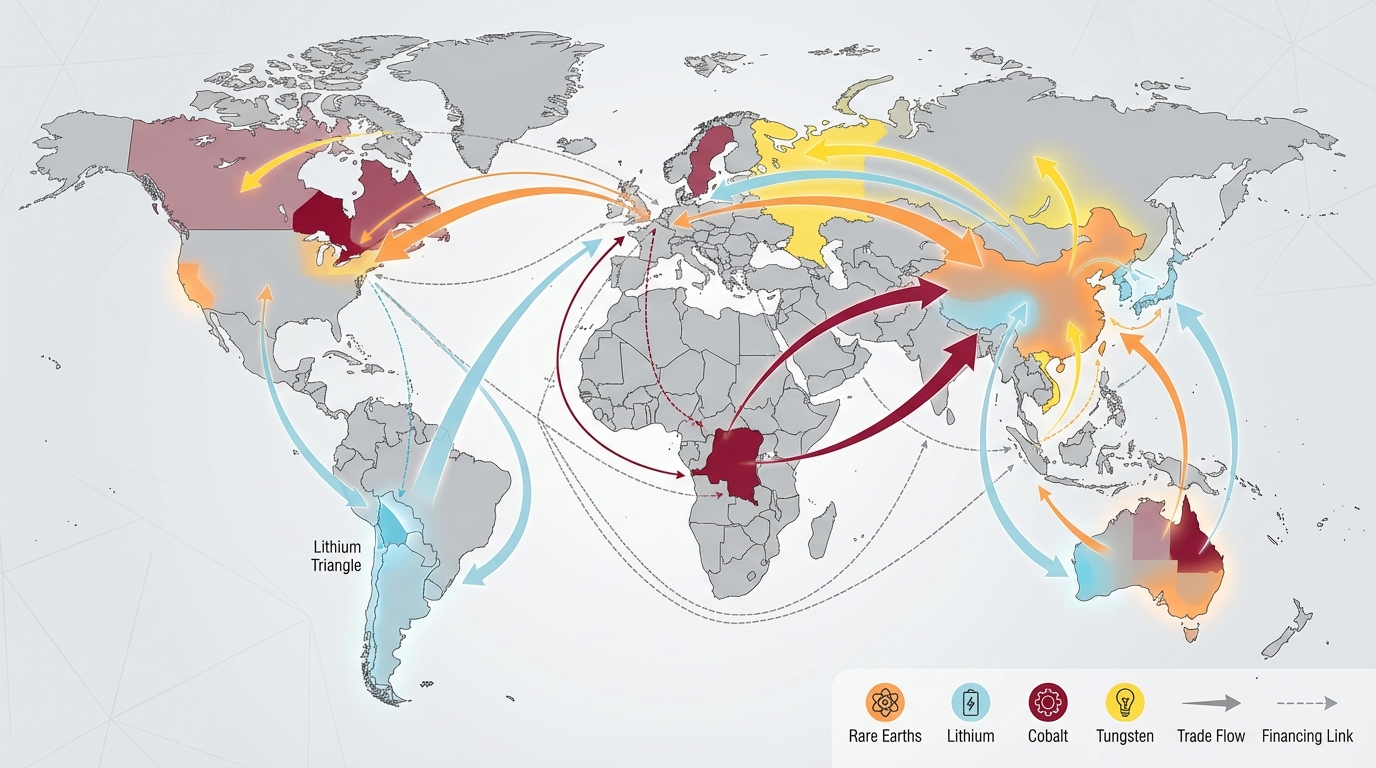
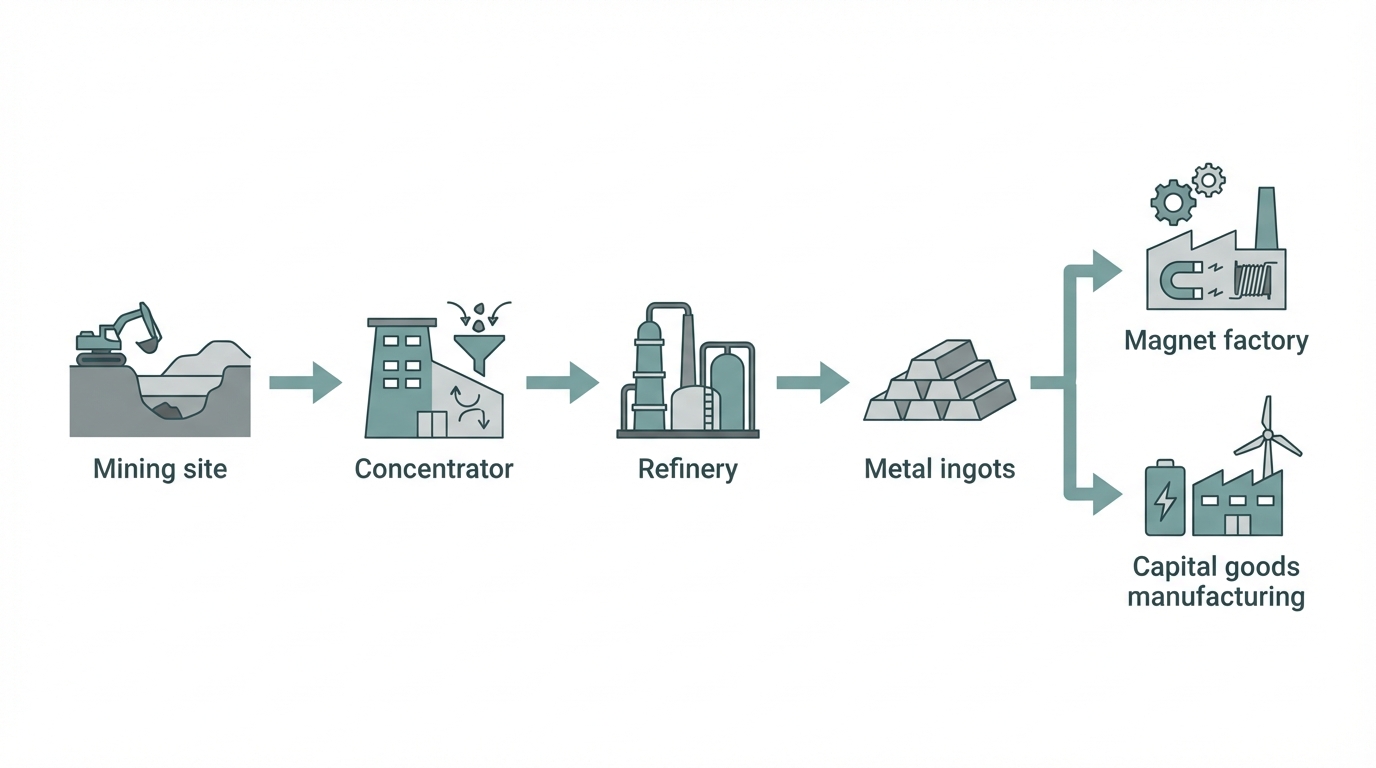
    Global flows of strategic materials under Chinese export controls
    Global flows of strategic materials under Chinese export controls

    4. Terbium (Control Risk: 9/10)

    Terbium (Control Risk: 9/10) – trailer / artwork
    Terbium (Control Risk: 9/10) – trailer / artwork

    The asset and risk. Terbium is another heavy rare earth, crucial in two very different domains: high-efficiency green phosphors for displays and lighting, and as a dopant in high-end magnets where it can roughly double coercivity. Its role in advanced sensors and some F-35 avionics gives it outsized strategic weight relative to tonnage. China processes roughly 98% of the world’s terbium, and there are virtually no independent non-Chinese separation streams at scale.

    Strategic context and bottleneck. Terbium is bundled with dysprosium, samarium, gadolinium, scandium, lutetium and yttrium in the April 2025 export-control package. Since then, export data suggests terbium shipments have fallen sharply, in some estimates by up to half relative to pre-control baselines. The 2026 licensing pause temporarily eases pressure for certain destinations, but the underlying message remains clear: terbium is classified as a dual-use and defense-relevant asset. Japanese and European recyclers, including magnet and phosphor recovery facilities, are scaling, yet volumes remain in the low hundreds of tonnes per year with purity and consistency challenges.

    Verdict and signals. Terbium scores 9/10 on control risk given the near-total concentration and demonstrated willingness to tighten exports. For display makers and specialty magnet producers, the realistic options in 2026 are early offtake agreements from new separation facilities (for example in Canada and Europe), aggressive recycling, and product redesign to reduce terbium intensity. Signals to track: ramp schedules at Neo Performance Materials’ facilities, technical performance of recycled terbium in high-spec magnets, and any extension or re-scoping of the November 2026 licensing pause. Terbium is likely to remain a persistent constraint, with defense and aerospace end-uses strongly favored in allocation.

    5. Gallium (Control Risk: 8.5/10)

    Gallium (Control Risk: 8.5/10) – trailer / artwork
    Gallium (Control Risk: 8.5/10) – trailer / artwork

    The asset and risk. Gallium underpins compound semiconductors such as GaAs and GaN, which are central to 5G/6G infrastructure, radar, satellite communications and high-frequency power electronics. China accounts for roughly 98% of primary gallium production, largely as a by-product of alumina refining. In 2023, Beijing imposed export licensing on gallium metal and key compounds, specifically linking controls to national security and advanced semiconductor use.

    Strategic context and bottleneck. Following the introduction of controls, gallium exports dropped by about 30% in 2025, with some buyers reporting multi-month delays in securing export licenses. In mid-2025, a partial pause for shipments to the United States and some allies was introduced, again running to November 2026. However, the formal control regime remains in force. Alternative supply is emerging: producers in Europe, Japan and the U.S. can collectively offer tens of tonnes per year, but cost structures are higher due to energy prices and smaller scale. AXT Inc. in the U.S. and Freiberger Compound Materials in Germany are among the key non-Chinese players, yet current capacity covers only a fraction of global demand growth.

    Verdict and signals. Gallium earns an 8.5/10 control risk. For radar manufacturers and RF semiconductor foundries, a 6–12 month stock horizon is already being treated as a minimum. Fabs have been quietly diversifying to non-Chinese gallium where specifications allow, accepting higher costs as insurance. Signals to watch in 2026: whether MOFCOM narrows the scope of the licensing pause, the pace of secondary gallium recovery from bauxite residue outside China, and long-term offtake contracts signed by Western fabs with non-Chinese refiners. Any renewed escalation in U.S.–China tech tensions would likely show up first in gallium license denials.

    6. Germanium (Control Risk: 8.5/10)

    Germanium (Control Risk: 8.5/10) – trailer / artwork
    Germanium (Control Risk: 8.5/10) – trailer / artwork

    The asset and risk. Germanium is a critical input in infrared optics, fiber-optic systems, certain high-efficiency solar cells and specialized semiconductor devices. It is typically produced as a by-product of zinc and coal operations. China controls about 60% of refined germanium and an even larger share of high-purity germanium used in defense and telecom applications. Like gallium, germanium was brought under Chinese export controls in 2023 via a licensing regime.

    Strategic context and bottleneck. Export licensing has already reduced Chinese germanium exports and elongated lead times, particularly for high-purity products. A similar pause for some destinations applies up to November 2026, but again the legal structure persists. Outside China, refining capacity is concentrated at facilities such as Umicore’s Olen plant in Belgium, which can produce on the order of 10 tonnes per year. Even at full stretch, current non-Chinese capacity cannot fully replace Chinese exports without aggressive recycling and substitution. Because germanium is a co-product, ramping supply requires either new primary mine investment or adjustments in existing zinc and coal flows, both of which have long lead times.

    Verdict and signals. Germanium is assessed at 8.5/10 control risk. Infrared optics for drones, missile seekers, and some satellite payloads are particularly exposed, as are telecoms operators relying on specialty fiber products. Signals to track: published Chinese export data post-2026, utilization rates at European and North American refining facilities, and any policy moves to classify germanium-bearing waste as strategic for recycling. Defense programs with heavy IR requirements are already working to pre-book multi-year germanium supply; the gap between those that do and those that don’t will become very visible if licensing tightens again after the pause.

    7. Silver (Control Risk: 8/10)

    Silver (Control Risk: 8/10) – trailer / artwork
    Silver (Control Risk: 8/10) – trailer / artwork

    The asset and risk. Silver is often framed as a precious metal, but industrial demand — especially from solar, electronics and EVs — now dominates. China accounts for only about 10–15% of global mine production, yet plays an outsized role in refining and processing. In 2025, Beijing introduced for the first time a designated exporter list for silver, expanding slightly for 2026–2027 but still capping the number of firms permitted to ship abroad.

    Strategic context and bottleneck. Silver’s control risk is less about immediate scarcity and more about systemic exposure. Chinese solar manufacturers and electronics assemblers are enormous consumers, and any tightening of export permissions or redirection of refined silver to domestic users could quickly squeeze global availability. Exporter caps function as a de facto quota: if demand rises, the approved firms can’t necessarily scale exports in line. At the same time, global silver demand for photovoltaics alone is expected to rise strongly as higher-efficiency cell designs use more silver per watt.

    Verdict and signals. Silver receives an 8/10 control risk in this ranking because it sits at the intersection of energy transition scale and emerging Chinese control tools. Non-Chinese producers like Hecla’s Lucky Friday mine in the U.S., Mexico’s large base-metal-silver operations, and Peru’s polymetallic mines are viable supply anchors, but much of this silver is produced as a by-product, limiting rapid increases. Signals to watch in 2026: any tightening of China’s exporter list, domestic Chinese solar deployment targets, and changes in refining charge terms. Solar-module producers and electronics OEMs heavily reliant on Chinese silver feedstock have the greatest near-term exposure.

    8. Yttrium (Control Risk: 7.5/10)

    Yttrium (Control Risk: 7.5/10) – trailer / artwork
    Yttrium (Control Risk: 7.5/10) – trailer / artwork

    The asset and risk. Yttrium is used in radar components (notably yttrium iron garnet filters), advanced ceramics, phosphors and some superconducting materials. It is another heavy rare earth where China dominates: estimates put Chinese control at around 95% of global processed yttrium. Volumes are modest, but the applications are acute in defense and high-frequency electronics.

    Strategic context and bottleneck. Yttrium was pulled into the April 2025 package of controlled REEs, with export licensing extended to metals, oxides and many compounds. Although the 2026 pause has dampened immediate friction for some buyers, compounds essential for ceramics and garnet-based components have already shown reduced availability and longer lead times. Outside China, yttrium output is limited and often occurs as a co-product of broader REE streams. Projects in the U.S. and Australia, including Energy Fuels’ planned HREE circuit at White Mesa, are targeting limited yttrium and related HREE recovery around 2026–2027.

    Verdict and signals. Materials Dispatch scores yttrium at 7.5/10 control risk. For electronics and defense primes, the key concern is not overall tonnage but the high specificity of supply: components qualified years ago to particular yttrium sources and chemistries can’t readily switch. Signals to monitor in 2026 include commissioning status at North American HREE separation plants, any MOFCOM guidance specifically naming yttrium in the context of radar or EW systems, and stockpiling behavior by radar-system integrators. If heavy-REE projects outside China slip timelines, yttrium could move quickly from a “background” issue to a frontline bottleneck.

    9. Samarium (Control Risk: 7.5/10)

    Samarium (Control Risk: 7.5/10) – trailer / artwork
    Samarium (Control Risk: 7.5/10) – trailer / artwork

    The asset and risk. Samarium is best known for its role in samarium–cobalt (SmCo) permanent magnets, which offer exceptional performance at high temperatures. These magnets are crucial in jet engines, some missile systems and space applications where NdFeB magnets can’t tolerate the thermal environment. China mines and processes the overwhelming majority of global samarium-bearing ores and concentrates, and as with other HREEs, dominates separation.

    Strategic context and bottleneck. As part of the April 2025 REE controls, samarium now falls squarely under export licensing for metal and selected compounds. While volumes are smaller than for NdFeB-related REEs, SmCo magnet supply chains are tightly concentrated, with much of the global production dependent on Chinese feedstock or processing steps. There are technically alternative magnet chemistries, but switching involves significant design, qualification and performance compromises, particularly for aerospace and defense programs already in production.

    Verdict and signals. Samarium is assessed at 7.5/10 control risk. It doesn’t yet present the same macroeconomic risk as antimony or tungsten, but for niche applications it’s effectively single-sourced. Signals to watch through 2026 include investments in Western SmCo magnet capacity, any moves by China to explicitly tie samarium exports to aerospace or defense policy, and the extent to which heavy-REE projects outside China can yield samarium streams at meaningful scale. For high-temperature motor and generator programs, risk mitigation will hinge on requalifying magnets from more diversified supply chains rather than expecting Chinese controls to loosen.

    10. Gadolinium (Control Risk: 7/10)

    Gadolinium (Control Risk: 7/10) – trailer / artwork
    Gadolinium (Control Risk: 7/10) – trailer / artwork

    The asset and risk. Gadolinium has two critical, though very different, uses: as an MRI contrast agent in medical imaging, and as a neutron absorber in nuclear reactors and some naval propulsion systems. In both cases, safety and performance requirements are strict. China dominates gadolinium production and separation along with other heavy REEs, controlling most of the high-purity oxides and compounds used globally.

    Strategic context and bottleneck. Gadolinium is covered by the same April 2025 REE export licensing framework. Unlike dysprosium or terbium, it has not yet been the focus of prominent diplomatic disputes, but the administrative tools are identical. Medical systems and nuclear-technology suppliers typically run lean inventories and are accustomed to relatively predictable deliveries, making them sensitive to even moderate licensing delays. Outside China, gadolinium supply is limited to a handful of REE streams from projects in Australia, Russia and minor by-product producers, many of which are not yet configured for high-volume, medical-grade output.

    Verdict and signals. Gadolinium scores 7/10 on control risk. The probability of deliberate, targeted restriction may currently be lower than for high-profile REEs, but the impact of any disruption would be immediate in healthcare and nuclear operations. Key signals to watch are regulatory changes around medical-grade gadolinium in China, commissioning of new separation facilities in Europe and North America, and early signs of stock-building by reactor operators. In a broader geopolitical crisis, gadolinium could move from a low-visibility controlled material to a flashpoint as governments move to secure nuclear and medical supply chains.

    11. Graphite (Control Risk: 6.5/10)

    Graphite (Control Risk: 6.5/10) – trailer / artwork
    Graphite (Control Risk: 6.5/10) – trailer / artwork

    The asset and risk. Graphite is the dominant anode material in lithium-ion batteries, accounting for the bulk of EV and stationary-storage demand. China produces about 65% of natural flake graphite and an even higher share of processed anode material, after adding synthetic graphite and purification steps. In 2023–2024, Beijing introduced licensing for several graphite categories linked to “super-hard” materials and battery use.

    Strategic context and bottleneck. While some of these graphite controls were temporarily softened or paused for certain destinations through 2026, the direction of travel is clear: graphite is now framed as a strategic export. China has both the ore and the midstream refining capacity, which gives it leverage over global EV production. Non-Chinese alternatives such as Syrah Resources’ Balama mine in Mozambique, combined with processing in the U.S. and Europe, are ramping, but capacity remains well below projected EV demand. Synthetic graphite can offset some deficits, but at a cost premium and with higher energy intensity.

    Verdict and signals. Graphite is assigned a 6.5/10 control risk. It sits slightly lower in this ranking because there’s a broader base of geological resources and several credible projects under construction or expansion outside China. However, any renewed tightening of graphite export licenses would quickly pressure EV and battery makers still heavily reliant on Chinese anode material. Signals to monitor in 2026 include commissioning of new active-anode-material plants in North America and Europe, Chinese policy statements about “overcapacity” in batteries, and shifts in OEM battery-chemistry roadmaps (for example, faster adoption of silicon-dominant or alternative-anode chemistries).

    12. Scandium (Control Risk: 6/10)

    Scandium (Control Risk: 6/10) – trailer / artwork
    Scandium (Control Risk: 6/10) – trailer / artwork

    The asset and risk. Scandium is a niche but strategically potent element. When added in very small amounts to aluminum, it produces Al–Sc alloys with significantly higher strength, weldability and fatigue resistance. These alloys are attractive for aerospace structures, some high-performance EV applications and advanced additive manufacturing. Global scandium supply is extremely small, measured in tens of tonnes per year, with China one of the key sources of both primary and by-product scandium.

    Strategic context and bottleneck. Scandium is explicitly listed in China’s April 2025 REE-related export-controls cohort. Even though current demand is modest, aerospace primes and advanced-manufacturing firms are actively developing Al–Sc components for next-generation platforms. Most accessible scandium today comes from Chinese output, Russian by-product streams, and a limited number of projects in Australia and North America working to extract scandium from laterites or tailings. Commercializing these streams at consistent quality is non-trivial and can be delayed by permitting, financing and metallurgy challenges.

    Verdict and signals. Scandium is rated at 6/10 control risk. It ranks below the high-volume or already-constrained metals, but for programs that have baked Al–Sc into designs, dependence on Chinese material is a real vulnerability. Signals to watch in 2026: qualification of non-Chinese scandium sources by major aerospace OEMs, technical performance of scandium extracted from waste streams, and any moves by China to explicitly position scandium as a defense-critical material. The key strategic choice for industry is whether to commit to Al–Sc at scale without a robust, diversified scandium supply base.

    Strategic Implications for 2026 Supply Chains

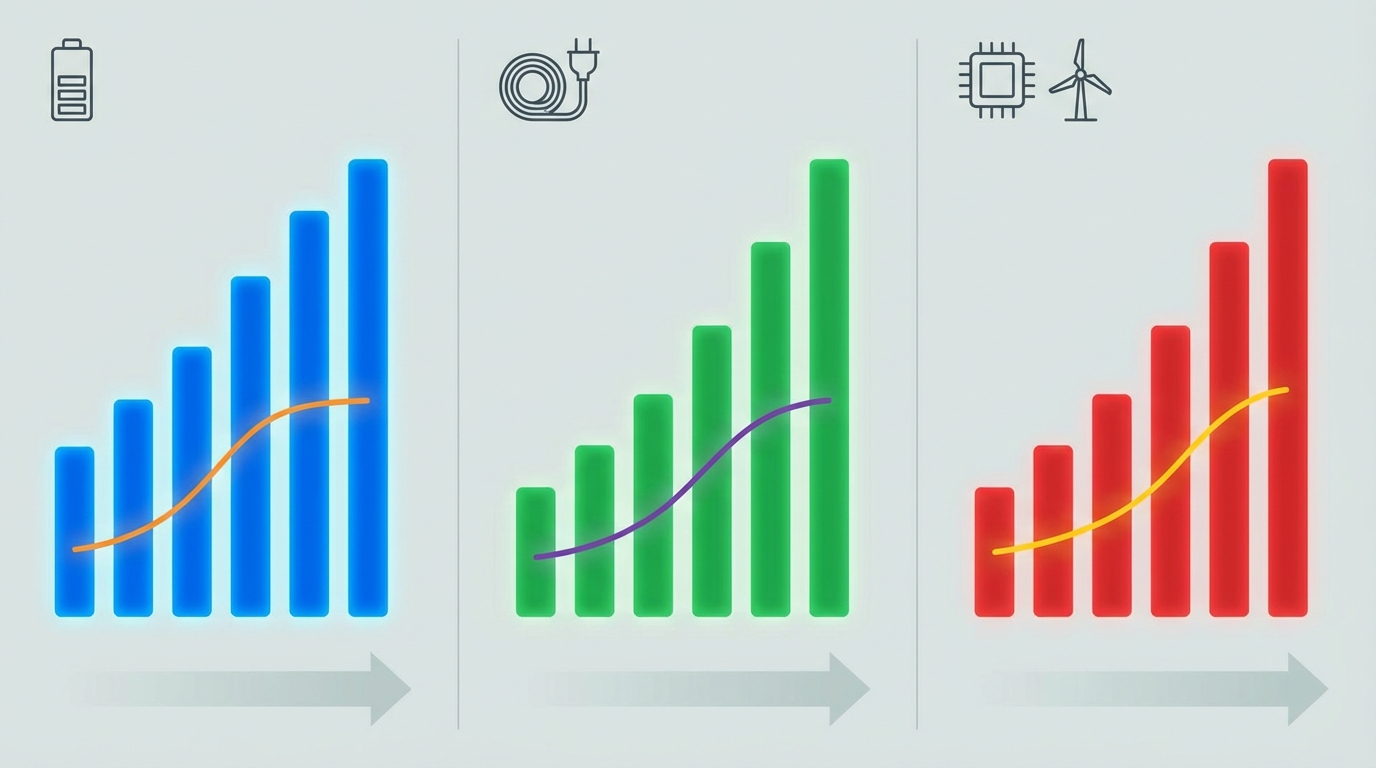
    Across these 12 materials, a consistent pattern emerges: China has built both mining and processing dominance and is now actively using export controls as a policy lever. Fixed exporter lists constrain tungsten, antimony and silver to roughly 80–90% of 2025 export volumes. Licensing regimes for REEs, gallium, germanium and graphite are in place for the long term, even if tactical pauses run to November 2026. In practice, this creates a two-stage risk for 2026–2027: initial supply friction followed by the potential for sharper, targeted restrictions if geopolitical tensions escalate.

    Defense and semiconductor supply chains are already treating the top six materials in this ranking as requiring immediate triage. For antimony, tungsten, dysprosium, terbium, gallium and germanium, it’s less about marginal price increases and more about whether offtake contracts and licenses will secure physical material. A senior procurement manager at a European missile manufacturer summed it up to Materials Dispatch: “We’ve shifted from quarterly sourcing to multi-year locking of anything that touches Chinese controls.” That shift cascades downstream, tightening availability for smaller buyers.

    Meanwhile, mid-tier risks such as silver, yttrium, samarium, gadolinium, graphite and scandium offer a short window of relative flexibility. Controls are in place, but non-Chinese projects and recycling can realistically cover a portion of incremental demand if planning starts now. The main operational failure mode here isn’t that alternatives don’t exist — it’s that permitting, qualification and logistics delays push real volumes into the late 2020s. The practical implication for 2026 is that supply security improves only where companies have already moved from talk to signed contracts and funded projects.

    Non‑Chinese Supply Diversification Targets

    Mitigating these risks doesn’t mean overnight independence from Chinese supply. It means building a portfolio of credible non-Chinese sources and understanding their timelines and bottlenecks. For antimony, Mandalay Resources’ Hillgrove project in Australia is one of the few near-term options. Its restart, targeted around 2026, could add roughly 1,500 tonnes per year of contained antimony, but is still navigating permitting and community-relations hurdles. Any slippage there directly prolongs global dependence on Chinese and Russia-adjacent material.

    On tungsten, Almonty Industries’ Sangdong mine in South Korea is the pivotal non-Chinese asset. If it achieves its planned >5,000 t/year WO3 output and avoids extended labor or energy disruptions, Sangdong can meaningfully offset Chinese export tightening and provide secure feedstock for allied defense and tooling industries. In rare earths, Lynas’ Mt Weld remains the cornerstone non-Chinese source for light and some heavy REEs, while Neo Performance Materials and emerging North American separation plants aim to add dysprosium, terbium, yttrium and samarium streams in the second half of the decade.

    For semiconductor inputs, AXT Inc. in the U.S. and European gallium and germanium refiners such as Umicore are the early anchors, although their combined capacities still cover only a fraction of current global demand. In battery materials, Syrah Resources’ Balama graphite operation in Mozambique, backed by downstream processing in the U.S. and Europe, is the main non-Chinese natural-graphite play with scale. Across these and similar projects, the pattern is consistent: if financing, permitting and infrastructure fall into place, they can collectively cover perhaps 20–30% of the projected deficits for the top six controlled materials by the late 2020s. For 2026, however, the realistic outcome is more modest: targeted risk reduction for the most exposed supply chains, not full insulation from Chinese policy decisions.

  • Top 10 signals that a strategic materials crisis is brewing

    Top 10 signals that a strategic materials crisis is brewing

    Top 10 Signals a Strategic Materials Crisis Is Brewing: Inventories, Controls, Premiums

    Materials Dispatch tracks the same simple question across rare earths, battery metals and precious metals: is this still a price story, or has it already become an availability story? When the answer quietly shifts to availability, a strategic materials crisis is already forming underneath the surface of quoted prices and benchmark indices.

    This briefing ranks the top 10 signals that a strategic materials crisis is brewing, based on the 2024-2026 pattern in silver, gold, platinum group metals (PGMs), copper-linked by‑products and rare earths. These are the indicators that moved first in our models and client casework when supply chains started to feel stress: chronic deficits, inventory air‑pockets, export controls, delivery premiums and national security stockpiling.

    The list is ordered by how quickly each signal tends to translate into real‑world disruption for manufacturers, energy developers and defense programs. The focus is deliberately operational: exchange inventory runs, delivery queues, licensing changes and mine outages, rather than abstract macro narratives. Several of the signals will be familiar from past commodity squeezes; what’s new is how tightly they now interact across metals because of AI infrastructure build‑out, electrification and rising geopolitical confrontation.

    Individually, none of these indicators proves a crisis. Together, they define the shift from a market where participants worry about price volatility to one where the real contest is simply who gets metal at all, and on what terms.

    1. Structural Silver Deficits Turning Chronic

    Structural Silver Deficits Turning Chronic – trailer / artwork
    Structural Silver Deficits Turning Chronic – trailer / artwork

    The asset/risk. Silver has moved from a cyclical precious metal to a structurally undersupplied industrial input. Survey data for 2021-2025 point to cumulative deficits on the order of 800+ million ounces, with annual shortfalls approaching or exceeding 200 million ounces in some scenarios. Most silver is produced as a by‑product of copper, lead and zinc, so primary output barely responds to higher prices.

    Strategic context. Solar photovoltaics, high‑efficiency power electronics, 5G/AI data centers and automotive electronics are now the dominant marginal buyers. These sectors are relatively insensitive to price in the short term: a few dollars per module matters far less than delivery risk on a gigawatt‑scale project. In our tracking of PV build‑out, silver thrifting gains have been offset by sheer volume growth, so industrial demand keeps encroaching on what used to be investment and jewelry metal.

    The bottleneck. Because silver rides on the capex cycles of copper and zinc, even a spike to “three‑digit” prices doesn’t quickly create new supply. Major greenfield projects face 7-10 year lead times and heavy permitting exposure. When annual deficits persist for multiple years, the adjustment comes not from mines but from inventory drawdown and, ultimately, demand destruction in lower‑priority uses.

    The verdict. A multi‑year silver deficit is one of the clearest early signals that the broader strategic metals system is tightening. The risk is highest for electronics, PV and defense programs that depend on high‑purity silver paste and contacts, and lowest for discretionary jewelry demand that can switch alloys. Once industrial users start competing with each other rather than with investors, the system shifts from “what’s the price?” to “who gets what,” and that is where crisis dynamics begin.

    2. Exchange and Vault Inventories Draining Faster Than Prices React

    Exchange and Vault Inventories Draining Faster Than Prices React – trailer / artwork
    Exchange and Vault Inventories Draining Faster Than Prices React – trailer / artwork

    The asset/risk. COMEX, LBMA and similar vault systems are supposed to act as shock absorbers between paper trading and physical flows. When registered inventories fall by double‑digit percentages over a few months while spot prices move only gradually, the buffer is being consumed quietly in the background. In silver, for example, reference inventories in some scenarios fall by over 100 million ounces within a single quarter as industrial users stand for delivery instead of rolling futures.

    Strategic context. Large industrials, fabricators and bullion banks treat exchange inventories as a last‑resort liquidity source. During normal markets, they prefer long‑term contracts, OTC swaps or internal stockpiles. When those parties start competing for scarce exchange metal, it’s a sign that off‑market supply has already tightened. Similar dynamics have played out in platinum and palladium stocks on NYMEX during South African cost spikes and Russian export uncertainty, and in base‑metal warehouses during smelter outages.

    The bottleneck. Inventories can fall much faster than mines can respond. Registering new metal isn’t instantaneous either; it depends on refining capacity, assay times and logistics from operations like Freeport‑McMoRan’s Grasberg or Norilsk Nickel’s Russian complexes. As inventories sag, lease rates and time‑spreads start sending stress signals, but these are often ignored outside specialist desks.

    The verdict. Rapid, synchronized drawdowns across exchanges and major commercial vaults, especially when accompanied by rising lease rates, flag a market moving from financial tightness to physical scarcity. This signal is particularly critical for North American and European manufacturers that rely on exchange deliverability as a contingency. By the time public inventory charts look like a “ski slope,” the scramble for alternative sources and substitutes is usually already underway in the background.

    3. Breakdown of Historical Price Relationships (Gold–Silver Ratio & Beyond)

    Breakdown of Historical Price Relationships (Gold–Silver Ratio & Beyond) – trailer / artwork
    Breakdown of Historical Price Relationships (Gold–Silver Ratio & Beyond) – trailer / artwork

    The asset/risk. The gold–silver ratio, typically oscillating in a wide but recognizable band, serves as a crude barometer of whether silver is trading primarily as a monetary metal or as an industrial one. When that ratio compresses sharply-moving, for instance, from levels above 70:1 into the 40s while gold is already strong-it suggests silver is being pulled tighter by industrial and strategic demand than gold itself.

    Strategic context. Gold responds primarily to macro‑financial stress, central bank policy and sovereign balance sheets. Silver, by contrast, has one foot in that monetary camp and one foot in the electronics and energy transition complex. A sudden silver outperformance against gold during an already elevated gold environment indicates that physical constraints, not just financial hedging, are driving behavior. Similar “decouplings” can be seen in ratios like palladium-to-platinum or cobalt-to-copper when specific supply or demand shocks hit catalytic converters or high‑nickel batteries.

    The bottleneck. Hedging and trading models in many institutions assume historical cross‑metal relationships will roughly hold. When those relationships break, risk systems lag reality. Physical users hedging silver via a gold proxy, for example, find that their hedge no longer tracks their input costs. That can force abrupt changes in procurement strategy, including accelerated spot buying or the unwinding of structured products, adding volatility to already stressed markets.

    Global supply chains for strategic materials under stress
    Global supply chains for strategic materials under stress

    The verdict. Sharp, persistent compression in the gold–silver ratio, or unusual divergence between PGMs that share many applications, is less about “mispricing” and more about stress fractures in the underlying supply chain. The signal is particularly relevant for electronics, PV and auto OEMs that have historically treated silver and certain PGMs as semi‑fungible within budgets. Once these ratios break, financial hedges stop providing cover, and availability risk starts to dominate planning.

    4. Escalating Chinese Export Controls on Silver, Rare Earths and Allied Inputs

    Escalating Chinese Export Controls on Silver, Rare Earths and Allied Inputs – trailer / artwork
    Escalating Chinese Export Controls on Silver, Rare Earths and Allied Inputs – trailer / artwork

    The asset/risk. China’s position in strategic materials is not limited to rare earth oxides (REO). It is a major refiner and exporter of silver, NdPr, dysprosium, gallium, germanium and a host of intermediate products. Moves to restrict exports via licensing, quotas or firm‑level approvals directly change the “rules of the game” for downstream users in autos, defense and electronics.

    Strategic context. A licensing regime that restricts silver exports to a small number of qualified firms, or that caps REO exports in the name of “resource security,” effectively weaponizes China’s refining and processing advantage. The 2020–2023 experience with rare earths and battery metals set the template: export controls can emerge initially as “national security” or environmental measures, then tighten in response to foreign policy disputes, leaving EU auto makers or Asian motor producers scrambling.

    The bottleneck. Even when ore or concentrates are mined outside China-at operations like Lynas’ Mt Weld, Pilbara Minerals’ Pilgangoora or North American RE projects—processing capacity for magnet‑grade oxides and many specialty silver products remains concentrated in China. Re‑routing through alternative refining hubs in Japan, Korea or Europe requires time, capex and permitting. In the interim, physical premiums over exchange prices can blow out by 15–20% for reliable delivery of NdPr, Ag and allied inputs.

    The verdict. When Chinese export controls move from headline risk to detailed implementation—firm lists, license categories, new customs codes—that’s a strong signal that availability, not just price, will dictate outcomes. The impact is most acute for magnet producers, EV motor and wind OEMs, and defense platforms with high rare earth content, such as advanced fighter aircraft. At that point, non‑Chinese supply chains become less about shopping for the best price and more about securing any qualifying tonnage at all.

    5. Central Bank Gold Accumulation at “Structural Bid” Levels

    Central Bank Gold Accumulation at
    Central Bank Gold Accumulation at “Structural Bid” Levels – trailer / artwork

    The asset/risk. Gold remains the only strategic metal held in size on central bank balance sheets. When state buying accelerates into four‑digit tonne per year territory and stays there, it does more than just lift the gold price; it re‑anchors the entire precious metals complex and frees monetary gold from some of its previous correlation to real yields or the dollar.

    Strategic context. After the freezing of Russian reserves, several emerging‑market central banks stepped up gold purchases as a sanctions‑resistant asset. If that trend solidifies into a persistent structural bid, it has two knock‑on effects. First, it supports higher “normal” gold price levels, which affects collateral values and funding costs for gold‑linked miners. Second, it nudges investor flows and some state actors to look at adjacent precious and strategic metals—silver, PGMs—as supplemental hedges, tightening those markets indirectly.

    The bottleneck. Gold mine supply grows slowly, and major expansions—such as block cave ramps at Grasberg or new West African developments—take many years. Recycling responds somewhat to higher prices but is constrained by collection and refining infrastructure. When central banks absorb a large share of annual mine output while investors also seek allocation, the share left over for industrial fabrication in electronics, medical devices and some catalysts shrinks, even if those sectors are not the price drivers.

    The verdict. Sustained, high‑intensity central bank buying is a systemic signal that strategic actors are repositioning for a long period of geopolitical and monetary uncertainty. For industrial users, gold itself may not be the bottleneck, but its behavior shapes risk premia and opportunity costs across the precious metals spectrum. The signal is especially important for firms exposed to palladium and rhodium, where Russian supply risk overlaps with rising “store of value” interest in a thinly traded market.

    6. Tier‑1 Mine and Smelter Disruptions Pushing Up the Global Cost Curve

    Tier‑1 Mine and Smelter Disruptions Pushing Up the Global Cost Curve – trailer / artwork
    Tier‑1 Mine and Smelter Disruptions Pushing Up the Global Cost Curve – trailer / artwork

    The asset/risk. Disruptions at a handful of Tier‑1 assets—Grasberg for copper/gold/PGMs, Norilsk for nickel and palladium, large South African PGM complexes like Mogalakwena or Impala’s operations—can reprice entire metals systems. These operations sit at the low to mid‑cost part of the curve and supply significant by‑product output that the market often treats as “assured.”

    Volatile markets for critical raw materials
    Volatile markets for critical raw materials

    Strategic context. When a major block cave ramps more slowly than planned, when tailings or geotechnical incidents hit output, or when power or labor problems in South Africa curtail smelter throughput, the marginal unit of supply shifts to higher‑cost, often smaller operations. That raises the incentive price needed for new capacity and pushes more of the market’s dependence onto politically and technically complex regions. In PGMs, for example, the interplay between South African cost inflation and Russian trade frictions has repeatedly forced auto makers to rebalance between palladium and platinum.

    The bottleneck. Big mines cannot be “turned back on” quickly. Even when disruptions are temporary, remediation, regulatory review and community consultation slow any return to full output. Meanwhile, mid‑tier producers and recyclers like Umicore or Johnson Matthey may benefit from higher prices but face their own constraints in feedstock quality and plant capacity. For by‑product metals like silver, rhenium or selenium, disruptions at copper or molybdenum operations propagate quietly into specialty supply chains months later.

    The verdict. A cluster of Tier‑1 disruptions within an 18–24 month window is a defining marker of crisis risk. The effect is most severe for downstream users whose specifications limit substitution and who rely on stable, low‑impurity material streams: aerospace alloys, advanced catalysts, chip fabrication and defense systems. Once the global cost curve steps up and stays there, planning assumptions based on “cheap, abundant” strategic metals become obsolete.

    7. State Stockpiling and Defense-Linked Classification of Civilian Supply Chains

    State Stockpiling and Defense-Linked Classification of Civilian Supply Chains – trailer / artwork
    State Stockpiling and Defense-Linked Classification of Civilian Supply Chains – trailer / artwork

    The asset/risk. When governments formally classify EVs, semiconductors, grid hardware and even data centers as strategic infrastructure, their approach to materials sourcing changes. Copper, silver, NdPr, high‑purity alumina and certain PGMs move from being procurement concerns to national security assets. State stockpiles grow, Defense Production Act‑style tools are deployed, and equity stakes or long‑term offtakes in mines become acceptable policy instruments.

    Strategic context. The US, EU, China, Japan and Korea are all building frameworks that blur the line between commercial and defense demand. Battery factories attract support on national security grounds; rare earth separation plants receive grants and guarantees; strategic metals recycling is written into industrial policy. This tends to pull forward demand and lock up supply, especially when agencies mandate domestic sourcing thresholds or priority allocations for defense and critical infrastructure projects.

    The bottleneck. State actors aren’t constrained by quarterly earnings or payback periods in the same way as commercial buyers. When they move aggressively into long‑term contracts, build stockpiles or back JVs in assets like Lynas, Pilbara or emerging North American RE refineries, available “free” market volumes shrink. Civilian buyers without political priority—consumer electronics, smaller OEMs, contract manufacturers—find that the benchmark tonnage they assumed was accessible has been pre‑empted by strategic programs.

    The verdict. The clearest signal here is less about rhetoric and more about specific instruments: government equity in mines, guaranteed floor prices, take‑or‑pay offtakes, and export licensing tied explicitly to defense needs. Once those appear across multiple jurisdictions, a materials crisis becomes a distributional problem: not just how scarce a metal is in aggregate, but which sectors have the political weight to secure it on favorable terms.

    8. Low Supply Elasticity in By‑Product Metals Colliding with Electrification Demand

    Low Supply Elasticity in By‑Product Metals Colliding with Electrification Demand – trailer / artwork
    Low Supply Elasticity in By‑Product Metals Colliding with Electrification Demand – trailer / artwork

    The asset/risk. Many of the most critical materials in the energy transition—silver, tellurium, selenium, germanium, ruthenium, iridium, and several PGMs—are produced predominantly as by‑products of copper, nickel, zinc or platinum mining. Even when prices for these minor metals spike, their supply responds only marginally unless the host metal’s economics justify new investment.

    Strategic context. Electrification, AI build‑out and grid reinforcement all pull heavily on by‑product metals. Silver paste for PV, ruthenium for chip fabrication, iridium for PEM electrolysers and certain catalysts, palladium for auto and industrial emissions control, and cobalt for specific battery chemistries are all growth markets. In parallel, some host metals like nickel and cobalt face their own cyclical headwinds and ESG constraints, dampening appetite for new projects that would otherwise bring more by‑products to market.

    The bottleneck. By‑product supply is tethered to host metal capex cycles and ore grades, not to the price of the by‑product itself. Pilbara’s spodumene output, for example, determines how much tantalum and certain minor by‑products reach market; a copper mine’s cut‑off grade sets the ceiling for associated silver or rhenium production. Recycling helps but is limited by collection, technology and working‑capital needs. The result is an inelastic supply curve that turns moderate demand growth into extreme price and availability swings.

    The verdict. When multiple by‑product metals experience simultaneous demand surges from green and digital infrastructure, the risk of localized crises rises sharply. This signal matters most for sectors with tight specifications and limited substitution options, such as high‑efficiency PV, advanced semiconductors and industrial catalysts. It’s less acute for lower‑spec uses where alloy changes are feasible. The underlying message: reliance on “cheap” by‑products is a hidden vulnerability in many decarbonization roadmaps.

    9. Policy-Driven Volatility and Mandatory Localisation of Strategic Value Chains

    Policy-Driven Volatility and Mandatory Localisation of Strategic Value Chains – trailer / artwork
    Policy-Driven Volatility and Mandatory Localisation of Strategic Value Chains – trailer / artwork

    The asset/risk. New rounds of critical minerals legislation, export restrictions, sanctions and local‑content rules are turning supply chains into regulatory mazes. US and EU incentives for domestic refining, China’s counter‑measures, and resource nationalism in producer countries (royalty hikes, export taxes, local processing mandates) all add layers of uncertainty to the cost and timing of projects.

    Key warning signals of a brewing strategic materials crisis
    Key warning signals of a brewing strategic materials crisis

    Strategic context. Unlike classic commodity cycles driven mainly by demand and capex, the current phase is heavily policy‑shaped. The same tonne of NdPr, lithium carbonate or battery‑grade nickel can attract very different economic outcomes depending on where it’s processed, what content rules apply, and which trade lanes are open. For example, a rare earth project that feeds a domestic separation plant backed by government guarantees may look viable even when spot prices wouldn’t normally justify investment.

    The bottleneck. Policy can move faster than projects. Environmental approvals, community agreements and grid connections still take years, even when subsidies are generous. Meanwhile, the threat or announcement of new rules can cause “front‑running” behavior: accelerated purchasing, stockpiling, and opportunistic arbitrage. Volatility expands as markets try to price not just fundamentals but also the probability and design of future regulations, often with incomplete information.

    The verdict. When critical minerals debates shift from white papers to binding rules, and when producer governments start demanding local processing or state equity for strategic assets, a new layer of crisis risk emerges. The supply picture becomes lumpy, political and time‑inconsistent. The most exposed actors are those reliant on cross‑border intermediate products—cathode materials, magnet alloys, concentrates—whose status can change overnight with a policy communiqué.

    10. Growing Gap Between Benchmark Prices and Physical Delivery Premiums

    Growing Gap Between Benchmark Prices and Physical Delivery Premiums – trailer / artwork
    Growing Gap Between Benchmark Prices and Physical Delivery Premiums – trailer / artwork

    The asset/risk. In a healthy market, futures benchmarks like LME, COMEX or Shanghai and OTC reference indices provide a reasonable proxy for physical procurement costs. In a stressed strategic metals environment, those benchmarks become only the starting point. Real‑world buyers face hefty physical premiums, pre‑payment requirements, take‑or‑pay clauses and quality differentials that can push their all‑in costs 15–20% above “market price,” especially for NdPr, palladium and some high‑purity silver and copper products.

    Strategic context. This divergence reflects a shift from a price‑clearing market to an allocation market. Traders and refiners prioritize long‑standing relationships, creditworthy counterparties and JIT‑compatible logistics. High‑performance segments—defense, aerospace, cutting‑edge semiconductors (where players like SK Hynix and Micron dominate HBM and DRAM supply)—command preferential access to material that meets tight impurity and form‑factor specs. Other users are left bidding for what’s left, often at substantial premiums and with slower, less reliable delivery.

    The bottleneck. Premiums blow out fastest when there are simultaneous stresses: mine disruptions, export controls, low inventories and policy uncertainty. Logistics constraints—limited shipping slots, inspection delays, insurance complications for sanctioned jurisdictions—add another layer. For many buyers, the relevant decision is no longer whether to lock in a futures price, but whether to accept high premia and onerous contract terms just to secure material.

    The verdict. A persistent, widening gap between spot benchmarks and physical delivery costs is the clearest late‑stage signal that a strategic materials crisis has moved from theory to practice. At that point, the market is no longer about efficient price discovery; it’s about triage and relationship capital. Those with long‑term offtakes, stockpiles and recycling loops—such as integrated autocatalyst makers or vertically aligned magnet producers—retain leverage. Those relying solely on spot purchases face the sharp end of scarcity.

    Conclusion: Reading the Top 10 Signals in Combination

    Each of these signals—chronic silver deficits, inventory drain, distorted ratios, Chinese export controls, central bank gold accumulation, Tier‑1 disruptions, state stockpiling, by‑product inelasticity, policy‑driven volatility and premium blow‑outs—has appeared in past cycles. What’s different in the mid‑2020s is how often they’re appearing together, and how tightly they’re linked across metals.

    In Materials Dispatch’s work with automotive, electronics, PV and defense supply chains, the pattern is consistent. The first discomfort shows up in by‑product availability and refinery slots. Then exchange stocks begin to slide and benchmark correlations start to break. Policy responses, stockpiling and export controls follow, pushing more volume into long‑term bilateral deals. Finally, physical premia detach from quoted prices, and the real conversation ceases to be about “cheap vs. expensive” metal and becomes a negotiation over priority access.

    For industrial strategists, compliance teams and procurement leads, the practical implication is straightforward: none of these metrics is sufficient on its own, but together they form an early‑warning system. When three or more of these signals flash red in the same metal system within a short period—silver in PV, NdPr in magnets, palladium in auto catalysts—the probability that a localized tightness will evolve into a strategic materials crisis rises sharply.

    The key advantage lies with organizations that treat these indicators not as distant market curiosities, but as operational inputs to contracting, inventory policy, technology road‑mapping and site selection. As availability increasingly takes precedence over price, strategic positioning in metals becomes as central to competitive advantage as design, software or brand.

  • Top 12 defense‑critical applications most exposed to gallium and rare earths

    Top 12 Defense‑Critical Applications Most Exposed to Gallium and Rare Earths

    Defense programs now live or die on access to a handful of obscure materials. Gallium and rare earth elements (REEs) sit at the center of this problem. China currently dominates roughly 98% of global REE processing and close to 89-98% of primary gallium production, while the United States relies on imports for essentially all of its separated rare earth oxides and high-purity gallium. When Beijing imposed export controls on gallium and germanium in 2023, prices jumped and lead times lengthened fast enough to register inside radar and missile programs within months.

    This briefing ranks the top 12 defense‑critical applications most exposed to gallium and rare earths, based on three lenses: kilograms of material per platform, concentration of supply in foreign entities of concern, and ease (or not) of substituting alternative technologies. The emphasis is on real operational exposure: radar arrays that can’t be fully populated, sonar systems waiting on permanent magnets, or guidance kits stranded in inventory because a single high‑purity oxide didn’t clear export licensing.

    We draw on USGS data, recent U.S. Department of Defense critical minerals strategies, disclosed platform material inventories, and on‑the‑ground updates from projects such as Rio Tinto’s gallium recovery initiative in Quebec, US Critical Materials’ Sheep Creek rare earth project in Montana, and recycling plays from Geomega, Vulcan Elements, and ReElement. Each entry lays out the role of gallium and REEs, the specific bottleneck, and the realistic resilience pathways between now and the late 2020s.

    What emerges is a risk map that looks very different from traditional “high‑value platform” lists. Radars and naval systems dominate the top tier, while some legacy airframes and soldier systems rank higher than many expect once tonnage and replacement difficulty are properly accounted for.

    1. F‑35 Lightning II AESA Radar and Mission Systems

    F‑35 Lightning II AESA Radar and Mission Systems – trailer / artwork
    F‑35 Lightning II AESA Radar and Mission Systems – trailer / artwork

    The F‑35 is the single most exposed U.S. platform to gallium and rare earth disruptions when tonnage, complexity, and strategic dependence are combined. Each aircraft is estimated to embed roughly 418 kg of rare earths across its radar, electric motors, actuators, and sensors, with 50-100 kg tied directly to the AN/APG‑81 active electronically scanned array (AESA) and associated mission systems. Gallium nitride (GaN) and gallium arsenide (GaAs) devices in the transmit/receive (T/R) modules underpin the jet’s long‑range, multi‑mode radar performance.

    Strategically, the F‑35 fleet is the backbone of allied airpower from Europe to the Indo‑Pacific. GaN allows much higher power density and efficiency than previous gallium arsenide or silicon technologies, enabling simultaneous air‑to‑air, air‑to‑ground and electronic attack functions. On the rare earth side, neodymium‑iron‑boron (NdFeB) magnets with dysprosium and terbium additives sit in electric actuators, pumps, and generators, where high‑temperature stability is non‑negotiable for stealth operations.

    The bottleneck is twofold: high‑purity gallium for GaN wafers and heavy rare earths (dysprosium, terbium) for high‑coercivity magnets. The U.S. has no primary gallium mining and very limited refining capacity; nearly all high‑purity gallium still originates in, or passes through, China. For heavies, China’s stranglehold on processing remains above 90%. DoD program offices have already reported radar module shortages in the 20% range during the first year of gallium export controls, forcing re‑sequencing of upgrade lots and stressing repair pipelines.

    Mitigation is underway but back‑loaded. Rio Tinto’s Quebec tailings‑based gallium recovery and domestic REE projects such as Sheep Creek could cover a slice of demand after 2026-2027, and recycling firms are experimenting with magnet and T/R module recovery from scrapped systems. For now, the verdict is simple: the F‑35 remains the highest‑exposure platform in the inventory, and any extended gallium or heavy REE disruption would propagate almost immediately into sortie generation and coalition readiness.

    2. Arleigh Burke DDG‑51 Aegis SPY‑6 Radar and Combat System

    Arleigh Burke DDG‑51 Aegis SPY‑6 Radar and Combat System – trailer / artwork
    Arleigh Burke DDG‑51 Aegis SPY‑6 Radar and Combat System – trailer / artwork

    If the F‑35 is the most visible gallium‑dependent asset, the SPY‑6 radar family on Arleigh Burke destroyers is the quiet tonnage heavyweight. A single Flight III DDG carries on the order of 2,600 kg of rare earth content tied to radar, power systems, and electric drives, with large surface‑mounted GaN T/R modules providing the backbone of 360‑degree air and missile defense. Peak power demands, particularly for ballistic missile and hypersonic tracking, push gallium device requirements into ranges where substitution is technically and operationally painful.

    Naval radars and combat systems stack REE exposures differently from aircraft. Beyond NdFeB magnets, systems such as SPY‑6 draw heavily on yttrium, gadolinium, and erbium for laser components, signal conditioning, and specialized alloys. The U.S. imported roughly 93% of its yttrium compounds from China in recent years, and the processing chain for gadolinium and erbium is similarly concentrated. Each destroyer is, in effect, a multi‑tonne bet on continued access to Chinese‑processed REEs and gallium.

    Programmatically, any radar production or upgrade delay ripples across ship delivery schedules, Aegis baseline rollouts, and regional missile defense postures. The combination of high unit value, long lead times, and limited alternative platforms means even modest material disruptions matter. On the supply‑side, proposed gallium recovery from alumina and zinc tailings in North America could cover a single‑digit percentage of global needs mid‑decade, while REE recycling initiatives (such as Geomega’s planned Montreal facility) may offer cost‑effective magnet feedstock but won’t immediately solve heavy rare earths for SPY‑6.

    Verdict: Arleigh Burke destroyers, and by extension Aegis‑equipped allies, form the naval epicenter of gallium and REE risk. Stockpiles for radar‑grade gallium and heavy REEs, longer‑horizon offtake agreements, and multiyear contracts with emerging recyclers are already becoming non‑negotiable for maintaining build and modernization schedules into the 2030s.

    3. Virginia‑Class Submarine Sonar and Combat Systems

    Virginia‑Class Submarine Sonar and Combat Systems – trailer / artwork
    Virginia‑Class Submarine Sonar and Combat Systems – trailer / artwork

    Submarine sonar suites quietly outrank most air and land systems once total rare earth tonnage is counted. A Virginia‑class attack submarine can embed around 4,600 kg of rare earth content across its main sonar array, towed arrays, quiet drive systems, and auxiliary motors. Low‑noise, high‑torque permanent magnet motors draw heavily on neodymium and dysprosium, while sonar arrays depend on specialized REE alloys (including scandium, ytterbium, and yttrium) and gallium‑based low‑noise amplifiers for long‑range, high‑fidelity detection.

    Strategically, these submarines are central to undersea dominance, covert strike options, and intelligence collection in contested waters. Sonar performance is not a “nice to have”; it underpins survivability against increasingly capable adversary ASW networks. The combination of acoustic stealth and sophisticated processing electronics means gallium and REEs touch almost every key system that differentiates a modern SSN from an older fast‑attack boat.

    Bottlenecks center on three materials: high‑purity gallium for RF and mixed‑signal electronics, dysprosium for high‑coercivity magnets in propulsion components, and scandium for select high‑performance alloys (for which the U.S. currently has essentially no primary production or refining). These are not materials that can be swapped out without deep redesigns and performance penalties. Program offices have already seen Block V schedules come under pressure from materials constraints more generally; if gallium or heavy rare earth availability tightens further, submarine builds are among the least flexible programs to re‑schedule.

    Verdict: Virginia‑class submarines sit in the top‑three exposure tier because they combine multi‑tonne REE dependence with ultra‑long program timelines and minimal substitution room. Any credible resilience plan must tie undersea programs directly into long‑term contracts with emerging domestic REE processors and recyclers, rather than treating them as generic “priority customers” in a tight market.

    4. Tomahawk and Long‑Range Cruise Missile Guidance Systems

    Tomahawk and Long‑Range Cruise Missile Guidance Systems – trailer / artwork
    Tomahawk and Long‑Range Cruise Missile Guidance Systems – trailer / artwork

    Long‑range cruise missiles like the Tomahawk Block V translate mineral supply issues directly into munitions stockpile math. Each missile only embeds tens of kilograms of rare earths and grams‑level gallium, but the exposure scales with volume: inventories run in the thousands, and surge scenarios demand rapid replacement. REE content concentrates in samarium‑cobalt and NdFeB magnets for actuators and control surfaces, as well as in navigation and seeker components. Gallium‑based RF chips support terrain‑following radar, data links, and precision guidance under jamming.

    In strategic terms, Tomahawks and similar systems provide stand‑off strike options that don’t require penetrating contested airspace with manned platforms. They’re also the bridge capability while hypersonic programs mature. Recent conflicts have shown how quickly precision munitions inventories can be drawn down; REE and gallium supply now constrains how fast those stocks can be rebuilt even if the industrial base has assembly capacity.

    The bottleneck is high‑purity heavy REEs (dysprosium, terbium) for magnets that must survive extreme temperature swings and vibration without demagnetizing, and RF‑grade gallium for microwave components. Regulatory and export frictions compound the problem: even small volumes of specialty oxides and wafers face long lead times when export licenses tighten. Domestic magnet manufacturing is still nascent, and while several U.S. projects aim to produce military‑grade NdFeB within a few years, samarium‑cobalt and heavy REE supply chains remain significantly exposed to Chinese processing.

    Verdict: Cruise missiles rank high on exposure because they combine critical operational roles, high consumption rates, and concentrated material bottlenecks in guidance and control sections. Program managers who assume “small system equals low risk” are already finding that a handful of grams of constrained materials can hold up entire production lots.

    5. JDAM and Other Precision Guidance Kits

    JDAM and Other Precision Guidance Kits – trailer / artwork
    JDAM and Other Precision Guidance Kits – trailer / artwork

    Guidance kits such as the Joint Direct Attack Munition (JDAM) and laser‑guided bomb add‑ons turn large inventories of unguided munitions into precision weapons. From a materials perspective, their exposure profile looks very different from Tomahawk‑class missiles: each kit carries a smaller rare earth and gallium footprint (on the order of a few kilograms of REEs and sub‑kilogram gallium content), but annual unit volumes can reach into the hundreds of thousands in high‑tempo periods.

    Strategically, JDAM‑type kits are the workhorses of modern air campaigns. Yttrium‑ and ytterbium‑doped fiber lasers, REE‑based phosphors, and gallium‑based semiconductors sit inside the seeker heads and guidance electronics, enabling terminal accuracy that keeps collateral damage and sortie counts down. When these materials tighten, the stress doesn’t necessarily appear as a total production halt; instead, it can manifest as lower yields, degraded performance bins, or reduced availability of the most capable variants (for example, all‑weather or moving‑target configurations).

    The bottleneck here is primarily in yttrium and associated REEs for laser and sensor systems, paired with mid‑grade gallium components manufactured on mature process nodes. The U.S. is heavily reliant on Chinese‑origin yttrium, and although alternative sources exist on paper, qualifying new suppliers for high‑reliability guidance electronics is a multi‑year exercise. As Ukraine and other theaters have absorbed large numbers of precision kits, procurement officers have begun to confront the reality that materials supply, not only explosives and casings, sets the ceiling for sustainable output.

    Verdict: Guidance kits rank mid‑pack on per‑unit exposure but high on aggregate risk because of their extraordinary consumption rates. They’re an early indicator sector: when JDAM‑class programs start flagging material issues, it’s usually a sign that higher‑value platforms will feel pressure next.

    6. F‑35 Electro‑Optical Targeting and Sensor Fusion Suite

    Staying with the F‑35 but shifting from radar to optics, the Electro‑Optical Targeting System (EOTS) and distributed aperture sensors are another major node of REE and gallium exposure. These systems integrate infrared search and track (IRST), laser designation, and high‑resolution imaging into the jet’s sensor fusion backbone. Gallium arsenide and related compounds underpin mid‑wave infrared detectors and focal plane arrays, while REE‑doped lasers and phosphors (involving elements such as terbium, europium, and yttrium) enable precise target designation and low‑signature emissions.

    Strategically, these sensors are central to the F‑35’s value proposition in contested environments. They offer passive targeting options when radar emissions are risky, and they feed the common operating picture that other platforms increasingly rely on. Unlike some legacy pods that can be swapped or downgraded, the EOTS and associated apertures are tightly integrated into the airframe and mission software, making any redesign to avoid constrained materials extremely complex.

    Bottlenecks mirror radar in some respects-high‑purity gallium compounds and heavy REEs-but optical systems add another layer of complexity: their performance is highly sensitive to materials quality, defect densities, and subtle process changes. That makes rapid supplier changes much harder. Program offices have already had to pace some sensor upgrade roadmaps to align with secure material sourcing, rather than pure engineering readiness. Meanwhile, potential domestic REE projects that could deliver terbium and dysprosium at scale are several years away from full qualification for such sensitive applications.

    Verdict: The F‑35’s electro‑optical suite is less of a tonnage giant than its radar and power systems, but its reliance on ultra‑high‑spec gallium compounds and heavy REEs pushes it into the top half of this ranking. Any serious effort to harden the F‑35 supply chain needs to treat EOTS and apertures as co‑equal to AESA modules in material planning.

    7. Predator/Reaper‑Class UAV Radars and ISR Payloads

    Predator/Reaper‑Class UAV Radars and ISR Payloads – trailer / artwork
    Predator/Reaper‑Class UAV Radars and ISR Payloads – trailer / artwork

    Uncrewed systems like the MQ‑9 Reaper and its successors present a different risk profile: lower unit value than manned fighters, but rapidly expanding fleets and sensor payloads. Synthetic aperture radar (SAR) and ground moving target indicator (GMTI) systems such as the Lynx radar are built increasingly around GaN T/R modules and rely on high‑precision NdFeB magnets in gimbal drives and stabilization systems. A typical ISR‑configured UAV might carry 20–50 kg of REEs across radar, electro‑optical systems, and electric actuators, alongside modest but non‑trivial gallium content in RF front ends and datalink amplifiers.

    From a strategic perspective, these aircraft underpin persistent ISR, pattern‑of‑life analysis, and long‑dwell strike options in theaters where deploying manned assets is politically or operationally constrained. As concepts of operation shift toward larger uncrewed fleets and, in some cases, swarming systems, the aggregate demand for gallium‑ and REE‑bearing sensors is poised to rise sharply, even if per‑airframe content doesn’t match a fifth‑generation fighter.

    The bottleneck here is mostly on the radar and high‑throughput communication side: GaN production at defense‑grade quality is concentrated among a small number of foundries, which in turn depend on Chinese‑linked gallium supply chains. There’s also emerging pressure on actuator and gimbal magnets as total fleet counts climb. While UAV platforms might be more amenable to performance trade‑offs or tiered capability configurations, export‑controlled ISR payloads can’t simply pivot to commercial‑grade materials without compromising mission profiles.

    Verdict: Predator/Reaper‑class platforms sit in the middle of the ranking but are the growth vector to watch. As more roles migrate to uncrewed systems, gallium and REE demand will follow, pushing these platforms from “secondary” to “core” consumers in supply negotiations.

    8. Virginia‑Class and Other Nuclear Submarine Propulsion Motors

    Virginia‑Class and Other Nuclear Submarine Propulsion Motors – trailer / artwork
    Virginia‑Class and Other Nuclear Submarine Propulsion Motors – trailer / artwork

    Submarine propulsion deserves a dedicated entry separate from sonar because the risk profile is subtly different. Modern quiet propulsion systems increasingly rely on large permanent magnet motors using neodymium‑iron‑boron with significant dysprosium content for high‑temperature stability. Individual motors can incorporate thousands of kilograms of rare earth magnets once stator and rotor assemblies, auxiliary drives, and pump systems are accounted for. Gallium also appears in high‑efficiency power electronics modules that modulate and control these motors.

    Strategically, propulsion dictates acoustic signature, endurance, and overall survivability for nuclear submarines. Transitioning to high‑efficiency permanent magnet motors has delivered major gains in performance and noise reduction compared to legacy induction designs, but it has also locked these platforms into one of the most constrained corners of the rare earth market. Heavy REEs like dysprosium are critical to maintain magnet performance at elevated temperatures; without them, designers must either accept larger motors, lower performance, or more complex cooling systems.

    The bottleneck is stark: China dominates the mining and processing of heavy rare earths used in high‑coercivity magnets. Alternative chemistries and motor architectures are under active development, but any wholesale shift for submarine propulsion would involve a major redesign and re‑qualification effort stretching over many years. Recycling firms targeting NdFeB magnet recovery from end‑of‑life industrial equipment and vehicles can help supplement supply, but the purity, coercivity, and traceability requirements for naval propulsion magnets are at the high end of the spectrum.

    Verdict: Propulsion systems place Virginia‑class and other nuclear subs near the top of the REE risk table from a pure tonnage and substitution standpoint. Even if sonar and combat systems are prioritized for the first wave of resilient material sourcing, propulsion magnets will need dedicated strategies and long‑term contracts if future submarine availability is to be protected.

    9. High‑Energy Laser (HEL) and Directed‑Energy Weapon Systems

    High‑Energy Laser (HEL) and Directed‑Energy Weapon Systems – trailer / artwork
    High‑Energy Laser (HEL) and Directed‑Energy Weapon Systems – trailer / artwork

    Directed‑energy systems might still be emerging in terms of deployed numbers, but their materials footprint is already significant. Army, Navy, and Air Force high‑energy laser demonstrators in the 50–300 kW range typically rely on ytterbium‑ and neodymium‑doped fiber or slab lasers, drawing heavily on REEs such as ytterbium, neodymium, and yttrium, along with gallium‑based pump diodes and control electronics. A single high‑power HEL system can embed over 100 kg of REEs once power conditioning, beam control, and cooling subsystems are included.

    Strategically, these systems are attractive precisely because they promise low cost‑per‑shot against drones, rockets, and, eventually, cruise missiles. That “unlimited ammo” narrative often glosses over the fact that the upfront material inputs are both specialized and geopolitically exposed. As programs like DE M‑SHORAD and ship‑mounted lasers move from prototypes to larger low‑rate production, demand for specific REE grades and gallium‑based diodes will grow quickly from a low baseline.

    The bottleneck landscape here mixes old and new problems. On the REE side, ytterbium and yttrium supply is tightly linked to the broader Chinese‑centric rare earth processing system; they’re typically by‑products of larger light‑REE operations, making targeted ramp‑ups difficult. On the gallium side, HEL systems often need diodes with very high reliability and narrow wavelength characteristics, limiting the number of qualified suppliers. Because directed‑energy programs are still consolidating architectures, there’s an opportunity to design for material resilience, but that window will narrow rapidly once particular designs are locked in for serial production.

    Verdict: High‑energy laser systems are not yet the largest absolute consumers of gallium and REEs, but they’re climbing the ranking as they transition from science projects to operational capabilities. Their exposure today is a leading indicator of how future point‑defense and counter‑drone architectures will amplify critical mineral demand.

    10. Enhanced Night Vision and Soldier‑Borne Imaging Systems

    Enhanced Night Vision and Soldier‑Borne Imaging Systems – trailer / artwork
    Enhanced Night Vision and Soldier‑Borne Imaging Systems – trailer / artwork

    At the other end of the scale from submarines and ships, soldier‑level systems like Enhanced Night Vision Goggles (ENVG‑B) and integrated visual augmentation devices embed small amounts of gallium and REEs per unit but at extremely high unit volumes. These devices often use gadolinium‑based scintillators, europium‑ and terbium‑doped phosphors, and gallium‑based semiconductor sensors (such as gallium arsenide or gallium phosphide) in image intensifier tubes and thermal imagers.

    Strategically, these systems define night‑fighting capability and situational awareness for ground forces. As militaries move toward fused thermal/optical displays and augmented‑reality overlays, the sophistication-and material complexity—of soldier‑borne optics rises. While a single goggle might only contain grams of gallium and REEs, equipping hundreds of thousands of soldiers translates into multi‑tonne aggregate demand. Moreover, these devices sit at the intersection of military and commercial imaging supply chains, which already compete for sensor and phosphor capacity.

    The bottleneck lies in specialty REE compounds for phosphors and scintillators, which rely on high‑purity europium, terbium, and gadolinium refined through Chinese‑dominated chains, paired with gallium‑based sensor wafers from a relatively small number of global fabs. Because soldier systems have somewhat more flexibility in form factor and performance than, say, fighter radar modules, there is room for partial substitution or tiered capabilities across units. However, experiments with alternative phosphor chemistries and non‑gallium sensor technologies are still early, and any significant degradation in performance would have clear tactical consequences.

    Verdict: Night vision and soldier‑borne sensors rank lower on per‑unit exposure but high on political and operational sensitivity. Any noticeable degradation in availability or performance would be highly visible across the force, making them important candidates for early recycling pilots and diversified sourcing of phosphor and sensor materials.

    11. Secure Military SATCOM and Jam‑Resistant RF Links

    Secure Military SATCOM and Jam‑Resistant RF Links – trailer / artwork
    Secure Military SATCOM and Jam‑Resistant RF Links – trailer / artwork

    Secure beyond‑line‑of‑sight communications—whether through systems like MUOS, advanced tactical SATCOM terminals, or protected waveform radios—depend heavily on high‑performance RF front ends. Gallium nitride and gallium arsenide power amplifiers sit at the heart of these terminals, while REE‑based components such as garnet circulators, lutetium‑containing filters, and magnetically biased isolators ensure stable, jam‑resistant links under contested conditions.

    Strategically, these links are the glue for command, control, communications, computers, intelligence, surveillance, and reconnaissance (C4ISR) architectures. As adversaries invest in electronic warfare and anti‑satellite capabilities, the premium on high‑linearity, high‑power RF chains—and thus on gallium devices and specialized REE components—only increases. The shift toward proliferated low‑Earth orbit constellations doesn’t remove this dependency; it multiplies the number of terminals that need high‑spec RF hardware.

    The bottlenecks mirror those in radar to some degree: high‑purity gallium supply and a narrow supplier base for defense‑grade GaN/GaAs MMICs. But SATCOM adds unique pressure on certain REEs, including lutetium and terbium in niche filter and isolator applications where performance windows are tight and alternatives limited. Many of these components are sourced through long, opaque supply chains that weave through commercial telecom vendors, making traceability and rapid qualification of alternative material sources challenging.

    Verdict: Secure SATCOM doesn’t rival F‑35s or destroyers in raw tonnage, but the systemic impact of disruptions pushes it into the top‑tier exposure set. A handful of gallium wafer lots or REE‑based RF components can become the pacing factor for fielding jam‑resistant communications across entire theaters.

    12. F‑16 and Other Legacy Fighter Engine and Control Actuation

    F‑16 and Other Legacy Fighter Engine and Control Actuation – trailer / artwork
    F‑16 and Other Legacy Fighter Engine and Control Actuation – trailer / artwork

    Legacy platforms like the F‑16 are often treated as “lower risk” in modernization debates, but their sustainment stories say otherwise. Engine control systems, actuators, and auxiliary power units in these aircraft make extensive use of samarium‑cobalt and NdFeB magnets with dysprosium additives, along with gallium‑based sensors and control electronics in full authority digital engine control (FADEC) units. Per aircraft, REE content can reach into the tens of kilograms in aggregate once actuators, generators, and radar components are included.

    Strategically, these fighters remain the backbone of many allied air forces and are heavily represented in export and security assistance programs. The surprise is not that they use critical materials; it’s that their long production history often masks how dependent ongoing sustainment has become on modern gallium/REE‑bearing subsystems introduced through upgrades. As new F‑16 variants and retrofit packages adopt AESA radars and more advanced mission computers, their exposure profile increasingly resembles newer platforms, even if airframes date back decades.

    The bottleneck is twofold: ensuring continuity of supply for high‑temperature magnets used in engines and actuators, and maintaining access to gallium‑based electronics for upgraded radars and avionics. Unlike newer programs, legacy fleets often lack fully mapped, end‑to‑end visibility into their material supply chains, making it harder to prioritize which components to re‑design or dual‑source. Engine overhauls and radar retrofit schedules have already experienced delays that trace back, at least in part, to constrained availability of certain magnet and semiconductor components.

    Verdict: F‑16s and other legacy fighters close out this top‑12 list not because their exposure is trivial, but because they offer slightly more flexibility in pacing upgrades and cannibalizing retired airframes. Even so, sustained pressure on gallium and heavy REE markets will increasingly force explicit tradeoffs between keeping legacy fleets modernized and feeding next‑generation platforms.

    Strategic Supply‑Chain Takeaways

    Viewed together, these twelve applications reveal a consistent pattern: a relatively small set of gallium and rare earth processing nodes underpins capabilities that span the entire kill chain, from early warning and ISR to precision strike and last‑mile soldier systems. Rough estimates suggest that U.S. defense programs alone are exposed to several billion dollars per year in cumulative spend tied directly to REEs and gallium, with the highest concentration in radar, sonar, propulsion, and secure communications.

    History offers a useful comparison. During the Cold War, supply risk debates focused on chrome, cobalt, and platinum‑group metals for armor and jet engines. Those materials still matter, but the current cycle is different in two important ways: first, gallium and REEs sit deeper inside complex, high‑tech components that can’t be easily substituted or stockpiled in finished form; second, processing is far more geographically concentrated today than nickel or copper ever were. The result is a tighter coupling between geopolitical friction and day‑to‑day readiness metrics like radar availability, sortie rates, and submarine deployment cycles.

    Mitigation pathways fall into three broad buckets. Near term, stockpiling high‑purity oxides, metals, and even key intermediates (such as magnet alloy powders and GaN wafers) can buffer 6–18 months of disruption, particularly for top‑tier applications like F‑35 radar modules and SPY‑6 arrays. Medium term, domestic projects targeting REE separation, magnet manufacturing, and gallium recovery from bauxite or zinc tailings can meaningfully reduce dependence if they’re tied to firm offtake commitments and realistic timelines. Longer term, recycling and design‑for‑recovery—through initiatives led by firms like Geomega, Vulcan Elements, and ReElement—offer the only scalable way to decouple defense capabilities from continuously rising primary extraction.

    Two failure modes are worth keeping in view. The first is over‑reliance on optimistic project announcements without factoring in permitting, qualification, and cost curves; this can create a false sense of security in program planning. The second is treating each platform in isolation, rather than recognizing that F‑35s, destroyers, submarines, and soldier systems compete for overlapping material pools. As export controls and geopolitical competition evolve through the late 2020s, the programs that fare best will be those that move early to secure diversified, transparent supply for the specific gallium and REE chemistries that matter most to their readiness.

  • Q2 2026 Early‑Warning Map: Critical Minerals Hotspots by Material, Country, and Sector

    Q2 2026 Early‑Warning Map: Critical Minerals Hotspots by Material, Country, and Sector

    Q2 2026 opens with simultaneous stress across heavy rare earths, lithium, copper, and cobalt, driven by Chinese export controls, African licensing delays, and slow mine permitting, creating immediate and medium‑term risks for aerospace, semiconductors, EVs, and grid projects [1][4][5][6][19][23][24]. This report maps the most critical hotspots by material, geography, and sector, and sets out concrete actions and monitoring signals for procurement and supply‑chain leaders.

    Q2 2026 Early‑Warning Map: Critical Minerals Hotspots by Material, Country, and Sector

    Executive Summary

    Entering Q2 2026, four materials define the near‑term risk landscape: heavy rare earth elements (HREEs), lithium, copper, and cobalt. Chinese export controls have cut U.S. yttrium imports by ~95% (17 t vs 333 t in the comparable pre‑control period) and driven prices to roughly 69 times year‑ago levels, with a further 60% surge since November 2025 alone [4][23]. Lithium carbonate spot prices in China have rebounded 57% in five months, from $8,259/t (23 June 2025) to $13,003/t (26 November 2025), as the market pivots from oversupply to looming deficits [6]. Copper is on track for structural shortfalls as early as 2025-2026, with the International Energy Agency (IEA) and S&P Global warning that supply from operating and in‑construction mines will be insufficient without unprecedented new investment [1]. Cobalt flows remain hostage to licensing delays in the Democratic Republic of the Congo (DRC), which supplies over 97% of China’s cobalt intermediate imports [24].

    China’s 91% share of global rare earth refining and processing capacity in 2024 amplifies the impact of export controls that now cover all heavy rare earths, related equipment, and services, and that have been extended to ban exports of rare earths and magnets to Japan as of February 2026 [5][8]. This creates immediate hotspots in aerospace propulsion, turbine coatings, and advanced semiconductors, where yttrium and scandium are both functionally non‑substitutable and largely sourced via Chinese supply chains [4][5][8][23]. Lithium and copper constraints define the medium‑term risk for EV, grid, and renewable build‑outs through 2030 [1][6].

    Three priority actions for Q2 2026:

    • By end of April: Map HREE (yttrium, scandium, dysprosium, terbium) exposure down to Tier‑2/Tier‑3 suppliers in aerospace, turbine, and semiconductor value chains, focusing on Chinese licensing dependencies and Japanese magnet suppliers [4][5][8][23].
    • By mid‑May: Stress‑test lithium and cobalt sourcing under 6-12 month disruption scenarios from high‑risk jurisdictions (China, DRC), incorporating IEA/Benchmark deficit projections and DRC licensing bottlenecks [1][6][24].
    • By end of Q2: Restructure at least a portion of long‑term offtake/spot mix in lithium and cobalt toward non‑Chinese production where viable (Australia, Americas, emerging U.S. projects), and initiate qualification of alternative rare earth processors [6][8].

    Risk / Impact / Timing snapshot (Q2 2026-2028):

    These converging constraints demand that procurement leaders move from passive monitoring to active portfolio rebalancing, with particular urgency in HREEs, where geopolitical controls have already crossed from theoretical risk into realized supply shock [4][5][23].

    The Problem

    The core problem entering Q2 2026 is that multiple critical mineral systems are tightening simultaneously, but on different timeframes, while supply chains remain highly concentrated in a small set of politically exposed geographies.

    Immediate HREE choke points are already binding. Following China’s April 2025 export controls on heavy rare earths-initially covering yttrium, dysprosium, terbium, and related alloys under a stringent MOFCOM licensing regime with extraterritorial reach [5]-U.S. yttrium imports from China fell from 333 t in the eight months prior to controls to just 17 t in the subsequent eight months, a ~95% collapse [4][23]. Since Reuters first highlighted acute yttrium shortages in November 2025, prices have jumped another 60% and now trade at around 69 times their level a year earlier [4][23]. Coating manufacturers have begun rationing, with at least one supply‑chain firm reportedly exhausting reserves and halting sales of yttrium‑oxide‑containing products [4][23].

    Yttrium is functionally non‑substitutable in key aerospace and power applications: it is essential for thermal barrier coatings in jet engines and turbines that prevent high‑temperature components from melting [4][23]. Without these coatings, engines cannot be operated safely, so yttrium availability is a hard capacity constraint rather than a cost issue. Scandium, with annual global production only in the tens of tonnes, plays a similar role in high‑performance alloys and advanced semiconductor processes, yet the United States currently has no domestic production and no operational non‑Chinese alternative [4][23]. Stockpiles are thought to cover months, not years [4][23].

    Lithium presents the next‑wave constraint. After a period of oversupply in 2023–2024, with inventories of roughly 175,000 t and 154,000 t respectively [6], the IEA now expects lithium supply shortfalls to emerge by 2028 under baseline scenarios, with earlier deficits possible if new mines underperform [1]. Benchmark Mineral Intelligence projects a 12.5% supply deficit by 2030 [1]. Lithium carbonate prices in China have already rebounded 57% between June and November 2025 [6], signaling that the surplus phase is ending just as EV and grid‑storage demand accelerates [6]. Lead times of two to five years to restart or develop new mines mean the system has limited ability to react quickly [6].

    Copper is on a slower but larger‑scale collision course. The IEA and S&P Global estimate that copper demand will outpace supply from currently operating or under‑construction mines as early as 2025, and certainly by the second half of 2026 [1]. Meeting projected demand through the energy transition would require commissioning three large mines every year for the next 29 years at a cost exceeding $500 billion [1]-an investment and permitting challenge that the current project pipeline is not on track to meet. Industry leaders such as Roque Benavides of Compañía de Minas Buenaventura warn that “in five or six years’ time, there is not going to be enough copper in the world for the demand of copper,” citing bureaucratic permitting delays as a core obstacle [19].

    Cobalt adds a further layer of fragility. Over 97% of China’s cobalt intermediate imports originate in the DRC [24]. Although exports formally resumed on 16 October 2025, delays in issuing export licenses meant that no raw materials actually left the country through early December 2025 [24]. Weak arrivals into China are expected through Q1 2026, with a compressed surge in April–May and gradual normalization thereafter [24]. At the same time, China’s EV sector—16.49 million sales in 2025, up 28.2% year‑on‑year—is shifting battery chemistries toward lower‑cobalt formulations, depressing some cobalt salt production even as the system remains vulnerable to upstream disruptions [24].

    These dynamics matter because they converge on the same end‑use systems: aerospace engines and turbines, advanced semiconductors, EVs, and electricity networks. The combination of HREE export controls, a tightening lithium market, looming copper deficits, and highly concentrated cobalt supply chains constitutes a systemic risk to industrial and energy transition plans through the late 2020s [1][4][5][6][19][23][24].

    Current State

    The current state of play as Q2 2026 begins can be understood as a sequence of overlapping policy shocks, market adjustments, and structural constraints across different materials.

    Heavy Rare Earths: From Policy Shock to Physical Shortage

    April 2025 – Initial Chinese export controls. China’s Ministry of Commerce (MOFCOM) introduced export licensing for key heavy rare earths—yttrium, dysprosium, terbium, and certain alloys—under a regime that allows authorities to scrutinize end‑users and to apply controls extraterritorially, even when Chinese content is limited [5].

    April–November 2025 – Collapse in U.S. yttrium imports. In the eight months following the April controls, U.S. imports of yttrium products from China fell to 17 t, compared with 333 t in the equivalent pre‑control period, a ~95% decline [4][23]. During this time, U.S. and allied aerospace and coating suppliers began to draw down inventories and prioritize deliveries to top‑tier jet‑engine manufacturers, turning away smaller and international customers [4][23].

    October 2025 – Control system enlarged. In October 2025, China expanded its export controls to cover all seventeen heavy rare earth elements, associated production equipment, and certain extraction and refining services, creating a comprehensive export‑control architecture without precedent in commodity markets [5]. This widened the scope of potential chokepoints and increased uncertainty about future license approvals.

    November 2025–Q1 2026 – Price spike and rationing. After Reuters highlighted acute yttrium shortages in November 2025, prices surged another 60% and stabilized at approximately 69 times their levels a year earlier [4][23]. Coating manufacturers began rationing supplies, and at least one company reportedly exhausted its yttrium oxide reserves and suspended sales of affected products [4][23]. To date, production of jet engines and aircraft has not been formally curtailed, but this represents a precarious equilibrium reliant on finite stockpiles and aggressive allocation [4][23].

    Scandium tightening. The same period saw growing concern over scandium. Global production remains only in the tens of tonnes per year, and the U.S. has neither domestic production nor operational non‑Chinese sources [4][23]. Major U.S. chipmakers report that scandium‑based components enter “essentially every 5G smartphone and base station,” according to SemiAnalysis CEO Dylan Patel [4][23]. Chinese licensing delays for scandium exports have lengthened, with U.S. chipmakers seeking U.S. government support [4][23]. Available stockpiles are believed to cover months of demand, exposing advanced semiconductor packaging and certain fuel‑cell and aerospace alloy applications to medium‑term disruption risk [4][23].

    February 2026 – Controls extend to Japan. In February 2026, China announced changes to its dual‑use export control regime that effectively banned exports of rare earths, permanent magnets containing HREEs, and various dual‑use technologies to Japan, citing Japanese political statements on Taiwan as the rationale [5]. Given Japan’s critical role as one of the few non‑Chinese producers of rare earth permanent magnets, analysts have flagged this as a significant blow to diversification strategies [8]. It also signals Beijing’s willingness to use HREE dominance for overt geopolitical coercion, not just as a defensive hedge [5][8].

    Global hotspots for critical minerals supply chain risk in 2026 by material and sectoral exposure.
    Global hotspots for critical minerals supply chain risk in 2026 by material and sectoral exposure.

    China’s share of global rare earth refining and processing capacity—around 91% in 2024, compared with 61% of mined supply—means that even new mines in non‑Chinese jurisdictions continue to depend on Chinese processing in the absence of alternative refineries [8]. Efforts to build such capacity in countries including Japan, the United States, and Australia are underway but will take years to materially reduce dependence [8].

    Lithium: From Glut to Tightness

    2023–2024 – Oversupply and inventory build‑up. The lithium market entered 2023 with a significant surplus, reflected in estimated stock builds of around 175,000 t in 2023 and 154,000 t in 2024 [6]. This oversupply saw lithium carbonate prices fall sharply from 2022 peaks [6]. Producers responded by cutting output at higher‑cost operations, including some Chinese mines associated with CATL, which paused or reduced operations in 2025 [6].

    Mid‑2025 – Price floor and rebound. By 23 June 2025, Chinese lithium carbonate spot prices had declined to $8,259/t, but by 26 November 2025 they had rebounded to $13,003/t, a 57% increase over five months [6]. At this point, estimated global inventories reached around 350,000 t [6]. The rebound reflects renewed EV demand, the limitations of further supply cuts, and market recognition of impending structural deficits.

    2026 onward – Transition toward deficit. The IEA projects that lithium supply shortfalls could appear as early as 2027–2028, depending on the performance of new capacity under construction [1]. Benchmark Mineral Intelligence estimates a 12.5% supply deficit by 2030 [1]. Ganfeng Lithium anticipates global lithium demand growing 30–40% by 2026 and has suggested prices could climb to 150,000–200,000 yuan/t (approximately $21,000–$28,000/t) if demand materializes as expected [6]. Fastmarkets forecasts a marginal surplus in 2025 flipping to a deficit of roughly 1,500 t LCE in 2026 [6].

    Lithium production is heavily concentrated: Australia (~60,000 t LCE), Chile (~35,000 t), China (~25,000 t), Argentina (~18,000 t), and the U.S. (~5,000 t) dominate supply [6]. With new mines requiring two to five years to reach production, the system has limited flexibility to respond to sustained demand from EVs, grid storage, and heavy transport, which Arcane Capital expects to drive global lithium demand to around 4.6 million t LCE by 2030 [6]. U.S. projects such as the Nevada Lithium‑Boron Project, expected to produce 26 kt LCE annually, will help but remain modest relative to projected global needs [6].

    Copper: Permitting Bottlenecks and Structural Deficit

    The IEA and S&P Global both warn that copper demand for electrification, grids, and EVs will outstrip supply from operating and in‑construction mines from the mid‑2020s onward [1]. S&P projects that copper demand could double by 2035, with supply shortfalls emerging as early as 2024 in some scenarios [1]. To close this gap, the world would need to commission three new copper mines each year for nearly three decades at a cumulative cost exceeding $500 billion [1].

    Regulatory and social constraints, rather than geology, constitute the main bottlenecks. Roque Benavides has publicly criticized slow permitting processes, noting that “bureaucracy is not the answer” if the world is serious about meeting copper demand [19]. Chile—historically the second‑largest copper producer—is experiencing stagnating output amid permitting challenges, water scarcity, and delayed execution of structural projects, exacerbating global tightness [19]. These constraints translate into higher project risk premiums, delayed capacity additions, and growing vulnerability for sectors dependent on high‑grade copper products, including HV cables, motors, and power infrastructure.

    Cobalt: Licensing Frictions and Chemistry Shifts

    The cobalt market in 2026 is characterized by both short‑term logistics risks and longer‑term demand uncertainty. The DRC supplies over 97% of China’s cobalt intermediate imports [24]. Although an export suspension was nominally lifted on 16 October 2025, the failure to issue export licenses promptly meant that no material actually left the country through at least early December 2025 [24]. Chinese imports of cobalt intermediates are expected to be weak from January to March 2026, with arrivals concentrated in April–May as licensing catches up [24].

    On the demand side, China’s EV market sold 16.49 million units in 2025, up 28.2% year‑on‑year [24]. However, the sector is shifting battery chemistries away from cobalt‑intensive ternary cathodes toward lower‑cobalt or cobalt‑free formulations [24]. This transition contributed to a 5.8% year‑on‑year decline in cobalt sulfate production in 2025 (to 111,611 t) and a 14.6% decline in cobalt chloride output (to 96,079 t) [24]. Producers have reduced or halted operations due to high costs, even as demand for cobalt oxide used in cathodes has been more stable [24].

    Chinese EV policy is also evolving. In 2026, national policy is shifting from broad‑based subsidies to more targeted “structural regulation,” meaning future EV adoption will rely more on intrinsic value and export competitiveness than on blanket incentives [24]. Analysts expect downstream cobalt product shortages in Q1 2026 and rising cobalt intermediate prices in Q2, followed by supply‑demand rebalancing and slower price growth in H2 2026 [24].

    Key Data & Trends

    This section highlights quantitative patterns that define Q2 2026 hotspots by material, country, and sector, and explains why they matter for procurement and strategy decisions.

    1. Yttrium Exports: A 95% Collapse in Physical Supply

    Yttrium exports from China to the United States illustrate the severity of current HREE controls:

    This chart shows Chinese yttrium exports to the U.S. collapsing from 333 t in the eight months before April 2025 controls to 17 t in the eight months after, a decline of about 95% [4][23]. For turbine and engine OEMs, this is not a marginal tightening but an abrupt supply shock. With yttrium central to non‑substitutable thermal barrier coatings, such a contraction converts into hard constraints on maintenance and production once inventories are exhausted [4][23]. The data underscores why HREEs must be treated as a top‑tier geopolitical risk, not simply as a cost line item.

    Schematic of the critical minerals supply chain from extraction to key end-use sectors.
    Schematic of the critical minerals supply chain from extraction to key end-use sectors.

    2. Rare Earth Processing Concentration: China’s 91% Refining Share

    Processing concentration amplifies the impact of Chinese policy decisions:

    China accounts for around 61% of mined rare earth supply but approximately 91% of global refining and processing capacity as of 2024 [8]. This pie chart highlights the processing bottleneck: even if new mines open in countries such as Australia, Vietnam, or Brazil, most ore still requires Chinese refining to become usable material [8]. For corporate strategy, this means that simply diversifying mining jurisdictions does not eliminate exposure to Chinese export controls; processing capacity outside China is the key constraint to monitor and, where possible, to help finance and secure.

    3. Lithium Carbonate Prices: From Floor to Uptrend

    Lithium carbonate spot prices in China signal the turn from surplus toward tightness:

    Between June and late November 2025, lithium carbonate spot prices in China rose from $8,259/t to $13,003/t, a 57% increase [6]. This rebound followed two years of oversupply and inventory accumulation [6]. For battery and EV manufacturers, this price pattern signals that the window to lock in long‑term offtake at cycle lows has closed. It supports the IEA and Benchmark projections that the market is transitioning into a structurally tighter phase, with deficits emerging from 2026–2028 onward if new capacity underperforms [1][6].

    4. Cobalt Intermediate Output: Production Cuts Amid Chemistry Shifts

    Chinese cobalt salt production data reveal how technology shifts interact with supply risk:

    In 2025, Chinese cobalt sulfate production totaled 111,611 t, down 5.8% year‑on‑year, while cobalt chloride output fell 14.6% to 96,079 t [24]. These declines reflect a shift toward lower‑cobalt battery chemistries and cost pressures on smelters [24]. Yet the system remains exposed to upstream shocks: the DRC still supplies over 97% of China’s cobalt intermediate imports, and export license delays are constraining arrivals in early 2026 [24]. For buyers, this combination of reduced structural intensity but high geographic concentration means cobalt risk has shifted from volume‑growth pressure to disruption‑driven volatility.

    5. EV Demand and Metal Exposure

    Electric vehicles drive demand across lithium, cobalt, copper, and certain rare earths. Global EVs on the road grew from around 10 million in 2022 to 16 million in 2024, with sales projected to exceed 25 million units by 2026 and surpass 50 million by 2030 [6]. China alone sold 16.49 million EVs in 2025, up 28.2% year‑on‑year [24]. Longer‑range vehicles require larger batteries, increasing lithium and, in many chemistries, nickel and cobalt consumption per vehicle [6][24].

    For procurement strategists, the key trend is that even with some substitution (e.g., lithium iron phosphate and sodium‑ion chemistries), aggregate mineral demand continues to rise rapidly [1][6][24]. Lithium and copper are particularly hard to substitute at scale in the medium term. This underpins the imperative to treat EV and grid deployment plans as embedded commodity positions and to integrate commodity risk management directly into product and capacity planning.

    Risks & Scenarios

    Materials Dispatch assesses three plausible trajectories for 2026–2028. These are qualitative scenarios designed for planning; they complement, rather than replace, the quantitative forecasts from IEA, S&P Global, and market analytics [1][6][24].

    Scenario 1 – Managed Tightness (Base Case)

    In this scenario, current patterns persist without major escalation. Chinese HREE export controls remain in place, licensing stays restrictive but not fully prohibitive beyond existing bans to Japan, and yttrium and scandium continue to trade at elevated prices with sporadic shortages [4][5][23]. Aerospace coating and semiconductor sectors avoid outright shutdowns by aggressive rationing, re‑routing through remaining channels, and limited efficiency gains, but operate with minimal buffers [4][23].

    Lithium markets move from balance to modest deficit around 2026, consistent with Fastmarkets and IEA projections [1][6]. Prices remain above the November 2025 level of $13,003/t and trend higher as inventories are drawn down and EV demand grows [6]. Copper supply tightens gradually, with increased premiums for high‑grade and just‑in‑time delivery, but large‑scale projects in Chile, Peru, and North America proceed slowly under existing permitting regimes [1][19].

    Cobalt experiences the expected 2026 pattern: tightness and higher prices in Q1–Q2 as DRC licensing backlogs constrain Chinese imports, followed by rebalancing in H2 as exports normalize and lower‑cobalt chemistries continue to gain share [24]. Under this base case, risk manifests primarily through elevated input costs, working‑capital strain from higher inventories, and limited optionality if a new shock emerges.

    Scenario 2 – Weaponized Chokepoints (Downside Escalation)

    The downside scenario assumes further geopolitical weaponization of critical minerals. China could extend HREE and magnet export bans beyond Japan to other allies, or tighten licensing selectively to target semiconductors, defense, or aerospace sectors in the U.S. and Europe by restricting approvals for specific end‑users, a capability already embedded in current licensing rules [5][23]. Any additional measure would compound existing shortages: with U.S. scandium entirely dependent on Chinese exports and global supply in the tens of tonnes, targeted denials could halt production of certain semiconductor tools and high‑performance alloys once months‑scale stockpiles are exhausted [4][23].

    Simultaneously, if DRC export license frictions persist or intensify, cobalt intermediate flows into China could remain constrained beyond the early‑2026 window currently anticipated [24]. Extended delays would force deeper production cuts in cobalt salts just as EV adoption continues, driving more pronounced price spikes and causing smaller cell producers to struggle to secure feedstock [24].

    On the lithium and copper fronts, escalation could take the form of slower‑than‑expected ramp‑up of new projects—due to permitting setbacks, social opposition, or financing constraints—which would tighten markets faster than baseline forecasts assume [1][6][19]. Combined with robust EV and grid demand, this would push prices to levels that challenge the economics of lower‑margin vehicle models and grid projects, potentially forcing OEMs to reprioritize product lineups and deployment schedules.

    For operators, this scenario translates into real risk of production interruptions in aerospace coatings, certain semiconductor production steps, and at the margin, battery manufacturing in less‑integrated producers. It would also elevate counterparty and sovereign‑risk considerations in offtake and project‑finance decisions.

    Scenario 3 – Partial Relief and Diversification (Upside)

    The upside scenario assumes a degree of policy stabilization and more rapid progress on diversification projects. Chinese authorities may choose to maintain HREE controls but streamline licensing for some commercial buyers to reduce collateral damage to global supply chains, while keeping targeted leverage over select strategic sectors [5]. U.S. and allied investments into non‑Chinese rare‑earth processing could begin to commission in the late 2020s, chipping away at the 91% refining dominance China currently holds [8].

    Contrasting demand growth and constrained supply for lithium, copper, and heavy rare earth elements through 2030.
    Contrasting demand growth and constrained supply for lithium, copper, and heavy rare earth elements through 2030.

    On lithium, faster‑than‑expected ramp‑up of Australian, South American, and U.S. projects—including assets like the Nevada Lithium‑Boron Project at 26 kt LCE per year—could narrow or delay the forecast deficits [1][6]. Additional recycling capacity and chemistries that reduce lithium intensity per kWh would ease pressure further [6]. Copper supply could benefit from targeted permitting reforms in key jurisdictions, reducing lead times and improving investor confidence, partly addressing the multi‑decade mine‑investment gap identified by the IEA and S&P Global [1][19].

    In cobalt, normalization of DRC export licensing and continued adoption of lower‑cobalt chemistries would likely sustain a more balanced market after 2026, containing price volatility and reducing immediate disruption risk even as total demand grows [24].

    Even in this optimistic case, however, the structural concentration of processing capacity and the long lead times for mining projects mean that critical mineral risk does not disappear; it becomes more manageable but still requires active procurement and portfolio strategies.

    Actionable Intelligence

    The following checklists translate the above analysis into concrete steps for procurement directors, supply‑chain strategists, and risk officers.

    Do Now (This Week)

    • Map HREE exposure by part, plant, and supplier. Owner: Chief Procurement Officer (CPO). Deadline: End of this week. Identify all uses of yttrium, scandium, dysprosium, and terbium in coatings, alloys, magnets, and semiconductor processes, including Tier‑2/Tier‑3 suppliers. Specifically flag dependencies on Chinese export licenses and Japanese magnet producers now affected by China’s February 2026 bans [4][5][8][23].
    • Validate critical‑mineral inventory coverage. Owner: Supply Chain VP. Deadline: Within 5 business days. For HREEs, cobalt, and lithium, quantify on‑hand inventory in weeks/months of consumption under current production rates. Compare coverage with known disruption horizons: months‑scale stockpiles for scandium and yttrium [4][23]; DRC cobalt import weakness through Q1 2026 [24]. Use this to define minimum safety‑stock thresholds.
    • Secure and review licensing/compliance documentation. Owner: Trade Compliance Head. Deadline: Within 1 week. For all flows of Chinese HREEs and DRC‑origin cobalt intermediates, ensure export/import licenses, end‑user declarations, and dual‑use compliance are current and complete [5][24]. Where possible, pre‑file or pre‑negotiate renewals to avoid administrative disruptions becoming physical supply cuts.

    Do in Q2 2026

    • Rebalance supplier portfolios away from single‑point dependencies. Owner: Category Managers (Battery Materials, Alloys, Magnets). Deadline: End of Q2. For lithium and cobalt, increase exposure to non‑Chinese production where commercially viable (e.g., Australia, Chile, Argentina, U.S. projects) via medium‑term offtake or volume‑flex contracts [6]. For rare earths, explore tolling or purchase agreements with emerging non‑Chinese processors, even at small volumes, to build optionality as they scale [8].
    • Accelerate material and process qualification for lower‑risk chemistries. Owner: CTO / Head of R&D. Deadline: Q2 sign‑off, 12–24 month implementation. In batteries, fast‑track qualification of lower‑cobalt cathode chemistries where performance and warranty profiles allow, leveraging the ongoing shift already observable in China [24]. In coatings and alloys, investigate formulations that reduce yttrium intensity per engine or component, while recognizing that total substitution is not currently feasible [4][23].
    • Embed commodity‑risk metrics into product and capex decisions. Owner: CFO / Strategy VP. Deadline: Q2 planning cycle. Incorporate IEA and market‑based deficit projections for lithium and copper [1][6] into long‑term EV, grid, and industrial electrification plans. Ensure that product profitability analyses explicitly model alternative price paths and availability risks for these commodities, not just average cost expectations.

    Do by 2026 and Beyond

    • Restructure supply chains around processing, not just mining, diversification. Owner: CPO / Corporate Development. Horizon: 2026–2030. Given China’s 91% share of rare earth processing [8], prioritize investments and long‑term partnerships in non‑Chinese refining and processing capacity for rare earths, lithium, and nickel. Equity stakes, long‑tenor offtakes, and technical support can all help de‑risk new plants and secure preferential access.
    • Support permitting and infrastructure reforms in key jurisdictions. Owner: Government Affairs / ESG. Horizon: Ongoing. Engage constructively with host governments and communities in copper‑, lithium‑, and cobalt‑rich regions to advocate for “fast‑track but responsible” permitting, echoing industry calls that current bureaucracy threatens to leave the world short of copper within five to six years [19]. Credible ESG performance is essential to win social license for the accelerated project timelines implied by IEA and S&P scenarios [1][19].
    • Build a dedicated critical‑minerals intelligence function. Owner: CRO / CPO. Horizon: Initial capability in 2026, full build‑out by 2028. Institutionalize monitoring of prices, spreads, export licenses, customs flows, and regulatory changes for HREEs, lithium, copper, cobalt, and related materials [1][4][5][6][24]. This should include subscriptions to specialist price reporting (e.g., for lithium carbonate [6]) and regular engagement with upstream operators. Treat this as core infrastructure, akin to FX or energy risk management.

    Signals to Watch

    To operationalize early warning, Materials Dispatch recommends tracking the following indicators on at least a weekly basis:

    • Yttrium export flows and license approvals. Monitor Chinese customs data and trade press for changes in yttrium exports to the U.S. and allies. Any sustained levels near the post‑control 17 t eight‑month figure, or further declines, signal continued or escalating constraint; a move back toward pre‑control volumes (333 t over eight months) would indicate partial relief [4][23].
    • Chinese lithium carbonate spot price vs. late‑2025 highs. Track whether prices remain above, or decisively break below, the November 2025 level of $13,003/t [6]. Persistent moves higher would corroborate the shift into deficit conditions; a sustained retreat could suggest demand softness or faster capacity additions.
    • DRC cobalt export licensing and Chinese arrivals. Watch for updates on DRC export license issuance and corresponding cobalt intermediate arrivals into China. Continued reports of “no raw materials leaving” beyond early 2026, or weaker‑than‑expected arrivals in April–May, would indicate downside risk to the current rebalancing narrative [24].
    • Chinese dual‑use export control updates. Any amendment to China’s dual‑use items catalogue or explicit extension of rare earth or magnet export bans to new countries or sectors (beyond the February 2026 measures targeting Japan) would materially alter risk for aerospace, defense, and semiconductor supply chains [5][8].
    • Public commentary from turbine‑coating and semiconductor OEMs. Statements about “rationing,” “allocation,” or “temporary order suspensions” related to yttrium‑ or scandium‑containing products—similar to those reported in late 2025 Reuters coverage [4][23]—are practical leading indicators that HREE constraints are moving from upstream tightening to downstream production impact.

    Sources

    [1] International Energy Agency (IEA); S&P Global; Benchmark Mineral Intelligence – Critical minerals and copper market outlooks and deficit projections, 2023–2035 (as compiled in the Perplexity research dossier).

    [4] Reuters – Reporting on Chinese heavy rare earth export controls, yttrium trade flows, price spikes, and impacts on coating manufacturers and aerospace supply chains, 2025–2026.

    [5] Ministry of Commerce of the People’s Republic of China (MOFCOM); PRC government – Export control regulations on heavy rare earths, including April and October 2025 measures and 2026 dual‑use control updates, as cited in the Perplexity research dossier.

    [6] Fastmarkets; Ganfeng Lithium; Arcane Capital; industry price and production reports – Lithium carbonate pricing, inventory levels, production by country, and demand forecasts for EVs and storage, 2023–2030.

    [8] Industry and policy analysis on global rare earth supply chains – Estimates of China’s share of mined rare earth output and refining capacity, and assessment of Japan’s role in permanent magnet production and diversification efforts.

    [19] Interview statements and conference remarks by Roque Benavides, Chairman of Compañía de Minas Buenaventura – Commentary on copper supply adequacy, project pipelines, and permitting/bureaucracy challenges in Latin America, February 2026.

    [23] SemiAnalysis and other semiconductor industry sources; Reuters – Analysis of scandium’s role in 5G semiconductor components, U.S. dependence on Chinese scandium exports, licensing delays, and stockpile limitations, 2025–2026.

    [24] Chinese cobalt market intelligence and statistical reports – Data on DRC’s share of China’s cobalt intermediate imports, export suspension and licensing delays, cobalt sulfate and chloride output and year‑on‑year changes, EV sales in China, and evolving EV subsidy and regulatory policy, 2025–2026.

  • Top 15 policy and regulatory risks for strategic materials in 2026

    Top 15 policy and regulatory risks for strategic materials in 2026

    Top 15 Policy and Regulatory Risks for Strategic Materials in 2026

    Materials Dispatch prepared this briefing for supply chain strategists, policy desks, and compliance teams that have discovered the hard way that geology is no longer the primary constraint in strategic metals. In 2026, export controls, security-driven procurement, and regulatory friction now matter as much as ore grades and capex. The 15 risks below are ranked by their likely impact on rare earths, battery metals, and precious metals supply chains over the next 12-24 months, with emphasis on operational bottlenecks rather than headline noise.

    Three forces shape almost every item on this list: national security framing of materials policy (especially in the United States and China), increasingly interventionist host governments in resource jurisdictions, and the growing compliance stack around ESG, emissions, and human rights. Where possible, this analysis links each risk to concrete levers: licensing timelines, offtake structures, tariff exposure, and due‑diligence obligations. The objective isn’t to predict single outcomes, but to map the boundaries of plausible scenarios that supply chain and policy teams should already be modelling.

    1. China’s Export Controls on Rare Earths and Dual-Use Technology Metals

    China’s Export Controls on Rare Earths and Dual-Use Technology Metals – trailer / artwork
    China’s Export Controls on Rare Earths and Dual-Use Technology Metals – trailer / artwork

    The most systemically important policy risk in 2026 remains China’s evolving export control regime on rare earth elements and dual‑use technology metals. Recent moves to tighten rare earth shipments to Japan, and to concentrate antimony export rights into a small group of state‑approved companies, confirm that Beijing is comfortable using administrative controls as a strategic lever rather than a narrow trade remedy. Similar dynamics already play out in gallium and germanium, where earlier controls forced semiconductor and defense supply chains into accelerated diversification.

    For downstream manufacturers in magnets, catalysts, semiconductors, and defense hardware, the main bottleneck isn’t geological scarcity, but licensing opacity. Export volumes can be throttled without any formal “ban” simply through slower approvals, tighter documentation checks, or shifting technical classifications. In by‑product markets like antimony, where primary production outside China is thin, even modest administrative constraints translate into price spikes and allocation battles that traditional hedging can’t fully offset.

    Verdict: Critical risk. Resilience improves only where buyers hold multi‑jurisdictional offtake (e.g., combining Chinese supply with emerging flows from Australia, the Americas, and ASEAN) and maintain buffer inventories. Signals to watch in 2026 include: additions to China’s export control catalogues; new security‑related licensing requirements for magnet and chip supply chains; and any pilot “white list” arrangements that favor select allied buyers while tightening access for others. A single policy announcement can effectively reprice the entire rare earth complex in days.

    2. U.S. Section 232 Actions on Processed Critical Mineral Products

    U.S. Section 232 Actions on Processed Critical Mineral Products – trailer / artwork
    U.S. Section 232 Actions on Processed Critical Mineral Products – trailer / artwork

    Section 232 of the U.S. Trade Expansion Act has moved from theoretical threat to active framework for restructuring critical minerals trade. A recent Commerce Department finding that the United States is “too reliant on foreign sources of processed critical mineral derivative products (PCMDPs)” and faces “unsustainable price volatility” gives the administration legal cover to deploy tariffs, quotas, or licensing on a wide set of refined metals, magnets, and alloy inputs on national security grounds.

    The vulnerability is broad: PCMDPs feed directly into defense platforms, aerospace structures, telecommunications hardware, and advanced transportation. Even where U.S. import dependence is partial rather than absolute, officials have flagged disruption risk as sufficient to justify intervention. Because Section 232 measures can be adjusted “depending on the status or outcome” of negotiations with allies and rivals, companies must operate under shifting tariff lines, evolving country exemptions, and periodic review of covered HS codes.

    Verdict: Critical risk, but asymmetrical. U.S. defense primes and OEMs with direct channels into Washington can often secure exclusions or transition relief; smaller manufacturers and foreign processors face the brunt of cost and paperwork. Resilience hinges on: (1) granular origin tracing for processed inputs, (2) maintaining alternate suppliers in jurisdictions likely to be exempted, and (3) scenario models covering tariff bands from 10-35%. Key signals in 2026 include any expansion of covered product lists to permanent magnet assemblies, battery precursors, or specialty alloys, and the alignment-or lack of it-between U.S. and allied trade measures.

    3. U.S. “Project Vault” and State-Backed Offtake Market Distortions

    U.S. “Project Vault” and State-Backed Offtake Market Distortions – trailer / artwork
    U.S. “Project Vault” and State-Backed Offtake Market Distortions – trailer / artwork

    Project Vault, Washington’s flagship strategic materials initiative, is expected to mobilize roughly USD 12 billion into mining, processing, and stockpiling to reduce reliance on China. The core instruments-long‑term offtake contracts, price floors, and targeted equity stakes—are designed to de‑risk projects in allied jurisdictions and secure material flows for defense, energy transition, and semiconductor supply chains.

    In practice, this creates a dual‑track market. Project Vault contracts often lock in volumes at negotiated prices and prioritize delivery to U.S. government needs or designated prime contractors. Remaining tonnage is left for commercial buyers at spot prices that can be significantly higher and more volatile. Producers, especially juniors, face intense pressure to sign government‑linked offtakes to unlock financing, even when those terms cap their upside in bull markets. Non‑U.S. buyers suddenly discover that “their” supplier is effectively pre‑sold years in advance.

    Verdict: Critical for buyers outside the preferred defense and semiconductor ecosystems, and a mixed blessing for producers. Resilience comes from early engagement: mapping which projects are likely to be “Vault‑eligible,” understanding how much capacity will be pre‑committed, and structuring side offtakes that survive policy or administration changes. Signals to monitor in 2026 include: the size and tenor of initial Vault contracts in rare earths and battery metals, any extension into recycling streams, and whether allied governments respond with parallel stockpiles that further fragment global availability.

    4. EU Critical Raw Materials Act: Ambitious Targets, Slow Permits

    EU Critical Raw Materials Act: Ambitious Targets, Slow Permits – trailer / artwork
    EU Critical Raw Materials Act: Ambitious Targets, Slow Permits – trailer / artwork

    The EU Critical Raw Materials Act (CRMA) is Brussels’ answer to dependence on Chinese processing and Russian feedstock. More than 160 projects have applied for strategic status under its framework, spanning lithium, rare earths, antimony, gallium, and other listed materials. Yet, when Materials Dispatch benchmarks projects on the ground, the policy bottleneck is clear: permitting inertia and procedural complexity consistently outrun political urgency.

    In recent industry surveys, 46% of respondents identified “red tape and administrative inaction” as the EU’s primary barrier to critical mineral security, far ahead of mere resource availability. Environmental impact assessments, overlapping national and EU‑level reviews, and litigation risks routinely stretch mine and refinery permitting to 5-10 years. Even brownfield expansions can find themselves trapped between new biodiversity rules, water directives, and shifting community expectations. Financing then stalls, because lenders typically require concrete permitting milestones before releasing capital, creating a circular delay.

    Verdict: High risk in terms of timing, even if not outright supply denial. CRMA targets for domestic mining, processing, and recycling are unlikely to be met on schedule without profound permitting reform. Resilience for industrial users involves assuming that European origin material will remain scarcer and more expensive than the policy narrative suggests, and continuing to cultivate non‑EU supply while tracking “fast‑track” permitting pilots. Signals in 2026: whether flagship CRMA projects obtain permits within 24–36 months, the real functioning of one‑stop shops, and the degree of tolerance for legal challenges by environmental NGOs and local communities.

    5. OECD Permitting, Litigation, and “Not in My Backyard” Constraints

    OECD Permitting, Litigation, and “Not in My Backyard” Constraints – trailer / artwork
    OECD Permitting, Litigation, and “Not in My Backyard” Constraints – trailer / artwork

    Beyond the EU’s formal CRMA context, permitting headwinds across OECD economies represent a structural risk for onshoring strategies. In the United States and Canada, strategic minerals projects routinely spend a decade navigating environmental reviews, court challenges, and local opposition. In several lithium and nickel projects reviewed by our team, litigation over water use, Indigenous consent, and land‑use zoning has proven more determinative than commodity prices.

    Efforts to streamline environmental review frameworks, such as U.S. NEPA reform discussions and Canadian “one project, one review” messaging, remain politically contested. At the same time, higher ESG expectations from financiers and OEMs mean that even when permitting law is technically satisfied, projects can still be de‑facto blocked by reputational concerns. For industrial users counting on “friendly‑shore” sourcing to offset Chinese dependencies, the combination of lengthy approval cycles and project‑by‑project politics often renders 2030 milestones optimistic.

    Verdict: High timing and volume risk for any strategy predicated on rapid scale‑up of mining in advanced economies. Resilience requires treating OECD projects as long‑dated options rather than firm near‑term supply, while investing in early engagement with communities and Indigenous rights‑holders to reduce litigation risk. Signals to watch in 2026 include: whether major lithium clay or rare earth projects in the U.S. Southwest and Canada’s North move from concept to construction; changes in judicial attitudes toward “strategic importance” arguments; and the spread of local referenda on new mines and processing facilities.

    6. Australia’s Strategic Minerals Reserve and Domestic Prioritization

    Australia’s emerging strategic minerals reserve—budgeted at roughly USD 1 billion and focused on antimony, gallium, and rare earths—marks a quiet but important turning point. Canberra is shifting from a pure export‑oriented posture toward a model where the state can intervene directly in allocation, timing, and destination of strategic materials, particularly where domestic defense or allied needs are implicated.

    Operationally, the reserve will likely function through targeted offtake, stockpiles, and financing support for strategic projects. That means a growing fraction of Australia’s high‑quality output could be pre‑committed under government‑backed contracts, often with destination or processing conditions attached. Non‑aligned or purely commercial buyers may find that access to Australian material becomes conditional on long‑term commitments, technology transfer, or participation in allied value‑addition initiatives.

    Verdict: High risk for buyers that have treated Australia as a neutral, always‑open supplier of strategic metals. The reserve also functions as a partial hedge against Chinese export controls, so defense and clean‑tech ecosystems aligned with Canberra and Washington may see improved security. Resilience for others depends on locking in multi‑year offtakes before reserve mechanisms fully activate, and tracking any moves to expand the scheme beyond the initial focus metals. Signals in 2026: the first tranche of reserve‑linked contracts, explicit “allied priority” language in policy documents, and any legal ceilings on volumes that can be diverted into state stockpiles.

    7. Resource Nationalism: Tax, Royalty, and License Shock in a High-Gold World

    Resource Nationalism: Tax, Royalty, and License Shock in a High-Gold World – trailer / artwork
    Resource Nationalism: Tax, Royalty, and License Shock in a High-Gold World – trailer / artwork

    Gold’s record prices in early 2026 have sharply altered bargaining dynamics between host governments and miners. With bullion at all‑time highs, treasury ministries are pushing aggressively for higher royalties, windfall taxes, mandatory local beneficiation, and in some cases retroactive fiscal revisions. While the rhetoric targets “excess profits,” the practical effect is to increase above‑ground risk premiums for gold and often for co‑produced metals such as silver and copper.

    Retroactive taxation is particularly corrosive. Governments revisit historical agreements, alleging underpayment or “unfair” terms negotiated under previous administrations, and then seek back‑taxes or revised royalty formulas applied to past production. In jurisdictions with weaker rule of law, license reviews are used tactically to extract concessions, with threats of suspension or nationalization if terms are not renegotiated. Arbitration cases are already rising, consuming management bandwidth and delaying investments in sustaining capital or expansion.

    Verdict: High risk across gold‑heavy portfolios, especially in parts of West Africa, Latin America, and Central Asia. For downstream users, the risk manifests in intermittent supply disruptions rather than outright scarcity, but it amplifies price volatility and financing costs. Resilience involves closely tracking fiscal policy debates, incorporating scenario buffers into mine‑site operating costs, and distinguishing between jurisdictions that respect stabilization clauses and those that treat contracts as reopenable whenever prices surge. Key 2026 indicators: new windfall profit schemes linked to gold benchmarks, large‑scale license “audits,” and regional copy‑paste of aggressive fiscal models.

    8. Expansion of State-Owned Miners and Forced Equity Participation

    Expansion of State-Owned Miners and Forced Equity Participation – trailer / artwork
    Expansion of State-Owned Miners and Forced Equity Participation – trailer / artwork

    Several resource‑rich states are moving beyond fiscal tools to deeper operational control via state‑owned enterprises (SOEs) and mandated equity stakes in private projects. In gold and critical minerals alike, new or revamped national mining companies are being positioned as compulsory partners, with minimum carried interests and rights to appoint key management or board members. This shift aims to secure a larger share of value and strategic control, but it introduces significant governance and sanctions risk into supply chains.

    Where SOEs have direct or indirect military links, exposure becomes a reputational and compliance issue for downstream buyers subject to ESG screens, sanctions regimes, or export‑control “foreign military end‑user” rules. Deals that were originally structured as private joint ventures can, after a change in law, suddenly include a state shareholder whose activities go far beyond mining. Decision‑making slows, capex approvals become politicized, and strategies may diverge between profit maximization and domestic political objectives.

    Verdict: High governance and compliance risk, particularly for strategic metals feeding defense and high‑tech sectors. Resilience depends on robust counterparty due diligence, explicit governance protections in shareholder agreements, and contingency planning for sanctions escalation. Signals to watch in 2026: new legislation mandating minimum state stakes or “golden shares,” the creation or recapitalization of national mining champions, and increased scrutiny by investors and NGOs of military‑linked supply chains.

    9. Human Rights and ESG Due Diligence Regimes Tightening Supply

    Human Rights and ESG Due Diligence Regimes Tightening Supply – trailer / artwork
    Human Rights and ESG Due Diligence Regimes Tightening Supply – trailer / artwork

    The regulatory wave around human rights and ESG due diligence is no longer theoretical. EU‑level initiatives such as the Corporate Sustainability Due Diligence Directive, the German Supply Chain Due Diligence Act, and national “duty of vigilance” laws, combined with U.S. forced‑labor import bans, are transforming how cobalt, artisanal gold, and 3TG (tin, tantalum, tungsten) can be sourced. Compliance frameworks draw heavily on OECD guidance but now carry hard legal teeth, including fines, civil liability, and seizure of shipments.

    This creates a paradox. Formalizing artisanal and small‑scale mining (ASM) could in theory improve livelihoods and traceability, but as practitioners repeatedly note, governments often “bark louder than they bite” when it comes to resourcing and enforcing ASM reforms. Meanwhile, downstream buyers tighten their red lines, effectively blacklisting high‑risk origins where credible assurance schemes are absent. The result is a shrinking pool of “compliant” material, heavier reliance on a few industrialized producers, and elevated risk of supply concentration—particularly acute for cobalt and ASM‑sourced gold.

    Verdict: High regulatory and reputational risk for any firm touching materials from high‑risk jurisdictions. Resilience hinges on investing in on‑the‑ground traceability, third‑party auditing, and diversified sourcing that can withstand enforcement shocks such as sudden detentions at port. Signals to monitor in 2026: first major enforcement cases under new EU and national due‑diligence laws, evolving guidance on “high‑risk areas,” and whether multistakeholder initiatives for ASM cobalt and gold secure sustained funding or stall under political pressure.

    10. Carbon Border Adjustments and Emissions-Based Trade Barriers

    Carbon Border Adjustments and Emissions-Based Trade Barriers – trailer / artwork
    Carbon Border Adjustments and Emissions-Based Trade Barriers – trailer / artwork

    Climate policy is quietly becoming a trade instrument for metals. The EU’s Carbon Border Adjustment Mechanism (CBAM) initially targets steel, aluminum, and a handful of carbon‑intensive sectors, but it sets the template for how emissions performance could shape access to major markets. Other economies are studying CBAM‑style measures or embedding lifecycle emissions criteria into green procurement and tax incentives, with potential knock‑on effects for nickel, lithium chemicals, and copper concentrates.

    For producers in coal‑heavy grids or with older smelting technologies, the risk is twofold: direct carbon‑linked charges on exports, and indirect exclusion from low‑carbon product categories and contracts. Buyers increasingly demand verified emissions data at batch or asset level, not just generic industry averages, forcing investment in measurement, reporting, and verification systems. Where governments are slow to implement credible carbon policies, their producers may find themselves disadvantaged against peers operating under stricter but more internationally recognized regimes.

    Verdict: Medium‑to‑high risk today, but structurally rising through the decade. For 2026, the primary impact is on aluminum and steel‑rich supply chains, yet strategic materials will not remain outside the perimeter for long. Resilience involves building emissions transparency now and considering low‑carbon energy and process investments as part of license‑to‑operate, not just ESG branding. Signals to watch: any expansion of CBAM or similar mechanisms to additional HS codes, the inclusion of embedded‑emissions criteria in battery and EV subsidies, and the emergence of differentiated prices for “green” versus conventional metal units.

    11. Sanctions, Conflict Zones, and the Fragmentation of Metal Flows

    Sanctions, Conflict Zones, and the Fragmentation of Metal Flows – trailer / artwork
    Sanctions, Conflict Zones, and the Fragmentation of Metal Flows – trailer / artwork

    Sanctions and conflict‑linked restrictions are increasingly central to metals trade. Measures against Russia have already complicated palladium, nickel, aluminum, and uranium flows, while conflict dynamics in regions such as eastern DRC, Myanmar, and parts of the Sahel affect tin, rare earths, and gold. Formal blacklists are only part of the story; many banks and insurers have adopted internal “de‑risking” policies that make it difficult to move any material with ambiguous ownership or routing through high‑risk jurisdictions.

    The immediate operational challenges include payment blockages, vessel and insurance refusals, and sudden reclassification of counterparties as sanctioned or high‑risk based on evolving intelligence. Over time, sanctions encourage the creation of parallel trade networks and opaque intermediaries that complicate traceability and elevate compliance risk for otherwise legitimate buyers. For some PGMs and specialty metals, the loss of Russian capacity from fully transparent Western supply chains has no easy short‑term substitute.

    Verdict: High and volatile risk, especially for trading houses and processors that sit close to the flows. Resilience requires a robust sanctions‑screening architecture, flexible logistics routing, and early warning systems that track political escalation around key producers. Signals to monitor in 2026 include: new sanctions packages targeting metals revenue in conflict‑affected states, any secondary sanctions aimed at third‑country intermediaries, and shifts in LME or other exchange policies around acceptability of metal from contentious origins.

    12. Export Bans, Quotas, and Local Processing Mandates in Resource States

    Export Bans, Quotas, and Local Processing Mandates in Resource States – trailer / artwork
    Export Bans, Quotas, and Local Processing Mandates in Resource States – trailer / artwork

    Export restrictions from resource‑rich states have become a normalized policy tool rather than an exception. Indonesia’s nickel ore ban and subsequent extension of domestic processing mandates to bauxite and other commodities is the template: governments use bans, quotas, and differentiated royalties to force investment into local smelting, refining, and downstream manufacturing. Similar instincts are increasingly visible in African copper and cobalt producers, and in selected Latin American jurisdictions exploring concentrate taxes or export licensing.

    For global supply chains, the issue is not just reduced ore exports, but the creation of captive value chains where foreign investors are expected to build processing capacity on terms that prioritize domestic industrial policy. Investors face pressure to accept higher capex, complex joint ventures, and evolving rules on domestic content and technology transfer. Buyers that historically sourced intermediates (like mixed hydroxide precipitate or refined nickel) from third countries must now consider exposure to in‑country processing political risk.

    Verdict: High structural risk and effectively a base‑case assumption for new resource jurisdictions considering “beneficiation” strategies. Resilience depends on mapping where export‑restriction contagion is most likely, modeling project economics under forced in‑country processing, and building relationships with policymakers early in the policy design phase. Signals in 2026: new or expanded export bans on unprocessed ores, tiered royalty schemes that strongly favor in‑country processing, and regional blocs discussing coordinated critical mineral industrial strategies.

    13. Artisanal Mining, Illicit Trade, and Enforcement-Driven Supply Shocks

    Artisanal Mining, Illicit Trade, and Enforcement-Driven Supply Shocks – trailer / artwork
    Artisanal Mining, Illicit Trade, and Enforcement-Driven Supply Shocks – trailer / artwork

    Artisanal and small‑scale mining (ASM) remains a critical but unstable source of gold, cobalt, and 3TG, especially in central and west Africa and parts of Latin America. Governments repeatedly promise to “formalize” ASM, but, as practitioners observe, many administrations “bark louder than they bite” in terms of actual resourcing and governance. The gap between rhetoric and enforcement invites illicit trade networks, money laundering, and smuggling, which in turn attract international scrutiny and sporadic crackdowns.

    For legitimate supply chains, the risk is not simply reputational contamination, but sudden enforcement waves—border closures, license cancellations, export suspensions—that disrupt flows overnight. When a government, under pressure from international partners or NGOs, decides to “clean up” ASM exports, the legal and illegal often get lumped together. Large refineries and traders may over‑correct by cutting off entire regions, further marginalizing artisanal communities while tightening global supply.

    Verdict: Medium‑to‑high risk, disproportionately affecting gold and cobalt chains with known ASM exposure. Resilience is strongest where buyers are actively involved in credible on‑the‑ground sourcing programs, can trace material to specific sites, and maintain diversified blends that limit dependence on any single high‑risk corridor. Signals to watch: new donor‑funded ASM formalization programs, partnerships between governments and refiners, and headline‑grabbing enforcement actions that may signal a broader policy shift.

    14. Traceability, Digital Passports, and Data-Heavy Compliance Demands

    Traceability, Digital Passports, and Data-Heavy Compliance Demands – trailer / artwork
    Traceability, Digital Passports, and Data-Heavy Compliance Demands – trailer / artwork

    Traceability is moving from voluntary ESG narrative to regulatory requirement. Battery passport schemes in Europe, digital product passport concepts, and responsible‑sourcing rules from exchanges and OEMs are converging on a future where each unit of strategic material carries a data trail: origin, processing route, emissions profile, and ESG credentials. The result is a substantial compliance and IT build‑out requirement across miners, traders, and processors.

    Firms that lack reliable chain‑of‑custody systems risk having otherwise saleable material treated as “non‑compliant” or relegated to lower‑value markets. Integration between mine‑site data, logistics providers, and customer systems becomes essential, and data inaccuracies can translate directly into shipment delays or contract disputes. For multi‑sourced products like cathode materials or alloy blends, the complexity compounds, as each component may carry its own regulatory attributes.

    Verdict: Medium‑to‑high risk in 2026 but a foundational requirement for long‑term market access. Resilience depends on investing early in interoperable traceability solutions, aligning data standards with key customers, and stress‑testing how operations respond when a lot is flagged as non‑compliant. Signals to monitor include: final technical specifications for EU battery and digital product passports, new responsible‑sourcing requirements from exchanges such as the LME, and convergence—or divergence—of standards across major jurisdictions.

    15. Recycling, “Waste” Classification, and Cross-Border Movement of Secondary Materials

    Recycling, “Waste” Classification, and Cross-Border Movement of Secondary Materials – trailer / artwork
    Recycling, “Waste” Classification, and Cross-Border Movement of Secondary Materials – trailer / artwork

    Recycling is often promoted as the risk‑free answer to critical mineral scarcity, but regulatory treatment of secondary materials tells a more complex story. Black mass from spent batteries, e‑scrap containing precious and technology metals, and metallurgical residues carrying cobalt, nickel, or rare earths frequently fall into ambiguous categories between “product” and “waste.” Basel Convention controls and tightened EU waste shipment rules add further friction to cross‑border movement.

    Where a shipment is classified as hazardous waste rather than recyclable product, exporters face lengthy notification procedures, consent requirements from transit and destination countries, and potential refusals that can strand material. Divergent interpretations between jurisdictions mean a material treated as a resource in one country can be regarded as problematic waste in another. For companies banking on recycled feedstock to meet ESG targets or diversify away from high‑risk mines, these regulatory frictions can derail project economics.

    Verdict: Medium‑to‑high risk that directly affects timelines and economics of circular‑economy strategies. Resilience rests on early engagement with regulators to secure clear classifications, investment in pre‑processing to reduce hazardous characteristics, and diversification of recycling locations to avoid single‑jurisdiction bottlenecks. Signals to watch in 2026: revisions to Basel listings relevant to battery and electronics materials, EU implementation of new waste shipment regulations, and moves by major economies to carve out streamlined pathways for strategic‑material recycling streams.

    Strategic Implications and 2026 Playbook

    Across these 15 risks, three cross‑cutting themes emerge. First, state intervention—from export controls to stockpiles and mandatory equity stakes—is now central to strategic materials markets. Second, regulatory and ESG compliance costs are no longer peripheral overheads; they’re shaping which assets get financed and which materials are contractible. Third, timelines for bringing new supply online in “safe” jurisdictions are structurally longer than political and corporate decarbonization targets.

    Materials Dispatch sees a practical 2026 playbook built around three pillars: diversify supply across jurisdictions and ownership structures rather than chasing single “perfect” origins; treat compliance, traceability, and decarbonization as core infrastructure for accessing premium markets and government contracts; and explicitly model government‑contract and policy scenarios—from Section 232 tariffs to Project Vault allocations—into offtake, capex, and inventory decisions. The firms that internalize policy risk as rigorously as they model ore bodies will be best positioned as strategic materials shift fully into the realm of security‑driven industrial policy.

  • Top 10 strategic materials projects likely to slip past their announced timelines

    Top 10 strategic materials projects likely to slip past their announced timelines

    Top 10 Strategic Materials Projects Likely to Slip Past Their Announced Timelines

    Forward supply plans in defense, EV batteries, grid upgrades and AI data centers all assume a wave of new strategic materials projects arriving between 2026 and 2029. In practice, many of the flagship assets underpinning those plans are colliding with resource nationalism, community resistance, and fragile infrastructure. Materials Dispatch tracks a recurring pattern: once political risk enters the critical path, commissioning dates move in multi-year increments, not quarters.

    This briefing ranks 10 high-impact projects most likely to slip beyond their announced timelines, using political risk as the primary lens. That includes direct state intervention, export controls, social license breakdowns, constitutional reform, and the “weaponization of industrial supply chains” between major blocs. Operational complexity, capex inflation, and logistics are considered, but only where they intersect with the political layer and extend real-world lead times toward the 15+ years now common in complex jurisdictions.

    Every entry follows the same structure: the asset and its status, the strategic context in global supply chains, the core bottlenecks undermining timeline guidance, and a verdict on who can realistically rely on the project and who should treat it as optional upside. The list spans copper, lithium, iron ore, rare earths, phosphates and gold-copper by-products-exactly the mix that defense, EV and grid planners are counting on to navigate a copper shortfall expected around 2026 and a rare earth landscape still ~90% dependent on China-centric processing.

    The rankings will be controversial. Several assets are heralded as “solution” projects in official critical minerals strategies and corporate roadshows. On the ground, community permits, rail corridors, or state equity negotiations tell a different story. For supply chain and compliance teams, the question is not whether these mines and plants will ever operate-most will-but whether they’ll be online in time to meet 2027-2030 offtake assumptions. On that timing, the risk profile is starkly asymmetric.

    1. Grasberg Block Cave Underground Expansion (Indonesia, Papua Province)

    Grasberg Block Cave Underground Expansion (Indonesia, Papua Province) – trailer / artwork
    Grasberg Block Cave Underground Expansion (Indonesia, Papua Province) – trailer / artwork

    The asset/risk. The underground block cave expansion of Grasberg is designed to sustain roughly 1.3 Mt per year of copper equivalent plus over a million ounces of gold, replacing the exhausted open pit. Public guidance points to a phased ramp-up completing around 2027. That now looks optimistic. A significant 2025 geotechnical incident and extended remediation have already pushed critical milestones, and the political environment is becoming more intrusive, not less.

    Strategic context. Grasberg is one of the world’s key copper hubs at a time when the global system edges toward its largest supply gap in more than two decades. High-grade Indonesian concentrate feeds smelters that ultimately supply wiring for data centers, defense electronics, power grids and vehicle harnesses. If copper does move toward the $15,000/t scenarios being modeled for late in the decade, the path will almost certainly run through what happens in Papua.

    The bottleneck. Indonesia’s resource nationalism—manifest in majority state ownership, tightening export rules and local processing mandates—means technical setbacks quickly become political bargaining chips. Each permit renewal or export approval is an opportunity for Jakarta to extract additional concessions, extend domestic smelting requirements, or revisit fiscal terms. The 2025 mud rush and safety investigations created a natural pause for regulators to reassess, effectively blending operational risk with policy leverage and dragging timelines to the right.

    The verdict. For downstream users, Grasberg remains system-critical, but as a timing anchor it’s fragile. Defense and data-center supply chains that assume a smooth 2026-2027 ramp are underestimating the probability of further slippage into 2028 and beyond, especially if Indonesia couples export permits to broader industrial policy. This project is best treated as a core volume source with high continuity risk: fine for diversified portfolios, hazardous for single-asset-dependent copper or gold strategies.

    2. Jadar Lithium-Borate Project (Serbia, Western Serbia)

    Jadar Lithium-Borate Project (Serbia, Western Serbia) – trailer / artwork
    Jadar Lithium-Borate Project (Serbia, Western Serbia) – trailer / artwork

    The asset/risk. Jadar, a large hard-rock lithium-borate deposit in western Serbia, is nominally positioned to deliver around 58,000 t/y of LCE once in production. Official narratives periodically resurface around a potential restart, with talk of a final investment decision later this decade and operations post-2028. On the ground, the project remains shelved, its environmental permits revoked after mass protests and sustained political backlash.

    Strategic context. For European battery and defense planners, Jadar was pitched as the cornerstone of a regional lithium supply chain—reducing exposure to South American brines, Australian spodumene, and Chinese conversion capacity. EU industrial strategies still reference domestic or near-European lithium as a key pillar in de-risking EV and stationary storage supply chains. Yet the EU’s ambitions sit uneasily with Serbian domestic politics and a population that has turned large-scale mining into a proxy fight over governance and environmental trust.

    The bottleneck. The core obstacle is social license translated into hard law. Protests in 2021-2022 triggered a political commitment to halt the project, followed by permit cancellations that would require a near-complete reset of the environmental and planning process. Any attempt to revive Jadar intersects with election cycles, EU alignment debates, and a regional narrative of foreign companies extracting value while locals absorb the externalities. That dynamic mirrors resistance seen in Nordic REE projects and makes linear permitting timelines unrealistic.

    The verdict. Jadar’s geology is not in dispute; the timeline absolutely is. For OEMs and cathode producers, Jadar shouldn’t be embedded into near-term supply plans; it’s more akin to a 2030s option with binary political risk. Entities with higher risk tolerance and long-duration horizons may view it as a potential strategic pivot if EU–Serbia relations deepen meaningfully. For those needing secure lithium units before 2030, Jadar is better treated as non-core upside rather than a planning anchor.

    3. Sokli Phosphate–Iron–REE Project (Finland, Savukoski)

    Sokli Phosphate–Iron–REE Project (Finland, Savukoski) – trailer / artwork
    Sokli Phosphate–Iron–REE Project (Finland, Savukoski) – trailer / artwork

    The asset/risk. Sokli, in Finland’s far north, is an ambitious integrated project combining phosphate, iron and rare earth elements. Current concepts envision around 2 Mt/y of phosphate and iron concentrates plus a still-evolving rare earth stream, with feasibility work stretching late into the decade and a staged production profile potentially into the early 2030s. Government stakeholders present Sokli as a model for secure, “clean” European critical raw materials.

    Strategic context. In phosphate, Sokli feeds straight into the food-security narrative. In rare earths, it targets the permanent magnets that underpin offshore wind, EV motors and many defense systems. Finland, with strong institutions and existing mining capability, is frequently named as a lower-risk alternative to higher-opportunity but unstable jurisdictions. However, being inside the EU also embeds Sokli in the union’s slow, heavily contested permitting culture.

    The bottleneck. The critical path isn’t geology or even capital; it’s permitting across sensitive northern ecosystems and Sámi traditional lands. EU processes offer “strategic project” fast-track branding, but in practice, court challenges and local veto points can extend decisions for years. Sokli must navigate overlapping environmental directives, climate commitments, and indigenous rights frameworks. Any misstep in stakeholder engagement risks litigation that could extend an already long 2027–2032 window toward the late 2030s.

    The verdict. Sokli is structurally attractive for European supply chains seeking low-jurisdiction-risk volumes, yet its headline schedules are best viewed as optimistic scenarios. Fertilizer producers and magnet value chains can reference Sokli for long-term diversification, but near- to mid-decade supply security shouldn’t hinge on it. The project suits corporates comfortable with EU regulatory cadence and premium costs; those requiring rapid tonnage increases may find the 15+ years lead time from discovery to full-scale production a significant constraint.

    4. Kamoa-Kakula Copper Complex Expansion (DRC, Lualaba/Katanga)

    Kamoa-Kakula Copper Complex Expansion (DRC, Lualaba/Katanga) – trailer / artwork
    Kamoa-Kakula Copper Complex Expansion (DRC, Lualaba/Katanga) – trailer / artwork

    The asset/risk. The Kamoa-Kakula complex, co-developed by Ivanhoe and Zijin in the Democratic Republic of Congo, is ramping toward a multi-phase expansion that could exceed 600,000 t/y of copper. Publicly, additional concentrators and smelter capacity are framed on a mid-to-late decade timeline, stacked on top of already impressive early-phase performance. But as the project’s scale grows, so does its exposure to the DRC’s shifting political and regulatory landscape.

    Strategic context. Kamoa-Kakula sits in a region that already supplies much of the world’s cobalt and a rising share of its high-grade copper concentrates. For battery cathodes, power infrastructure and defense systems, the complex is a core node in any realistic supply scenario. Western policy circles frequently cite it, somewhat wishfully, as a counterbalance to Chilean grade decline and Indonesian policy risk.

    The bottleneck. The DRC’s governance and infrastructure remain fragile. Road and power constraints already push logistical costs higher and raise the probability of intermittent curtailments. At the same time, political leverage increases as the mine’s global importance grows. Debates over royalties, state equity participation and export policies echo earlier cycles in neighboring copper–cobalt districts. Seismic and geotechnical events add another layer: when remediation intersects with a contentious tax audit or contract review, ramp-up schedules can slide by years rather than months.

    The verdict. Kamoa-Kakula should remain a cornerstone supplier of copper into the 2030s, but its expansion milestones are politically exposed. Smelter and power integration plans, in particular, look vulnerable to delay. Utilities, OEMs and defense contractors relying on incremental Kamoa-Kakula volumes from 2026 onward would be prudent to stress-test scenarios where the full 600,000+ t/y profile materializes closer to 2029–2030. The complex fits diversified portfolios comfortable with frontier risk; it’s less suitable as the sole backstop for critical copper exposure.

    5. El Teniente New Mine Level Expansion (Chile, O’Higgins Region)

    El Teniente New Mine Level Expansion (Chile, O’Higgins Region) – trailer / artwork
    El Teniente New Mine Level Expansion (Chile, O’Higgins Region) – trailer / artwork

    The asset/risk. El Teniente, operated by Codelco, is the world’s largest underground copper mine. The New Mine Level (NML) project is designed to sustain and eventually lift production as existing levels mature, with earlier timelines pointing to substantial contributions around 2026. That schedule has already been revised multiple times due to geotechnical challenges and cost inflation. Recent seismic impacts and remediation needs further pressure the critical path.

    Strategic context. Chile remains central to global copper supply, but its giant mines are aging, grades are falling, and water and power constraints are tightening. NML is less about massive new tonnage and more about preventing a sharp decline at a globally important asset. For downstream users, it represents a key factor in whether the copper market leans into chronic deficit or manages a softer landing as energy transition demand accelerates.

    The bottleneck. The political environment around mining in Chile has been fluid. Constitutional rewrites, debates over water rights, and demands for greater indigenous and community participation have all introduced uncertainty into project planning. As a state-owned company, Codelco also carries policy obligations that don’t always align with efficiency—local content rules, employment commitments and fiscal needs can stretch budgets and timelines. When combined with complex underground engineering, every technical setback creates an opening for regulatory re-scoping, pushing commissioning targets toward the decade’s end.

    The verdict. NML is essential for stabilizing Chilean copper output, but its timeline has drifted into the zone where “on time” is increasingly defined politically rather than technically. Industrial consumers treating NML as a firm 2026–2027 addition are likely to be disappointed. The project best suits long-term planners who assume a staggered ramp through the late 2020s and factor in periods of flat or declining El Teniente output. For those requiring near-term security, alternative sources or secondary copper recovery pathways need greater emphasis.

    6. Taiwan Rare Earth Pilot Production Line (Taiwan, Industrial Cluster)

    Taiwan Rare Earth Pilot Production Line (Taiwan, Industrial Cluster) – trailer / artwork
    Taiwan Rare Earth Pilot Production Line (Taiwan, Industrial Cluster) – trailer / artwork

    The asset/risk. Taiwan’s proposed rare earth separation and magnet-material pilot line aims to cover a significant share of domestic demand and serve as a strategic node for allied supply chains. Initial political announcements framed a roughly three-year build and commissioning window, positioning the facility for meaningful output before the end of the decade. In practice, project specifics remain opaque, and geopolitical risk overshadows technical execution.

    Strategic context. Rare earths are deeply embedded in the same systems Taiwan already leads—semiconductors, advanced manufacturing and defense electronics. For the United States and like-minded partners, a functional REE processing and magnet ecosystem in Taiwan would partially offset the ~90% dependence on China-dominated separation and magnet-making capacity. However, that strategic value automatically makes the project a pressure point in cross-Strait relations.

    The bottleneck. Two intertwined risks dominate. First, supply: the pilot line needs dependable feedstock from outside China, yet most near-term projects are themselves politically or environmentally constrained. Second, security: escalating military posturing and economic coercion—export controls on gallium, germanium and REE alloys—inject uncertainty into every stage from financing to equipment delivery. Foreign partners are wary of committing sensitive IP and capital into an asset whose continuity could be jeopardized by a blockade or sanctions regime.

    The verdict. The Taiwan REE pilot is a strategically elegant concept with a structurally fragile timeline. It’s attractive for defense OEMs and semiconductor players seeking a symbolic and practical diversification move, but its commissioning and ramp-up should be treated as contingent, not guaranteed. Entities comfortable with geopolitical tail risk may integrate it as one node in a multi-hub REE strategy. Those seeking rock-solid magnet or REE oxide volumes by 2029 would do well to base planning on projects in more secure geographies, using Taiwan’s initiative as supplemental rather than foundational.

    7. Yichun Lepidolite Lithium Operations (China, Jiangxi Province)

    Yichun Lepidolite Lithium Operations (China, Jiangxi Province) – trailer / artwork
    Yichun Lepidolite Lithium Operations (China, Jiangxi Province) – trailer / artwork

    The asset/risk. The Yichun region has become synonymous with lepidolite-hosted lithium production in China, with multiple integrated mines and chemical plants supplying tens of thousands of tonnes of LCE-equivalent per year. In recent years, capacity has been throttled by environmental clampdowns, license reviews and quota adjustments. Official communications often frame disruptions as temporary, with restarts scheduled within a few quarters. The pattern suggests a more structural politicization of the asset.

    Strategic context. China dominates both upstream lithium refining and downstream cathode production. Yichun’s lepidolite output has been an important swing capacity, especially during periods of tight spodumene supply or logistics disruptions from Australia and South America. For global EV programs and energy storage systems, the region’s output has helped smooth spot price volatility—even as it reinforced dependence on Chinese-controlled flows.

    The bottleneck. Environmental and land-use enforcement in China increasingly intersects with trade policy and strategic positioning. License expiries, quota reviews and surprise inspections can act as tools for demand management or as signaling mechanisms in broader trade disputes. Local governments balance fiscal reliance on lithium with Beijing’s push to rationalize capacity and enforce ESG standards. This makes Yichun’s operational profile highly episodic: plants can restart only to face renewed constraints once prices or diplomatic conditions change.

    The verdict. For Western or allied supply chains, expecting stable, growing volumes from Yichun over a fixed 2026–2029 horizon is no longer realistic. The asset should be viewed as a policy-variable swing producer whose future output is deliberately flexible. Cell manufacturers embedded in Chinese ecosystems can work around short interruptions; those attempting to decouple or comply with domestic-content rules in North America and Europe should treat Yichun-derived units as increasingly misaligned with their compliance and resilience goals.

    8. Simandou Iron Ore Project (Guinea, Simandou Range)

    Simandou Iron Ore Project (Guinea, Simandou Range) – trailer / artwork
    Simandou Iron Ore Project (Guinea, Simandou Range) – trailer / artwork

    The asset/risk. Simandou is one of the world’s largest undeveloped high-grade iron ore deposits, divided among consortia including major Western and Chinese players. Plans call for up to 60 Mt/y of premium ore once rail and port infrastructure are completed. Public milestones have already shifted multiple times, with first ore dates sliding under the weight of political negotiations and multi-billion-dollar capex requirements.

    Strategic context. For steelmakers, Simandou’s high-grade ore promises lower emissions per tonne of steel and diversification away from traditional suppliers. Indirectly, it matters for critical materials through its role in supplying the steel needed for wind turbines, transmission towers, naval vessels and armored systems. It’s also a test case for how emerging producers leverage “resource nationalism” in an era when both China and Western states are competing for secure raw material flows.

    The bottleneck. Guinea’s political situation remains volatile, with coups, transitional governments and periodic renegotiation of mining conventions. The state’s equity expectations, local participation requirements and infrastructure-sharing mandates have all shifted over time. Simandou isn’t just a mine; it’s an integrated mine–rail–port mega-system requiring regional coordination and long-term rule stability. Every government reshuffle or external pressure campaign reopens core questions about ownership, tariffs and access, delaying engineering decisions and contractor mobilization.

    The verdict. Simandou will almost certainly ship ore eventually; the scale is too important to remain dormant indefinitely. But treating the project’s 2020s timelines as firm is a recurring mistake. Steel and infrastructure planners should see Simandou as a 2030s volume story with intermittent, politically mediated early shipments. For critical materials strategists, it’s more relevant as a bellwether of African resource governance trends than as a near-term solution to steel or emissions challenges.

    9. Norra Kärr Rare Earth Project (Sweden, Småland)

    Norra Kärr Rare Earth Project (Sweden, Småland) – trailer / artwork
    Norra Kärr Rare Earth Project (Sweden, Småland) – trailer / artwork

    The asset/risk. Norra Kärr is a predominantly heavy rare earth deposit in southern Sweden, often highlighted in European strategy documents as a potential cornerstone for local magnet and alloy supply. Conceptual plans envisage several thousand tonnes per year of REE oxides once in operation. Despite its strategic profile, the project has been mired in permitting disputes, legal challenges and public opposition for more than a decade.

    Strategic context. Heavy rare earths—dysprosium, terbium and others—are critical for high-temperature permanent magnets in military platforms, offshore wind and advanced motors. Europe’s near-total reliance on imports refined in or through China is an obvious vulnerability. Norra Kärr’s location in an EU member state with strong rule of law and industrial capability initially looked like an ideal alignment of geology and jurisdiction.

    The bottleneck. The project sits at the intersection of environmental sensitivity, water protection, and local quality-of-life concerns. Swedish courts have repeatedly scrutinized permits and land-use plans, narrowing the legal room for large-scale open-pit or intensive processing operations in the area. At the same time, EU-level pressure to deliver domestic critical minerals has not translated into a mechanism that overrides local opposition. As a result, Norra Kärr advances on paper in strategy documents while remaining effectively stalled on the ground.

    The verdict. For defense ministries and magnet producers, Norra Kärr has symbolic value in debates over European autonomy, but limited utility as a dependable 2020s supply source. It’s more appropriately treated as a case study in how ambitious critical mineral policies collide with local environmental norms. Planning assumptions that place significant heavy REE volumes from Sweden before 2030 are out of step with the project’s legal and social reality. Alternative pathways—such as recycling, allied supply from more permissive jurisdictions, or smaller-scale Scandinavian projects with lower impact footprints—currently offer a clearer line of sight.

    10. Ahafo North Gold–Copper Mine (Ghana, Ahafo Region)

    Ahafo North Gold–Copper Mine (Ghana, Ahafo Region) – trailer / artwork
    Ahafo North Gold–Copper Mine (Ghana, Ahafo Region) – trailer / artwork

    The asset/risk. Ahafo North, operated by Newmont in Ghana, is designed primarily as a gold project with a meaningful copper by-product stream—on the order of several hundred thousand ounces of gold and tens of thousands of tonnes of copper annually at steady state. Commissioning has begun, with commercial production flagged around the mid-2020s and a planned ramp-up period over the following years. However, project economics and timelines sit within a shifting Ghanaian fiscal and social landscape.

    Strategic context. Gold’s role in defense and industrial systems is often indirect, via electronics and as a financial hedge, while copper by-product streams contribute to broader supply. For major miners, Ahafo North is positioned as part of a portfolio rebalance, offsetting declines elsewhere and supporting capital allocation across continents. Ghana has traditionally been seen as one of West Africa’s more stable mining jurisdictions, which has encouraged expectations of relatively smooth ramp-up.

    The bottleneck. Ghana’s mounting fiscal pressures and debt negotiations have driven a series of tax and royalty changes, along with greater scrutiny of local content and community benefit-sharing. Land access and resettlement near Ahafo North have already sparked tension, with local stakeholders acutely aware of the state’s need for revenue and the operator’s dependence on a stable social license. Any cost overrun or schedule slip becomes a focal point for renegotiating fiscal terms or community agreements, extending the effective ramp period and dampening the copper contribution precisely when the global market needs it most.

    The verdict. Ahafo North is unlikely to fail outright; the geology, sunk capital and operator capability all argue for eventual full production. The risk lies in a stretched, higher-cost ramp that struggles to deliver the originally marketed profile by the late 2020s. For electronics and defense supply chains, the copper tonnage is too small to be system-defining but large enough to matter for specific smelter and refiner balances. This asset best fits models that treat its copper output as helpful but non-essential, with gold-focused strategies bearing the brunt of any delay or fiscal escalation.

    Cross-Cutting Signals for Supply Chain and Compliance Teams

    Across these 10 projects, a consistent pattern emerges: political and social dynamics, rather than pure geology or engineering, now define the pace at which strategic materials enter the market. Resource nationalism in Indonesia, Guinea and the DRC, constitutional and permitting shifts in Chile and the EU, and the weaponization of industrial supply chains between major powers all converge on a single outcome—longer, more uncertain delivery timelines.

    For copper, the combination of delayed expansions at Grasberg, Kamoa-Kakula and El Teniente increases the odds that the mid-decade shortfall is deeper and longer than many baseline forecasts assume. That feeds directly into cost structures for AI data centers, grid reinforcement and defense electronics. For lithium and rare earths, the fragility of Jadar, Yichun, Norra Kärr, Sokli and Taiwan’s pilot line underscores how difficult it is to convert strategy papers into physical tonnes when local opposition, trade policy and ESG scrutiny are all intensifying simultaneously.

    From a compliance and procurement standpoint, these slipped or slipping projects have three practical implications. First, critical-materials diversification that relies on a small number of large, high-profile “solution” projects is misaligned with the observed risk profile; portfolios that blend modest volumes from multiple jurisdictions with recycling and substitution options show greater resilience. Second, jurisdictions with established legal frameworks, shorter permitting pathways and infrastructure—Canada, parts of Australia, certain US states—may deliver less spectacular ore bodies but more reliable project timing, an increasingly valuable asset in itself. Third, stockpile and buffer strategies, particularly for defense-critical materials like heavy REEs and high-conductivity copper forms, need to be calibrated to multi-year disruptions rather than quarter-to-quarter volatility.

    Materials Dispatch’s working assumption is that 15+ years lead times from discovery to stable commercial operation will remain common for complex projects in politicized jurisdictions. As a result, the projects profiled here are best understood as part of the 2030s landscape, not near-term fixes. Organizations that internalize this timing gap—adjusting contracting, qualification pipelines and risk metrics accordingly—will be better positioned when the next wave of delays rolls through the strategic materials sector.

  • Minerals Financing Pivot: How State-Backed Capital Is Rewriting Critical Minerals Markets

    Minerals Financing Pivot: How State-Backed Capital Is Rewriting Critical Minerals Markets

    Critical minerals financing is shifting from market-led project lending to state-anchored, de‑risked capital with price floors, strategic stockpiles, and long-tenor export credit. This “minerals financing pivot” will reshape pricing, offtake strategies and geopolitical risk for rare earths, battery metals and tungsten through 2030.

    Minerals Financing Pivot: State-Backed Capital, Price Floors and the New Critical Minerals Playbook

    Résumé Exécutif

    Critical minerals finance is undergoing a structural pivot: from dispersed, market-led project lending to a tightly orchestrated regime of state-backed capital, price floors, and strategic offtakes. In the span of roughly a year, the United States, European Union and multilateral lenders have rolled out a suite of tools-10‑figure credit lines (EXIM’s $10 billion Project Vault), blended-finance consortia (the $1.8 billion Orion Critical Mineral Consortium) and hard price guarantees (the U.S. Department of Defense’s $110/kg NdPr floor for MP Materials)-that effectively move critical minerals from a commodity space into an instrument of industrial policy.

    For procurement directors, traders and supply chain strategists, the immediate consequences are threefold: first, price discovery for several strategic materials is being partially socialised through state-backed floors and strategic stockpiles; second, access to long-tenor, concessional finance is increasingly conditioned on ESG, local value-add and geopolitical alignment; and third, the demand signal itself is being reshaped by AI-driven power buildouts and evolving battery chemistries. The key watch-points now are the implementation of the new FORGE framework on coordinated price references, the sustainability of U.S. price-floor arrangements in the face of cheaper Chinese supply, and how fast EU and multilateral facilities can move projects from feasibility to bankable status.

    Couverture & Attention

    The minerals financing pivot is not yet framed as such in mainstream media, but it is increasingly visible across three clusters of coverage: official government and development finance announcements, specialised policy and energy-transition analysis, and a set of adjacent technology stories that reveal how capital is being reallocated to strategic infrastructure.

    On the official side, U.S. government channels and development finance institutions have become primary narrators. The U.S. State Department’s communiqué on the February 2026 critical minerals ministerial in Washington, D.C. introduces FORGE (Forum on Resource Geostrategic Engagement) as the successor to the Mineral Security Partnership, signalling a shift toward coordinated “reference prices” and preferential trade for critical minerals. The U.S. Export-Import Bank (EXIM) and U.S. International Development Finance Corporation (DFC) have issued a stream of press releases detailing large-ticket deals such as Project Vault and financing for Serra Verde’s rare earth expansion in Brazil. The European Investment Bank (EIB) similarly uses its Global Gateway communications to highlight early-stage technical assistance for graphite and lithium projects in Africa.

    Specialised think-tank and industry analysis-such as work by the Center for Strategic and International Studies (CSIS), S&P Global and sector-focused consultancies—adds a more critical lens. CSIS underlines the depth of U.S. import dependence across dozens of critical minerals and tracks China’s overwhelming role in processing (around 61% of mined rare earth supply and 91% of processing capacity, and roughly 70% average refining share for 19 of 20 key strategic minerals), framing the new U.S. executive order on processed critical minerals as an attempt to close a structural vulnerability. Market analytics from platforms like S&P Global and Project Blue emphasise persistent premiums for non-Chinese rare earth material and the bottlenecks in bringing alternative supply online.

    Adjacent technology and energy outlets offer a complementary vantage point. A Numerama report describes how the boom in artificial intelligence is pushing U.S. tech majors to build their own off‑grid gas power plants to secure data centre electricity, raising questions about energy security and climate trade-offs. A MIT Technology Review roundtable positions 2026 as an inflection year for sodium‑ion batteries, citing lower cost and safer chemistries and touching on the implications for lithium supply chains. TechCrunch coverage of the White House push for AI firms to shoulder any electricity rate hikes documents how Microsoft, OpenAI, Anthropic and Google are committing to on‑site generation and battery investments. While these pieces do not discuss mineral finance per se, they expose the same dynamic: governments and regulators are nudging private capital to internalise the cost of strategic inputs (power, storage, critical materials) rather than relying solely on public balance sheets.

    Coverage in general business and consumer media remains thin and episodic. When it appears, it often focuses on headline numbers (“$10 billion for Project Vault”, “up to $1.6 billion for USA Rare Earth”) or on political theatre around tariffs and trade, without unpacking the longer-term shift in how critical minerals are being priced, financed and governed.

    Sentiment & Divergence (presse spécialisée vs. données officielles)

    Official communications by the U.S. administration, DFC, EXIM and EIB are uniformly upbeat, framing the new financing architecture as “unprecedented leadership” and a necessary response to China’s dominance. DFC’s CEO describes securing critical minerals as “a paramount matter of U.S. strategic interest and economic prosperity” and casts the Orion Critical Mineral Consortium as a vehicle to “establish a robust pipeline of secure critical mineral investments.” The EIB’s leadership, for its part, stresses mutual benefits for Africa and Europe, situating early-stage project support within the EU’s Global Gateway strategy.

    By contrast, specialised analysis and some trade press adopt a more cautious tone. Commentators drawing on the MP Materials-DoD deal note that the 10‑year price floor of $110/kg for NdPr oxide currently more than doubles prevailing Chinese market prices (below $60/kg, according to MP Materials and contemporaneous market data). This raises the prospect of long-term subsidy dependence and questions about how politically durable such arrangements will be if Chinese prices remain structurally lower. Policy analysis from organisations like CSIS and Columbia University underscores that government-set floors in thinly traded markets are largely untested and could distort investment signals if not carefully calibrated.

    There is also a divergence in how risk is framed. Official U.S. and EU messaging tends to present these financing tools as straightforward resilience-building measures. Analysts and some NGOs, however, highlight distributional and geopolitical risks: the potential for new forms of resource dependence (just with different lead states), the risk that price coordination under FORGE could be perceived as cartel-like behaviour by excluded producers, and the possibility that generous Western financing accelerates resource extraction in governance‑challenged jurisdictions without commensurate gains in local value-add.

    Global supply chains and financing flows for critical minerals.
    Global supply chains and financing flows for critical minerals.

    Sentiment around China is another key fault line. U.S. and European official sources cite China’s export restrictions and technology controls as justification for reshoring and friend‑shoring. External research notes that Chinese export controls introduced in April 2025 on seven heavy rare earths—later expanded in November 2025 to five more elements—have coincided with sharp price spikes: dysprosium up 168%, terbium 195% and yttrium 598% compared with April 2025 levels, according to synthesis by CSIS, China-Briefing and S&P Global. Yet some analysts warn that assuming continued Chinese escalation could lead to overbuild, stranded Western assets and a backlash from producers in the Global South who seek balanced engagement with both blocs.

    Signaux Thématiques / Glissements Narratifs

    Several deep narrative shifts are visible across the current wave of announcements and analysis. Together, they define what Materials Dispatch refers to as the “minerals financing pivot.”

    1. De la sécurité d’approvisionnement à la formation administrée des prix

    Early critical minerals policy focused on securing tonnes in the ground and long-term offtakes. The new wave of instruments explicitly targets price formation itself. The FORGE ministerial in February 2026 signalled an ambition to “establish reference prices for critical minerals at each stage of production, pricing that reflects real-world, fair-market value,” according to the U.S. Vice President’s framing reported by policy briefings. The MP Materials-DoD agreement goes further, contractually locking in a 10‑year NdPr oxide floor at $110/kg and an offtake commitment covering 100% of output from a future NdFeB magnet facility in Texas. These arrangements effectively underwrite cash flows and alter global benchmark expectations, especially for non‑Chinese supply.

    2. Du financement de projets isolés aux portefeuilles et réserves stratégiques

    Instead of backing individual mines on a case-by-case basis, governments and development financiers are building portfolios and stockpiles. EXIM’s Project Vault authorises a $10 billion direct loan to finance a strategic reserve of minerals such as cobalt and lithium, complemented by an estimated $2 billion in private capital from traders and industrial users (including Mercuria, Hartree, Traxys and suppliers to Clarios), according to EXIM’s February 2026 release. DFC’s $600 million investment into the $1.8 billion Orion Critical Mineral Consortium is deliberately structured to seed a pipeline of near‑term projects across eligible jurisdictions rather than a single flagship asset. This portfolio approach diversifies technical and political risk and creates leverage for standardising ESG and offtake terms across multiple projects.

    3. De la mine à la chaîne de valeur complète “mine‑to‑magnet”

    The Trump administration’s January 2026 executive order on processed critical minerals emphasises that “mining a mineral domestically does not safeguard the national security of the United States if the United States remains dependent on a foreign country for the processing of that mineral.” Reflecting this logic, recent deals increasingly span from extraction to refining and component manufacturing. USA Rare Earth’s announced letter of intent with the U.S. government would unlock about $1.6 billion in CHIPS Program-related funding (including $277 million in federal support and a $1.3 billion senior secured loan), plus a separate $1.5 billion private investment in public equity (PIPE), aimed at building a vertically integrated heavy rare earth value chain. MP Materials’ planned $1.25 billion magnet facility in Texas (supplemented by $200 million in state incentives) is designed to close the loop from mined concentrate in the U.S. to finished NdFeB magnets for EVs and defense systems.

    4. Du financement pur au “capital conditionnel” lié à l’ESG et à la souveraineté

    EU and multilateral initiatives are making access to capital contingent on both sustainability performance and strategic alignment. The EU’s Critical Raw Materials Act sets 2030 benchmarks of sourcing at least 10% of annual consumption from domestic extraction, 40% from EU-based processing and 25% from recycling, while limiting dependence on any single third country to 65% of imports. The EIB’s technical assistance grants of €2 million each to EcoGraf (graphite in Tanzania) and Andrada Mining (lithium in Namibia) are explicitly framed as tools to make projects “investment-ready” under Global Gateway, embedding expectations around water use, land disturbance and biodiversity (aligned with GRI 14: Mining Sector, effective January 2026). In parallel, mandatory climate and sustainability reporting under ISSB standards and the EU’s CSRD is raising the cost of financing opaque or high-impact projects, indirectly steering capital toward assets that can demonstrate robust ESG performance and transparent governance.

    The intersection of physical mining operations and large-scale financing.
    The intersection of physical mining operations and large-scale financing.

    5. De la croissance “EV‑centric” à une demande tirée par l’IA et les nouvelles chimies batteries

    Coverage around the mineral-finance nexus is increasingly shaped by two cross‑cutting demand shifts. First, AI and data centre expansion are becoming major incremental drivers of electricity, and by extension of copper, aluminium and grid‑scale storage demand. Numerama and TechCrunch document how U.S. tech giants are building dedicated power plants and committing to absorb distribution tariff hikes, often backed by new battery assets—dynamic that ties directly into Project Vault’s focus on cobalt and lithium and DFC’s support for storage-relevant minerals. Second, the MIT Technology Review roundtable on sodium‑ion batteries highlights how alternative chemistries could ease the tightest constraints on lithium and cobalt, but at the cost of introducing new sensitivities around sodium, manganese and other inputs. Market data compiled by Trading Economics show lithium carbonate at around CNY 161,750 per tonne in February 2026 (roughly 113.5% higher year‑on‑year) amid high daily volatility of about 6.4%, reinforcing the case for diversified chemistries and multi‑metal portfolios in creditors’ strategies.

    Contexte Externe (complémentaire)

    This section synthesises key external developments shaping the minerals financing pivot, based on official releases and third‑party research explicitly cited below.

    Architecture U.S. : EXIM, DFC, DoD et l’exécutif

    Executive Order & FORGE. On 15 January 2026, the U.S. administration signed the executive order “Adjusting Imports of Processed Critical Minerals and Their Derivative Products into the United States,” directing the Commerce Secretary and USTR to pursue bilateral agreements and consider price floors on processed critical minerals (White House, 2026). In February 2026, a critical minerals ministerial in Washington brought together representatives from 54 countries plus the EU and launched the Forum on Resource Geostrategic Engagement (FORGE) as successor to the Mineral Security Partnership (U.S. State Department, 2026). FORGE discussions explicitly covered coordinated floor-pricing concepts and a preferential trade zone for allied mineral supply.

    Project Vault (EXIM). In early February 2026, EXIM approved a $10 billion direct loan facility under “Project Vault” to finance a strategic stockpile of critical minerals, including cobalt and lithium, to be stored and managed in partnership with private sector firms such as Clarios, GE Vernova, Western Digital and Boeing. The total capitalisation is expected to reach around $12 billion when approximately $2 billion in private co‑financing from commodity traders and industrials is included (EXIM, 2026). The structure leverages EXIM’s long-tenor export credit capabilities to secure multi‑year supply for U.S. industrials while providing offtake visibility to mines and processors in partner countries.

    DFC and Orion CMC. The U.S. International Development Finance Corporation has emerged as a central actor. In January 2026, it closed a $600 million commitment into the Orion Critical Mineral Consortium, a $1.8 billion fund backed by Orion and Abu Dhabi’s ADQ, with a target of up to $5 billion to finance near‑term critical mineral projects in DFC-eligible jurisdictions (DFC, 2026). DFC states that it has now deployed more than $4.5 billion across six critical minerals deals over the past year, including support for Serra Verde’s rare earths expansion in Brazil (a $565 million package with an option for a minority U.S. government equity stake) and a tungsten project in Kazakhstan where EXIM has issued a $900 million letter of intent and DFC a $700 million LOI for Northern Katpar and Upper Kairakty deposits (Cove Kaz/DFC, 2026).

    Defense Production & MP Materials. Within the U.S. defense establishment, Title III of the Defense Production Act (DPA) has been mobilised to fund a spectrum of strategic minerals, from gallium and scandium to tungsten. An infographic published by the U.S. Department of Defense notes $550.4 million in FY 2025 awards for “Strategic & Critical Materials” alongside $364 million for “Kinetic Capabilities.” The July 2025 MP Materials-DoD deal is emblematic: it combines a $150 million loan and $400 million in preferred equity, a decade-long NdPr price floor at $110/kg, and a 100% offtake commitment for magnets from the planned U.S. facility (MP Materials, 2025).

    Commercial & geopolitical partnerships. U.S.-backed deals increasingly pair commercial actors in resource-rich countries with U.S. capital and offtake. In December 2025, Gécamines (DRC) and Mercuria announced a copper/cobalt joint venture with DFC support, including sale of roughly 100,000 tonnes of copper to U.S. customers in 2026 and a further 50,000 tonnes planned for Saudi and Emirati buyers (Mercuria/DFC, 2025). For tungsten, Cove Kaz and Kazakhstan’s Tau‑Ken Samruk have executed definitive agreements for deposits holding an estimated 1.4 million tonnes of WO3, with planned output of 12,000 tonnes per year—around 15% of projected global supply (Cove Kaz, 2026).

    Stratégie européenne : CRM Act, EIB Global Gateway

    On the European side, the Critical Raw Materials Act (CRMA) formalises 2030 benchmarks of 10% of annual EU consumption from domestic extraction, 40% from EU-based processing and 25% from recycling, while capping dependence on any single third country to 65% of imports (European Commission, 2023). The regulation also hard‑wires ESG considerations—including water usage, land disturbance and biodiversity—into materiality assessments for mining and processing, aligning with the GRI 14 mining sector standard effective January 2026.

    From extraction to advanced manufacturing in critical mineral value chains.
    From extraction to advanced manufacturing in critical mineral value chains.

    To operationalise these targets, EIB Global is deploying Global Gateway as a vehicle for strategic minerals. In February 2026, it signed cooperation agreements with EcoGraf (graphite, Tanzania) and Andrada Mining (lithium, Namibia), each receiving €2 million in technical assistance to move projects from feasibility to bankability (EIB, 2026). The EU’s Commissioner for International Partnerships framed these as part of a broader push to build “secure and sustainable supply chains by investing early in projects that create value locally,” underscoring the conditional nature of support on both sustainability and local beneficiation.

    Multilatéraux, Afrique et la nouvelle course aux capitaux

    The World Bank signalled a five‑fold increase in minerals and metals financing over the next five years, announced at the 2026 Mining Indaba, with an explicit focus on domestic value addition and beneficiation in African producer states. Analyses by Power Shift Africa note that this is positioned as a tool to help close Africa’s estimated $170 billion annual infrastructure and energy gap, but warn that conditionalities and governance standards will determine whether such capital translates into resilient local economies or reinforces extractive dependencies.

    Contexte chinois : contrôles d’exportation et technologie

    China’s evolving export controls and technology restrictions are the primary backdrop for Western financing moves. Research aggregated by CSIS, the International Energy Agency and others underscores that China controls the majority of global rare earth mining and an even higher share of processing capacity. Export controls rolled out from April 2025 onwards have tightened access to heavy rare earths and associated technology, contributing to sharp price spikes for selected elements. In parallel, China’s December 2023 restrictions on the export of rare earth extraction and separation technologies have limited Western firms’ ability to rapidly replicate Chinese processing capabilities, even where capital is available.

    Marchés : lithium, cobalt et structure des prix

    Lithium markets remain volatile. Trading Economics data suggest lithium carbonate prices around CNY 161,750 per tonne in February 2026, more than doubling year‑on‑year, with intraday swings averaging 6.41%. While a supply glut from projects sanctioned before 2025 has temporarily eased tightness, multiple analyses anticipate an inflection from the second half of 2026 as demand continues to grow around 12% annually through 2030, aided by factors such as Chinese VAT rebate changes and restrictions on concentrate exports from Zimbabwe.

    Cobalt spot prices on the London Metal Exchange stand at roughly $56,267 per tonne as of late February 2026 (LME, 2026), but large long-term offtake deals—such as those linked to Project Vault and DRC‑anchored JVs—are increasingly priced off bilateral formulas rather than transparent benchmarks. For rare earths, S&P Global and Project Blue report persistent premiums for non‑Chinese supply where performance, qualification and continuity are critical, particularly in NdPr‑based magnets and heavy rare earths, a trend likely to be reinforced by Western price floors and stockpiling.

    Risques / Implications / Watchlist

    Pour les directeurs achats & desks matières premières

    1. Dual price structures and opaque reference levels. With instruments like the MP Materials NdPr floor and prospective FORGE reference prices, buyers should prepare for a bifurcated pricing environment: one set of prices for state-backed, ESG‑compliant, “trusted” supply and another for broader market material, especially from China. This will complicate benchmarking and hedging. Procurement teams will need to adjust contract frameworks to accommodate floor‑and‑collar structures, conditional rebates and strategic stockpile draw‑down clauses.

    2. Competition for subsidised offtake. Government-backed deals often come with priority offtake rights for domestic or allied industries, as seen in MP Materials’ 10‑year magnet offtake to the U.S. defense ecosystem and Gécamines/Mercuria’s committed shipments to U.S. customers. Non‑favoured buyers risk being squeezed to residual volumes or shorter‑term contracts, especially in tungsten, rare earths and cobalt. Early, long‑dated commitments and participation in strategic stockpile tender processes will become differentiators.

    3. Volatility around policy shifts and legal challenges. The February 2026 U.S. Supreme Court decision striking down certain IEEPA‑based tariffs illustrates the fragility of some trade instruments. While the administration pivots to other authorities (such as Section 122 with capped and time‑limited tariffs and potential Section 301 investigations), procurement strategies built on assumed tariff differentials may need rapid revision. Contracts should incorporate policy‑change clauses and flexible sourcing options.

    Pour les stratèges supply chain & opérations industrielles

    1. Re‑routing of value chains. The financing map points to new corridors: Kazakhstan for tungsten, Brazil for rare earths, Tanzania and Namibia for graphite and lithium, and DRC for copper/cobalt under U.S.- and EU‑backed structures. Supply chain teams should map exposure not just to countries but to financing regimes—state-backed versus market-only—and stress‑test logistics, permitting and political‑risk assumptions under each.

    2. Integration of energy and minerals planning. The convergence of AI‑driven power demand, grid storage buildout and critical minerals finance suggests that plant‑level planning for energy and materials can no longer be separated. The trend of tech companies building captive power generation and storage, as reported by Numerama and TechCrunch, foreshadows similar moves by downstream industrial users to co‑invest in upstream mineral projects or strategic reserves. Cross‑functional teams will need to align power procurement, metals sourcing and capital allocation decisions.

    3. Technology path dependency. Commitments to specific battery chemistries or magnet technologies must now factor not only performance and cost but also eligibility for subsidised finance and offtake guarantees. For example, heavy reliance on lithium‑ion chemistries may benefit from Project Vault and related facilities, but emerging sodium‑ion options could offer supply security advantages where access to lithium is constrained. Diversifying technology bets and qualifying multiple suppliers across chemistries will help mitigate lock‑in risk.

    Pour les responsables conformité, ESG & reporting

    1. ESG as a gatekeeper for capital. With ISSB standards, CSRD, GRI 14 and growing enforcement against greenwashing, access to EIB, DFC, World Bank or EXIM financing increasingly depends on robust, auditable ESG performance. Compliance officers should anticipate lender‑driven demands for enhanced traceability, nature‑related risk assessment (aligned with TNFD, which already counts more than 730 adopters representing $22 trillion in assets) and third‑party assurance on climate and biodiversity claims.

    2. New disclosure exposures. Participation in strategic stockpile schemes or price‑floor arrangements may trigger additional disclosure obligations, including around state‑aid, related‑party transactions and long‑term government guarantees. Reporting teams must coordinate closely with legal and treasury functions to ensure accurate portrayal of contingent liabilities and support mechanisms in financial statements and sustainability reports.

    3. Community and governance risks in producer states. As capital accelerates into projects in the DRC, Tanzania, Namibia, Kazakhstan and others, scrutiny of community consent, labour conditions and environmental impact will intensify. Barclays estimates that nature-related risks could reduce mining earnings by up to 25% over five years; failure to manage these risks may also jeopardise eligibility for concessional finance. Strong local stakeholder engagement and alignment with emerging best practice (e.g., ICMM standards, IFC Performance Standards) will be essential.

    Pour les analystes géopolitiques & décideurs publics

    1. Emergence of a “minerals Bretton Woods”? FORGE’s ambition to coordinate reference prices and preferential trade conditions, combined with U.S., EU and multilateral financing, points toward a quasi‑institutional order for critical minerals. Analysts should watch for whether this coalesces into binding rules or remains a loose coalition, and how excluded actors—particularly China and some emerging producers—respond, including via counter‑financing or alternative trade blocs.

    2. Deep‑sea and frontier mining as policy swing factors. Research from the Stimson Center suggests that moves toward coordinated price floors and guaranteed offtakes may increase the attractiveness of deep‑sea mining and other frontier sources of cobalt, nickel and rare earths. The current U.S. administration’s openness to lowering entry barriers for seabed mineral development introduces an additional vector of geopolitical and environmental contention. Policy choices in this space will materially affect long‑term supply, ESG debates and the credibility of Western sustainability claims.

    3. Durability of allied financing commitments. Bilateral reciprocal tariff deals and investment pledges—such as reported commitments from South Korea and the EU to channel hundreds of billions into U.S.-aligned industrial projects—may be vulnerable in the absence of stable U.S. tariff authority and amid domestic political shifts. A change in administration in any major partner, or judicial constraints on executive trade tools, could weaken the underpinnings of current financing frameworks. Scenario analysis should consider partial unwinding of these commitments and its impact on project bankability.

    Notes Méthodologiques & Niveaux de Confiance

    This brief synthesises coverage from specialised technology, energy and policy outlets together with official communications from U.S. and EU institutions, development finance bodies and multilateral organisations. It is complemented by research from think tanks and market data providers on prices, trade flows and regulatory developments. The aim is to distil directional signals rather than provide a comprehensive database of projects.

    Niveaux de confiance sur les constats centraux

    • Élevé – There is a structural increase in state-backed financing and risk‑sharing mechanisms for critical minerals, including price floors, strategic stockpiles and long‑tenor export credit. Justification: Corroborated by multiple official announcements (EXIM Project Vault, DFC–Orion, MP Materials–DoD, EIB Global Gateway) and consistent policy framing in the U.S. executive order and EU CRM Act.
    • Élevé – China’s dominance in processing and recent export/technology controls are key drivers of Western financing initiatives. Justification: Quantified import dependence and Chinese market share reported by CSIS, IEA and EU documents, with explicit linkage in U.S. and EU policy statements.
    • Modéré – Coordinated reference prices under FORGE will materially reshape global benchmarks for certain minerals. Justification: Political intent is clearly stated in the critical minerals ministerial framing, but operational details and enforcement mechanisms remain undefined.
    • Modéré – Price floors such as the $110/kg NdPr guarantee for MP Materials will prove difficult to sustain politically if Chinese prices remain structurally lower. Justification: Clear price differential versus current Chinese levels; long‑term political tolerance for above‑market support is uncertain and depends on future security dynamics.
    • Modéré – The minerals financing pivot will accelerate investment into projects in Africa and Central Asia, but local value‑add and governance outcomes will be uneven. Justification: Financing deals are real and sizeable (e.g., DFC, EIB, World Bank commitments), whereas governance quality and enforcement capacity vary widely and monitoring remains limited.
    • Faible à modéré – Emerging demand drivers from AI/data centres and sodium‑ion batteries will significantly alter the composition of critical mineral demand by 2030. Justification: Early but compelling signals in technology press and expert roundtables; however, adoption curves and regulatory frameworks are still in flux.

    Readers should so treat the minerals financing pivot as a firmly established policy direction, but one whose precise market impacts will depend on implementation details, political durability and the interplay with technology shifts and Chinese policy responses.

  • Why gold is surging

    Why gold is surging

    Why Gold Is Surging in 2026 – And How IT Leaders Turn It Into an Edge

    Gold has blasted through $5,500 per ounce in early 2026. That headline is everywhere. What is not being discussed enough is this: the current move in gold is no longer just a macro story for traders – it is a technology and architecture story for corporate treasuries and IT leaders.

    The same forces driving this rally – central banks diversifying into a “neutral reserve asset,” structurally low real interest rates, elevated geopolitical risk, and a weakening US dollar – are reshaping how resilient balance sheets are built. Companies that treat gold as an afterthought to FX forwards and rate swaps are quietly ceding an advantage to peers who are using ETFs, tokenized gold, APIs, and AI risk engines to hard‑wire resilience into their financial systems.

    The business case is no longer theoretical. Well‑designed, tech‑enabled gold strategies are already delivering:

    • 15-30% reductions in hedging costs versus traditional FX and rate hedges alone
    • 40-60% reductions in manual treasury workload through API‑driven automation
    • 6–18 month ROI timelines with total cost of ownership (TCO) typically $50–$150 per $10,000 allocated annually

    If you are a CFO, corporate treasurer, CTO, or a journalist trying to explain why gold is surging, the real story is not just the chart. It is how fast‑moving enterprises are weaponizing data analytics, blockchain treasuries, and AI‑driven risk modeling to turn this “structural bid” in gold into a durable competitive edge.

    1. Executive Hook: Gold’s 2026 Surge Is Now a Technology Story

    Headline: gold trades above $5,500/oz. The deeper story: the buyers setting the marginal price are not speculators chasing a fad, but central banks and institutions re‑architecting their reserves for a more fragmented world.

    Since 2023, central banks have been purchasing over 1,000 tonnes of gold per year, led by China, India, and other emerging markets that want to reduce dependence on the US dollar. ETF and physical inflows have added another 250+ tonnes annually, and flows in 2026 are on pace to match or exceed that. This is what “structural bid” actually looks like: deep, persistent demand that does not care about short‑term price noise.

    At the same time, real interest rates remain low or near zero in key economies, the US dollar has weakened from its peak, and geopolitical risk premia have become a permanent feature, not a transient shock.

    Put simply, the macro environment has turned gold from a “nice to have” diversification tool into a core hedging instrument for balance sheets that want to stay investable through volatility regimes we have not seen in decades.

    But here is the twist: gold’s importance is now determined by your technology architecture. The firms that win are not those that simply own more gold — it is those that can integrate gold dynamically into their treasury stack through:

    Corporate treasury and IT teams monitoring surging gold prices in real time.
    Corporate treasury and IT teams monitoring surging gold prices in real time.
    • Exchange‑traded funds (ETFs) and physically backed products that plug into existing brokers and custodians
    • Tokenized gold and blockchain‑based custody (e.g., platforms from players like Paxos) enabling 24/7, programmable settlement
    • Trading and pricing APIs (e.g., via Interactive Brokers and other institutional brokers) feeding into Oracle and SAP treasury modules
    • AI‑driven risk engines that rebalance gold, FX, and rates exposure in real time

    Without that digital plumbing, gold is just another line item. With it, gold becomes an active, measurable, and automatable component of your risk and liquidity strategy.

    2. Industry Context: Why Gold’s Surge Matters for Competitive Advantage

    The practical question isn’t “will gold go higher?” but “what does this price action mean for how we design treasury and IT systems?”

    Across industries, three structural shifts are underway:

    • Reserves are being re‑balanced for a multipolar world. Central banks increasingly frame gold as a “neutral reserve asset” — something no single government can sanction or print at will. Corporates face the same reality: supply chains, financing, and revenue streams are more exposed to currency and policy shocks than at any point in the last 30 years.
    • Hedging costs are under pressure. FX forwards, swaps, and other derivative hedges are consuming more budget, especially for firms exposed to emerging market currencies and higher volatility regimes. Gold’s low or negative correlation with equities and bonds during stress episodes makes it a uniquely efficient hedge when integrated correctly.
    • Digitization is collapsing the operational barrier to owning gold. Five years ago, adding gold meant physical logistics and complex accounting. Today, ETFs, digital vaults, and tokenized gold can be connected via APIs into the same systems that run your FX and liquidity management.

    In response, leading treasuries are quietly carving out 3–10% of their strategic liquidity for gold-linked instruments. The numbers are compelling:

    • Hedging cost savings: 15–30% reductions in overall hedging spend when gold is used to offset FX and equity drawdowns rather than layering only derivatives on top of dollar cash.
    • Operational efficiency: 40–60% fewer manual steps in hedging workflows when gold exposure is managed via integrated APIs and rule‑based engines instead of ad hoc trades.
    • TCO advantage: For a $100M allocation, typical total cost in year one is $250K–$500K (0.25–0.5% including systems setup), falling to $100K–$200K per year once the integration is in place — roughly $50–$150 per $10,000 allocated annually.

    Those numbers stand out when benchmarked against traditional hedge funds, structured products, or even active bond mandates that routinely cost 1–3% per year all‑in.

    In that context, ignoring gold in 2026 is not a neutral decision. It is a strategic bet that your current mix of cash, bonds, and derivatives will out‑hedge a world where central banks, sovereign wealth funds, and large corporates are clearly signaling that they no longer trust those tools alone.

    3. Core Insight: Treat Gold as a Digitally Native Hedge, Not a Static Commodity

    From years of watching digital transformation programs succeed and fail, one pattern repeats: technology only creates advantage when it changes how decisions are made, not just what sits on the balance sheet. Gold is no exception.

    Ecosystem view of how central bank demand, tokenized gold, and AI-driven platforms interact.
    Ecosystem view of how central bank demand, tokenized gold, and AI-driven platforms interact.

    In this cycle, gold’s ascent is less about “shiny metal goes up” and more about who can integrate it intelligently into their financial operating system. The organizations extracting real value are doing three things differently:

    • They see gold as code, not just a bar. Whether via ETFs, tokenized gold, or synthetic exposure, they hold and move gold through APIs, not spreadsheets. That allows rule‑based allocation, instant reporting, and automated compliance rather than ad hoc decisions.
    • They embed gold in AI‑driven risk modeling. Modern risk engines simulate scenarios where rates spike, the dollar strengthens, or volatility explodes, and can shift gold allocations within defined bands — say 2–8% of treasury assets — in response to data, not gut feel.
    • They design for composability. Instead of locking themselves into a single bank or provider, they build flexible architectures using integration tools (e.g., MuleSoft, Boomi) to connect brokers, custodians, ERP/treasury systems (Oracle, SAP), and analytics layers. That keeps switching costs low and bargaining power high.

    Executed well, this approach transforms gold into a living part of your treasury stack that can offset shocks efficiently. In practice, that often means:

    • Short‑term: Allocating 3–7% of surplus liquidity into gold ETFs for immediate diversification while integration work begins.
    • Medium‑term: Adding tokenized gold or blockchain‑based custody for 24/7 settlement and lower fees, especially for organizations with global cash pools.
    • Long‑term: Using AI to coordinate gold allocations with FX, credit, and commodity hedges, targeting 15–25% annualized risk‑adjusted improvement over a three‑year window.

    The payoff is not just theoretical. TCO models and early adopters point to 6–18 months to break even on systems investments, driven by reduced hedging spend, lower operational overhead, and better performance in stress regimes.

    4. Common Misconceptions: What Most Companies Get Wrong About Gold

    Several persistent myths prevent leadership teams from taking gold seriously as a technology‑enabled hedge. In 2026, these are no longer intellectually defensible.

    • “Gold is a speculative bubble; it will crash when rates rise.”
      While 10–20% corrections are entirely plausible — and should be expected — the demand driving this cycle is predominantly structural: central bank reserve diversification, institutional hedging, and persistent geopolitical risk. Even if nominal rates rise, what matters to gold is the path of real rates. As long as those remain low or only mildly positive, the structural bid stays intact.
    • “Gold is non‑yielding, so treasuries shouldn’t touch it.”
      This confuses cash flow with portfolio function. Gold’s job is not to generate yield; it is to provide liquidity and protection precisely when other assets are under stress. In environments where inflation is elevated and bond returns are uncertain, that insurance role is often worth more than a few extra basis points of carry.
    • “Operationally, gold is messy — storage, audits, security.”
      That was true when exposure meant vaults and serial numbers. With ETFs, institutional custodians, and regulated tokenized gold platforms, operational complexity has dropped dramatically. Properly integrated, gold exposure can be managed with the same workflows that already exist for FX, equities, and commodities.
    • “This is a finance problem; IT just needs to ‘connect the pipes’.”
      In reality, gold’s strategic value emerges from how treasury and IT co‑design the architecture: data models, APIs, integration patterns, AI risk tools, and controls. Treating it as a simple asset‑class add‑on leaves 50% of the value on the table and heightens the risk of vendor lock‑in.

    The organizations that move past these myths are the ones that will quietly lock in lower hedging costs and stronger crisis performance over the next three to five years.

    5. Strategic Framework: Designing a Tech‑Enabled Gold Strategy

    To turn today’s gold market into a durable advantage, leaders need a structured way to think about both exposure and infrastructure. A practical framework has four layers.

    Layer 1: Strategic Intent – What Are You Hedging?

    Start with the risk map, not the metal. Define clearly:

    • Revenue and cost exposures by currency, geography, and commodity
    • Debt and covenant constraints, especially those linked to credit ratings and interest coverage
    • Liquidity buffers required for operations and M&A

    The output should be a quantified view of how much drawdown you can tolerate under stress scenarios (e.g., a 20% equity correction, a 15% FX move, or a sudden spike in spreads). Gold then becomes a tool to cap downside under those scenarios, not a bet on any single macro narrative.

    Gold as a digital-era hedge supported by algorithmic trading and AI risk models.
    Gold as a digital-era hedge supported by algorithmic trading and AI risk models.

    Layer 2: Instruments – Choosing the Right Gold Vehicles

    Most corporates do not need to reinvent the wheel. The main implementation choices are:

    • Gold ETFs: Highly liquid, straightforward to account for, easy to trade via existing brokers. Ideal for initial 3–7% allocations. Typical costs: 0.1–0.4% annual expense ratios plus modest spreads.
    • Allocated physical and digital vaulting: Relevant for larger or more conservative treasuries that want title to specific bars, with custodians handling storage and insurance. Higher custody costs, but strong legal clarity.
    • Tokenized gold: Digitally native claims on allocated gold stored with reputable custodians, represented on blockchains. Providers like Paxos and others offer institutional platforms with lower custody and transaction costs (often cutting fees by 30–60% versus traditional models) and 24/7 settlement.
    • Derivatives (futures, options, swaps): Useful for tactical adjustments or when physical/ETF exposure is constrained. More complex and margin‑intensive; best layered on top of a core exposure rather than used in isolation.

    For most enterprises, a blended approach — core via ETFs or tokenized gold, tactical via derivatives — optimizes both flexibility and cost.

    Layer 3: Infrastructure – APIs, Data, and AI Risk Engines

    This is where IT moves from support function to competitive weapon.

    • Integration with treasury/ERP: Connect gold trading and holdings into platforms like Oracle Treasury, SAP S/4HANA, or specialized systems such as TreasuryXpress through secure APIs. This eliminates spreadsheets and manual reconciliations.
    • Market data and analytics: Stream real‑time price and volatility data into your analytics stack. Use platforms from banks (e.g., JPMorgan) and data providers, layered into BI tools, to monitor correlations between gold, FX, rates, and equities.
    • AI‑driven scenario modeling: Deploy machine learning models to test how gold behaves under shocks — rate hikes, dollar spikes, conflict escalation — and define rule sets for rebalancing. This is where “weaponize data analytics, blockchain treasuries, and AI‑driven risk modeling” becomes more than a slogan.
    • Composable integration: Use iPaaS and API gateways (MuleSoft, Boomi, Apigee) so adding or switching custodians, brokers, or data providers does not require multi‑year projects. Composability is your insurance against vendor lock‑in.

    Expect initial infrastructure investments in the $1–$2M range for mid‑ to large‑cap firms — often less if you already have a modern integration layer. Against that, the recurring savings in hedging spend and manual effort typically reach $5–$10M over a three‑year window.

    Layer 4: Governance and Triggers – When to Scale Up or De‑Risk

    Gold is volatile. Even in a bullish structural trend, 10–20% drawdowns are normal. Governance is what turns that volatility into opportunity rather than panic.

    • Allocation bands: Define strategic and tactical ranges (e.g., strategic 3–7%, tactical 2–10%). AI and rule‑based engines operate within those bands; anything beyond requires committee or board approval.
    • Scale‑up triggers: Systematically increase allocation within bands when:
      • Real rates fall back toward zero or negative territory
      • The US dollar weakens materially (e.g., 5–10% on a trade‑weighted basis)
      • Cross‑asset volatility indicators spike above predefined thresholds
    • De‑risk triggers: Gradually reduce exposure when:
      • Real rates rise above ~2%
      • The dollar strengthens sharply
      • Volatility collapses and risk assets rally broadly, reducing the need for maximum insurance
    • Board visibility: For allocations above ~5%, embed gold reporting into regular board packs, including performance versus benchmarks and stress‑test outcomes.

    For journalists and analysts, these triggers are the missing link in most coverage of why gold is surging. The structural bid is clear, but the interesting story is how real enterprises decide when to lean in or step back based on data, not headlines.

    6. Action Steps: What Leaders Should Do Monday Morning

    Turning this framework into action does not require a multi‑year transformation from day one. It requires a focused, staged approach over the next 3–12 months.

    • 1. Commission a rapid gold exposure and capability diagnostic (2–4 weeks)
      Ask treasury and IT to deliver a concise assessment:
      • Current FX, rate, and commodity exposures
      • Existing hedging tools and their cost
      • Systems and integration gaps for adding gold (ETFs, tokenized, derivatives)
      • Preliminary TCO and ROI estimates for a $50–$100M allocation

      Use external advisors (Deloitte, specialized treasury consultancies) only to accelerate; ownership must sit with your internal teams.

    • 2. Approve a pilot allocation of 3–5% via ETFs (0–6 months)
      Choose a liquid, institutionally recognized ETF and execute a modest allocation via existing brokers (e.g., Interactive Brokers or your primary banking partners). Integrate holdings and pricing into your ERP/treasury system dashboards so the pilot is fully visible and measurable from day one.
    • 3. Stand up the integration layer for gold data and trades (0–9 months)
      Fund a compact IT workstream to:
      • Connect trading, custody, and pricing APIs into your treasury system
      • Automate position, P&L, and risk reporting for gold alongside FX and bonds
      • Implement basic rule‑based rebalancing (e.g., auto‑rebalance when gold moves ±15% relative to a three‑month average)

      Target early wins: 40–60% reduction in manual processes related to hedging and reporting.

    • 4. Experiment with tokenized gold for a subset of flows (6–12 months)
      Once the ETF pilot and integrations are stable, run a controlled experiment with a reputable tokenized gold provider. Limit this to a portion of your allocation, but focus on:
      • Settlement speed and availability (including weekends)
      • Custody and regulatory comfort
      • Operational cost savings versus ETFs and physical

      This is where you start capturing the full TCO edge — often halving custody and transaction fees at scale.

    • 5. Deploy AI‑driven scenario modeling and governance (6–18 months)
      Layer in AI tools that:
      • Model correlations between gold, your specific currencies, and your sector
      • Simulate shocks (rate spikes, dollar surges, geopolitical escalations)
      • Recommend allocation changes within predefined bands

      Integrate these models into a formal governance process so that treasury committees and boards can approve systematic rules rather than debating each move ad hoc.

    • 6. Codify triggers and communicate them enterprise‑wide
      Document, in plain language:
      • When you increase or decrease gold exposure
      • How you measure success (hedging cost savings, drawdown reduction, automation KPIs)
      • How you will respond to 10–20% gold price corrections

      This reduces the risk of emotional, headline‑driven decisions — the real killer of long‑term hedging strategies.

    Done well, this playbook turns gold from a nervous reaction to scary headlines into a deliberate, tech‑enabled pillar of your financial architecture. In a world where central banks are rewriting the rules of reserve management in real time, that is not a luxury. It is how you stay investable, liquid, and competitive when the next shock hits.

    Gold’s surge in 2026 is your signal. Treat it not as noise from the commodity pits, but as an invitation to build a smarter, more resilient treasury — one where data, blockchain treasuries, and AI risk engines work together to turn structural uncertainty into structural advantage.