Blog

  • Tech deep dive: rare‑earth permanent magnets and their dysprosium/terbium risk

    Tech deep dive: rare‑earth permanent magnets and their dysprosium/terbium risk

    **Heavy rare earths dysprosium and terbium underpin high‑temperature NdFeB magnet performance but sit at the narrowest, most geopolitically exposed point of the magnet supply chain; engineering and policy responses are reshaping materials choices, process flows, and risk models from mine to motor.**

    Tech Deep Dive: Rare‑Earth Permanent Magnets and Their Dysprosium/Terbium Risk

    Executive summary: Rare‑earth permanent magnets, especially neodymium‑iron‑boron (NdFeB), underpin the energy transition and advanced defense systems. Their Achilles’ heel sits in a handful of heavy rare earth (HRE) atoms per hundred – dysprosium (Dy) and terbium (Tb) – that stabilize coercivity at elevated temperature but are sourced from a narrow and politically exposed upstream. The result is a system where gram‑level Dy/Tb decisions in motor design cascade back into billion‑dollar questions about mines, refineries, and export controls.

    Materials Dispatch’s assessment is that the core technical tension is no longer simply “NdFeB versus alternatives”. It is the three‑way tradeoff between high‑temperature coercivity, Dy/Tb intensity, and exposure to a supply base concentrated in Chinese ionic clays and a small set of emerging HRE projects. Engineering advances in grain‑boundary diffusion, Dy‑free microstructures, SmCo deployment, and magnet recycling are real, but they rebalance rather than eliminate this constraint.

    What follows unpacks the magnet physics, the precise role of Dy/Tb in that physics, the upstream and midstream infrastructure that delivers those atoms into finished magnets, and the operational choices facing electric mobility, wind, and defense programs in the 2024-2025 window.

    1. Context and the Operational Question: Why Dy/Tb Matters Now

    Permanent magnets are one of the highest “leverage” materials systems in modern industry: small mass, outsized system impact. NdFeB magnets in traction motors, wind turbine generators, guidance actuators, and precision servos enable compact, efficient machines with high power density. The roadblock is temperature. Standard NdFeB grades lose coercivity sharply above roughly 120–150 °C; at 150 °C coercivity can drop to less than half of the room‑temperature value if no heavy rare earth is present.

    Dysprosium and terbium solve this at the microstructural level, but they do so by tapping into the rarest, most scattered part of the rare‑earth series. A 2024 US neodymium magnet supply‑chain report and market studies from Roskill and Adamas Intelligence converge on a simple structural fact: high‑temperature NdFeB accounts for a substantial and rising share of total NdFeB tonnage, yet Dy/Tb mine output trails this demand segment, leading to persistent deficits and price sensitivity. In other words, **the energy transition is leaning heavily on the two rare earths with the weakest and most geographically concentrated production base**.

    The operational question is therefore not abstract. It is concrete: how many weight percent Dy/Tb in each magnet, from which upstream jurisdictions, processed through which refineries, at what coercivity and thermal margin – and what happens if that Dy/Tb is suddenly unavailable or repriced.

    2. Magnet Chemistries and Thermomagnetic Constraints

    2.1 NdFeB: High Energy Density, Limited Thermal Margin

    NdFeB magnets are based on the Nd₂Fe₁₄B phase: approximately one‑third rare earth (neodymium and praseodymium), with the remainder mostly iron and a small amount of boron. The tetragonal crystal structure has alternating rare‑earth and iron‑rich layers; boron stabilizes this phase and supports high magnetocrystalline anisotropy. Typical sintered grades deliver high remanence, strong coercivity at room temperature, and very high maximum energy product, which explains why NdFeB has captured the majority of the rare‑earth magnet market.

    The problem arises as temperature climbs toward 150–200 °C – the regime where traction motors, wind turbine generators, and aerospace actuators frequently operate. The intrinsic coercivity of the Nd₂Fe₁₄B phase declines with temperature as exchange coupling weakens. Without Dy/Tb, high‑energy NdFeB grades can see coercivity roughly halved between room temperature and 150 °C, shrinking safety margin against partial demagnetization during overload or fault conditions.

    2.2 SmCo and Ferrites: Alternative Baselines

    Samarium‑cobalt magnets occupy the traditional high‑temperature niche. The two industrial families, SmCo₅ and Sm₂Co₁₇, offer lower remanence than NdFeB but extremely high Curie temperatures (well above 700 °C in many compositions) and good corrosion resistance. Their magnetocrystalline anisotropy is dominated by the samarium 4f orbitals interacting with cobalt 3d electrons, giving robust coercivity even at temperatures beyond those tolerable for NdFeB.

    In contrast, ferrite magnets (strontium or barium hexaferrite) deliver low cost, good corrosion resistance, and moderate Curie temperatures around the mid‑400 °C range, but their remanence and energy product are far lower. For high‑power density machines in EVs and aerospace, ferrites are generally not competitive on volume and weight, although they remain important in many mass‑market applications where size, weight, and efficiency penalties are tolerated.

    Property (typical ranges) NdFeB (sintered) SmCo (SmCo₅ / Sm₂Co₁₇) Ferrite
    Remanence Br High (around 1.0–1.4 T) Moderate (about 0.8–1.2 T) Low (roughly 0.2–0.4 T)
    Coercivity Hci (room temp.) High, but sensitive to temperature High and more temperature‑stable Low–moderate
    Max energy product (BH)max Very high (hundreds of kJ/m³) High (but generally below NdFeB) Low (by an order of magnitude)
    Typical usable temp. range Up to ~150–200 °C (grade‑dependent) Up to ~300 °C and beyond Up to ~250–300 °C
    Relative material cost Baseline (1×) Several times NdFeB Fraction of NdFeB
    Comparative qualitative performance: NdFeB delivers the highest energy density but needs Dy/Tb for reliable performance at elevated temperature.

    SmCo thereby offers a structurally Dy/Tb‑free solution at the price of higher cost, lower energy product, and dependence on cobalt. That structural difference explains why SmCo remains concentrated in defense and high‑end aerospace niches, while NdFeB dominates EV and wind volumes but carries the Dy/Tb burden.

    3. The Physics of Dy/Tb in NdFeB: Coercivity at a Price

    Dysprosium and terbium are both heavy rare earths with stronger spin‑orbit coupling than neodymium. When Dy³⁺ or Tb³⁺ partially substitute for Nd³⁺ in the Nd₂Fe₁₄B lattice, the anisotropy field increases. Practically, this means domain walls are harder to move, and coercivity rises, especially at elevated temperature. This is why high‑temperature NdFeB grades typically contain a few weight percent Dy and/or Tb in addition to Nd/Pr.

    Two main industrial routes introduce Dy/Tb into NdFeB magnets:

    • Bulk alloying / co‑sintering – Dy/Tb are added to the melt, then the alloy is strip‑cast, hydrogen‑decrepitated, jet‑milled, pressed, and sintered. Dy/Tb are relatively uniformly distributed, raising coercivity but at a significant penalty in remanence.
    • Grain boundary diffusion (GBD) – Dy/Tb‑rich alloys are applied as a coating or secondary phase and diffused into grain boundaries at elevated temperature. This concentrates Dy/Tb where coercivity is most affected (grain surfaces) while leaving grain cores Dy‑free, preserving more remanence per unit Dy/Tb used.

    Experimental and industrial data compiled in Japanese and US technical literature show that undoped NdFeB grades can see coercivity values around the lower end of standard ranges at room temperature, with significant degradation above 100–150 °C. Introducing several weight percent Dy can roughly double coercivity at 150 °C, enabling reliable operation for EV and wind applications. Comparable coercivity improvements can be obtained with slightly lower Tb contents because Tb’s contribution to anisotropy per atom is higher, but Tb is even scarcer and often more expensive.

    The tradeoff is clear in practice. Each incremental percent of Dy or Tb generally trims remanence, because Dy/Tb atoms carry different magnetic moments and modify the local environment of iron 3d electrons. That forces magnet designers into a three‑way compromise: coercivity margin, magnet volume, and HRE content. In high‑power density EV motors, that balance becomes acute. **In practical terms, every additional weight percent of Dy in a traction motor magnet reshapes the entire thermal‑margin versus active‑material cost calculus.**

    4. Upstream: Where Dysprosium and Terbium Actually Come From

    4.1 Geological and Ore‑Type Constraints

    Unlike Nd and Pr, which are relatively abundant and concentrated in large bastnäsite and monazite deposits, Dy and Tb occur at lower concentrations and are strongly associated with specific ore types:

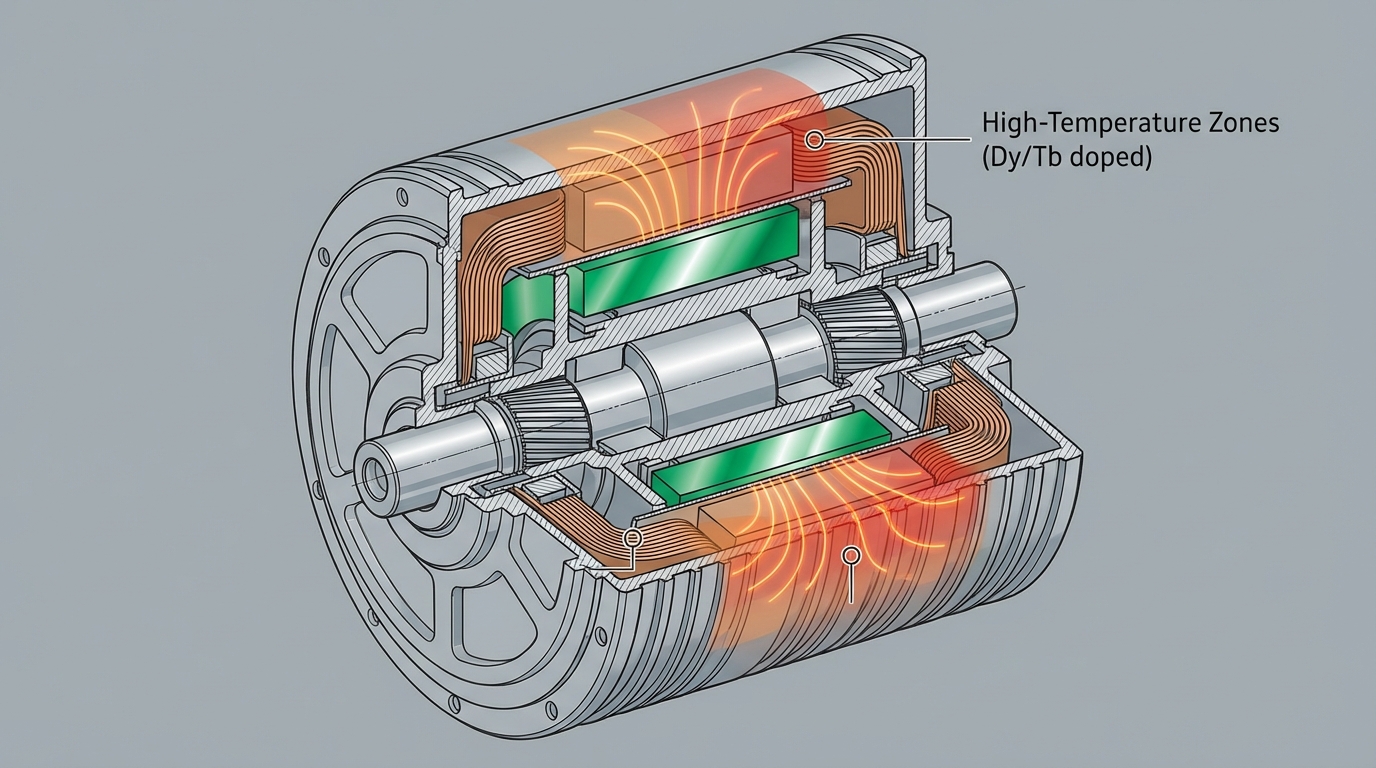
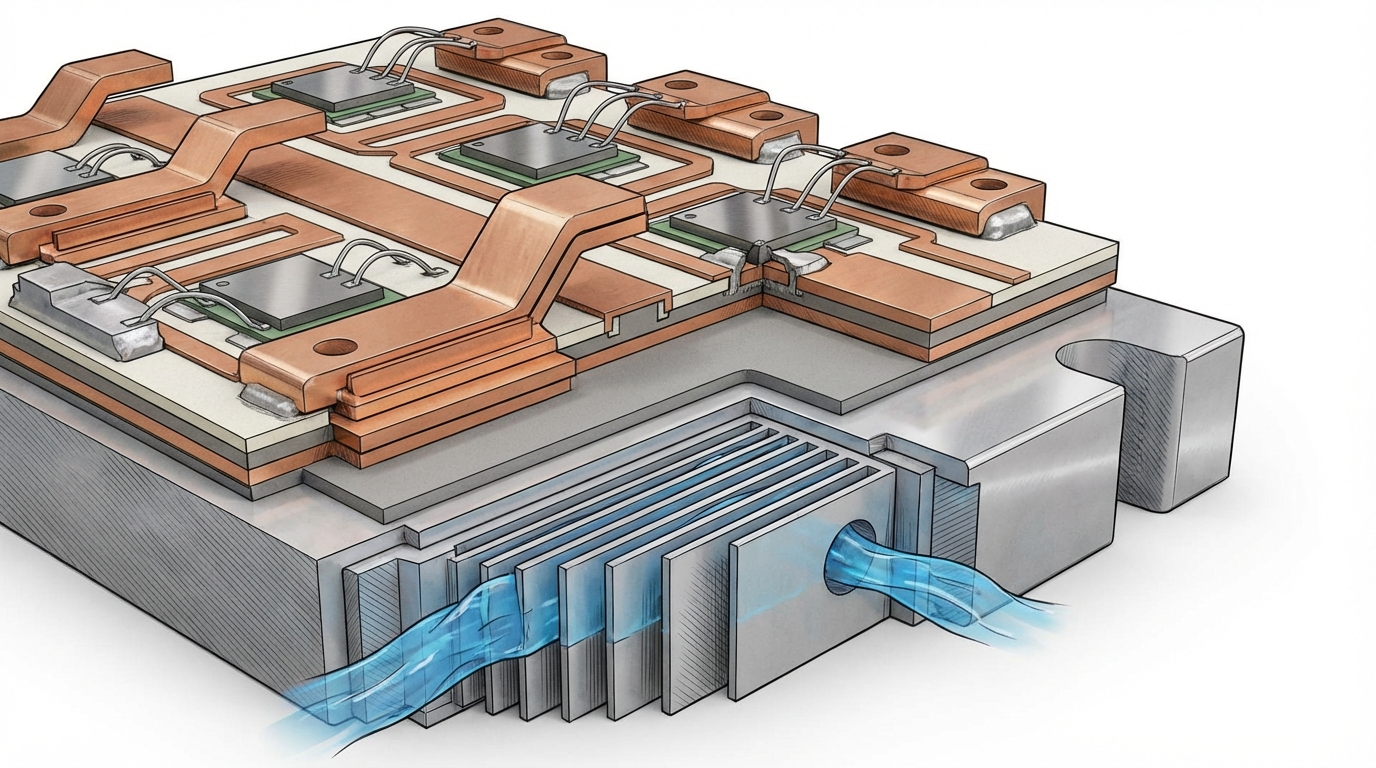
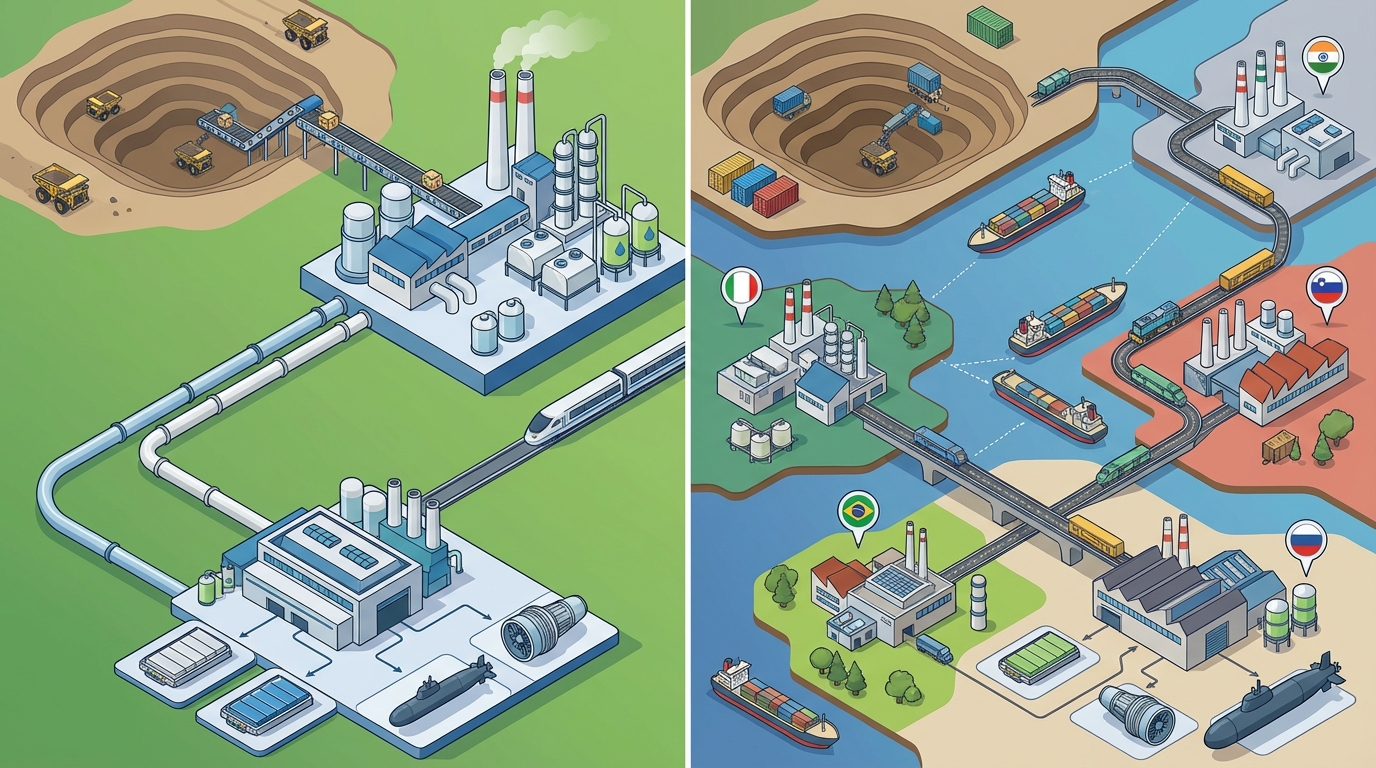
    How NdFeB permanent magnets are used in EV traction motors, with high-temperature regions driving Dy/Tb demand.
    How NdFeB permanent magnets are used in EV traction motors, with high-temperature regions driving Dy/Tb demand.
    • Ionic adsorption clays in southern China and neighboring regions – weathered granites where rare earths are loosely bound on clay surfaces; these deposits have relatively higher fractions of HREs (including Dy and Tb).
    • Xenotime and HRE‑rich monazite in select hard‑rock deposits such as xenotime‑bearing quartz veins and specialized alkaline systems.
    • Phosphogypsum and industrial by‑products where rare earths (including HREs) were historically discarded with fertilizer or phosphoric acid residues.

    USGS data and commercial assessments show that a dominant share of separated Dy/Tb in recent years has been produced from Chinese ionic adsorption clays, supplemented by material extracted in Myanmar and processed in China. Large light rare‑earth operations such as Bayan Obo in Inner Mongolia produce immense Nd/Pr flows but relatively modest Dy/Tb quantities, which are insufficient on their own to meet high‑temperature magnet demand.

    4.2 Process Flows: From Clay and Concentrate to Dy/Tb Oxides

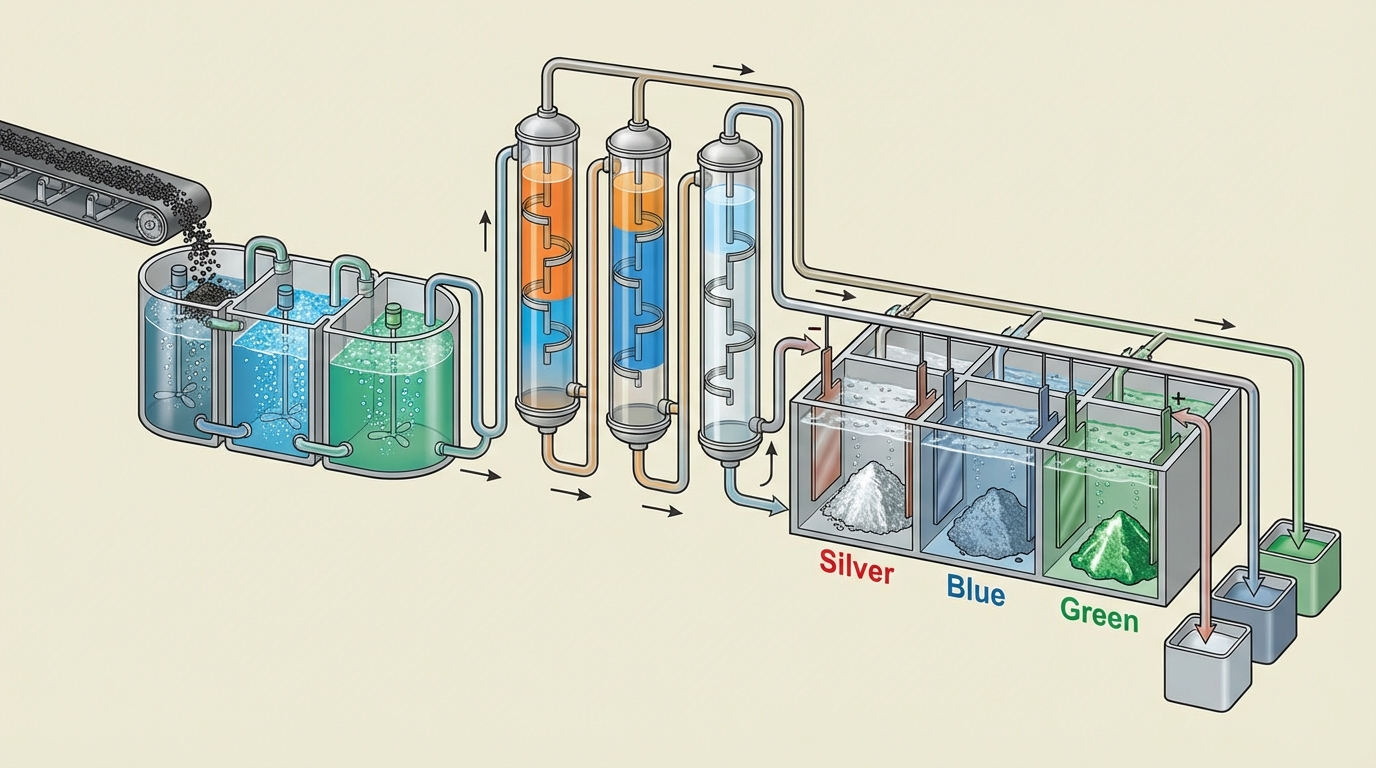
    The typical ionic‑clay HRE flow sheet is chemically simple but environmentally sensitive. Leaching uses saline ammonium sulfate or other electrolytes to displace rare‑earth cations from clay surfaces; the pregnant leach solution then passes through steps of impurity removal, rare‑earth precipitation (usually as carbonates or hydroxides), and finally solvent extraction for separation of individual elements such as Dy and Tb. Oxalate precipitation and calcination yield rare‑earth oxides (REOs), which move to metal‑making and alloying stages.

    Key operational constraints emerge at each step:

    • Leach control and effluents – Inadequate capture of ammonium and rare‑earth bearing leachates can contaminate waterways. Stricter environmental enforcement in southern China has periodically curtailed unregulated operations, cutting HRE supply.
    • Solvent extraction capacity – Dy and Tb are separated in long mixer‑settler or column trains. Capacity expansions require significant capital, organic solvent inventory, skilled operators, and acid/alkali supply, all of which can become bottlenecks.
    • Residue management – Clay tailings remain chemically active and require engineered containment to avoid acidification and metal release; this is now a central focus of Chinese regulators and a key permitting consideration in new projects elsewhere.

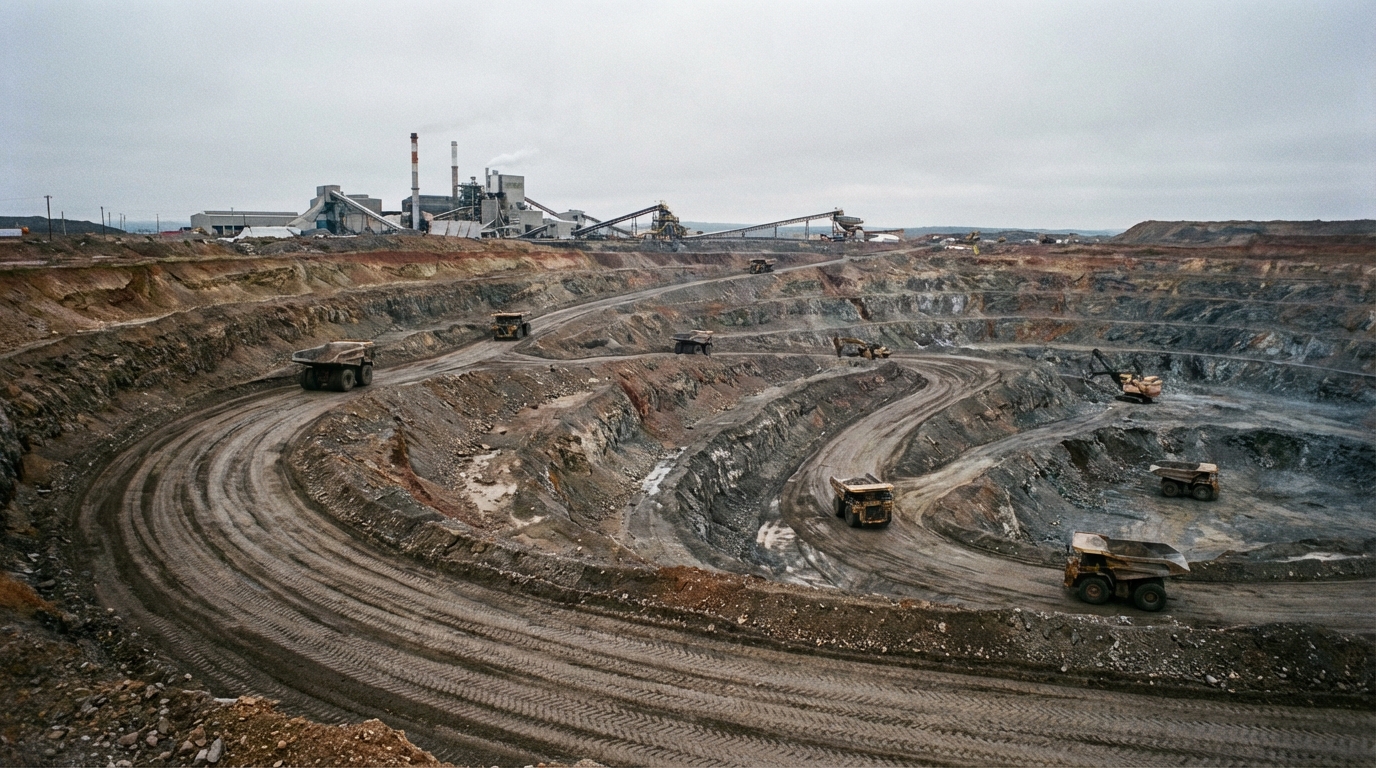
    Hard‑rock HRE projects such as Browns Range (xenotime), Dubbo (zirconium‑hafnium‑rare earths), and Round Top (multi‑element rhyolite) follow more familiar mining and beneficiation patterns: conventional open pit, crushing, grinding, flotation or gravity separation, then acid or caustic cracking of concentrates and solvent extraction. These operations introduce higher capex but can yield relatively concentrated Dy/Tb streams and co‑products (Zr, Hf, Nb, Li, etc.) that support industrial resilience.

    4.3 Key Dy/Tb‑Relevant Projects in 2024–2025

    Industry and policy attention has coalesced around a limited group of assets that materially influence Dy/Tb availability outside China. Publicly available technical and market reports regularly cite the following as structurally important for the mid‑2020s:

    • Browns Range (Australia, Northern Minerals) – Xenotime‑rich ore focused on Dy/Tb and other HREs, operating pilot‑scale production with plans for scale‑up. Logistics revolve around Darwin port and remote infrastructure.
    • Dubbo Project (Australia, Australian Strategic Materials) – A zirconium‑hafnium‑rare‑earth deposit with relatively high HRE content. Feasibility work indicates meaningful Dy/Tb output alongside Zr/Hf streams, positioning it as a non‑China HRE hub once financed and constructed.
    • Nolans (Australia, Arafura) – A phosphate‑hosted NdPr project with some HRE components. Nolans is primarily a NdPr project but offers incremental Dy/Tb capacity and aims for integrated downstream processing.
    • Round Top (USA, Texas) – A multi‑element deposit containing rare earths (including HREs) and lithium, with a development concept built around integrated processing in Texas. Permitting and technical de‑risking are the current focal points.
    • Phosphogypsum‑based projects (e.g., South Africa) – Recovery of rare earths, including Dy/Tb, from historic fertilizer stacks, blending mining and waste‑reprocessing challenges with ESG scrutiny.

    Parallel to these, ionic‑clay supply in Myanmar and southern China remains decisive. Political disruptions in Myanmar in recent years have periodically cut HRE feed into Chinese separation plants, leading to noticeable tightening in Dy/Tb spot availability and price spikes highlighted by Fastmarkets and other price reporting agencies.

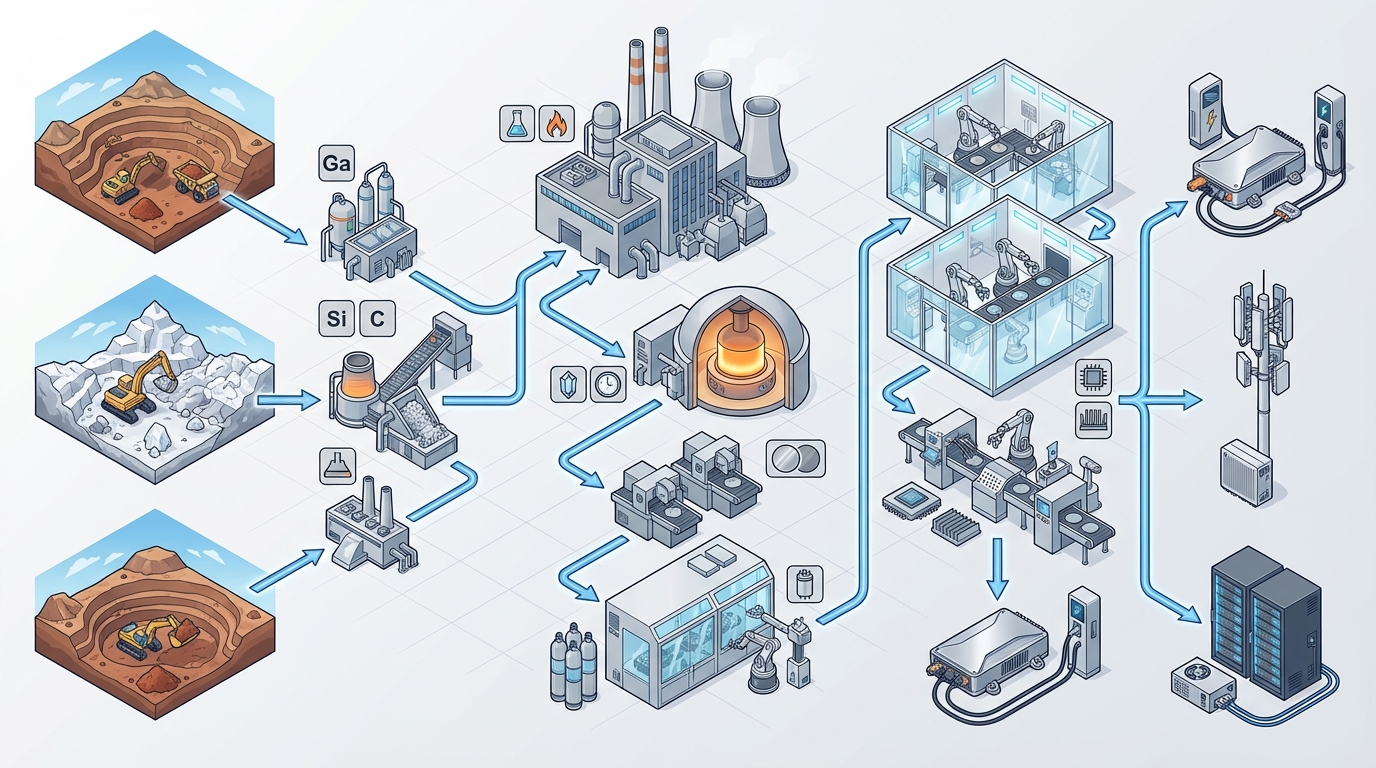
    5. Midstream: From Oxide to Magnet and Where Dy/Tb Is Consumed

    5.1 Metal Production and Alloying

    Dy and Tb oxides follow the same basic midstream path as other rare earths destined for NdFeB magnets. Oxides are typically converted to fluorides or chlorides, then reduced metallothermically (for instance, with calcium or other reductants) in vacuum or inert atmosphere to yield metals or master alloys. Dy/Tb can also be added as mischmetal‑type alloy additions rather than as pure metal.

    At this stage, the key technical focus is purity (to avoid parasitic phases and non‑magnetic inclusions) and control of alloy composition. Even minor deviations in Dy/Tb content from specification can materially alter coercivity profiles, particularly in grain‑boundary‑diffused magnets where effective Dy/Tb content at grain surfaces, not simply bulk analysis, governs performance.

    5.2 NdFeB Manufacturing: Where Dy/Tb Choices Are Locked In

    The classic sintered NdFeB process involves strip casting the alloy, hydrogen decrepitation to break it into brittle hydrides, jet milling under inert gas to achieve sub‑10 µm powders, pressing in alignment fields, sintering, and heat treatment. Dy/Tb can be present throughout this process (bulk doping) or introduced via GBD steps after sintering.

    Grain‑boundary diffusion routes used by Japanese and Korean magnet producers highlight the central tradeoff. Coatings or thin layers enriched in Dy/Tb are applied to magnet blanks, which are then annealed at elevated temperatures for tens of hours. Dy/Tb diffuses a limited distance into grain boundaries, increasing coercivity near surfaces where demagnetization starts, while leaving grain cores largely free of HREs and maintaining higher remanence.

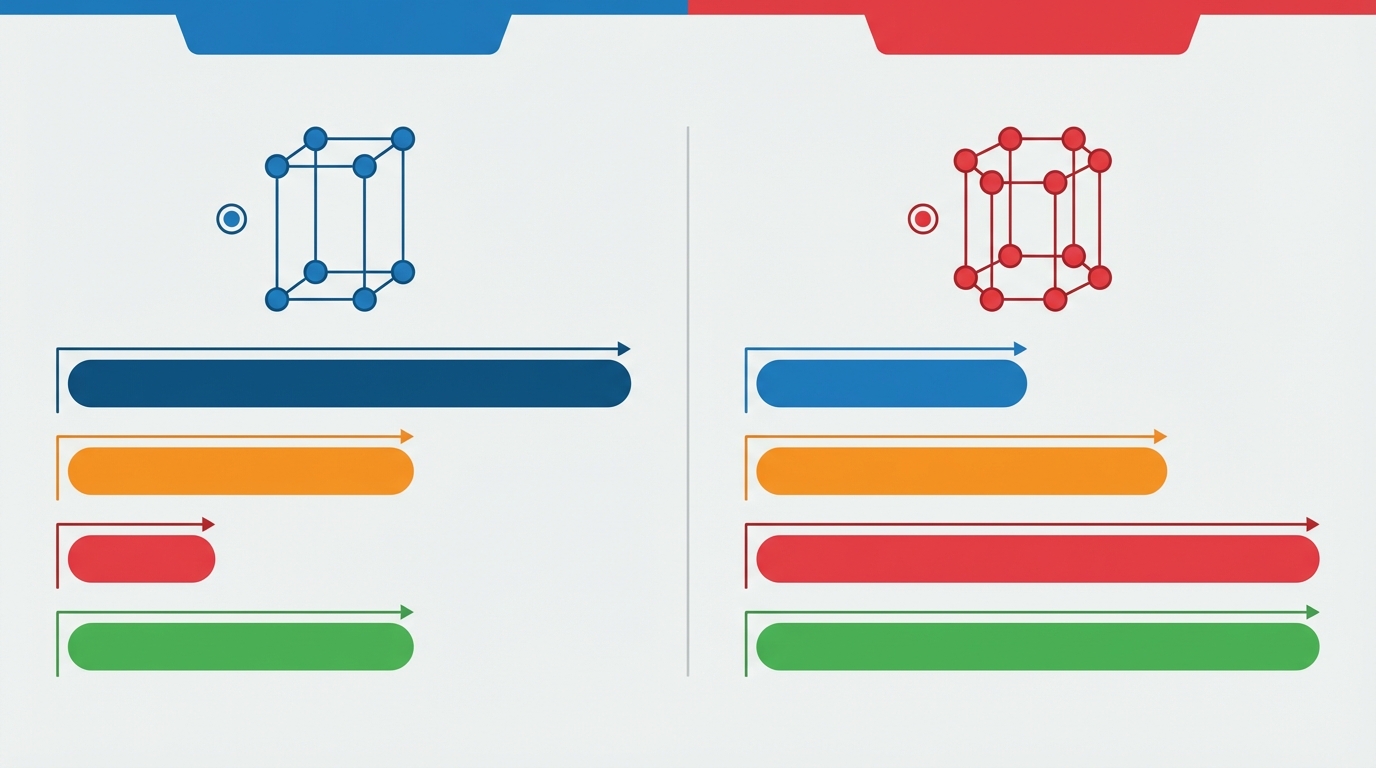
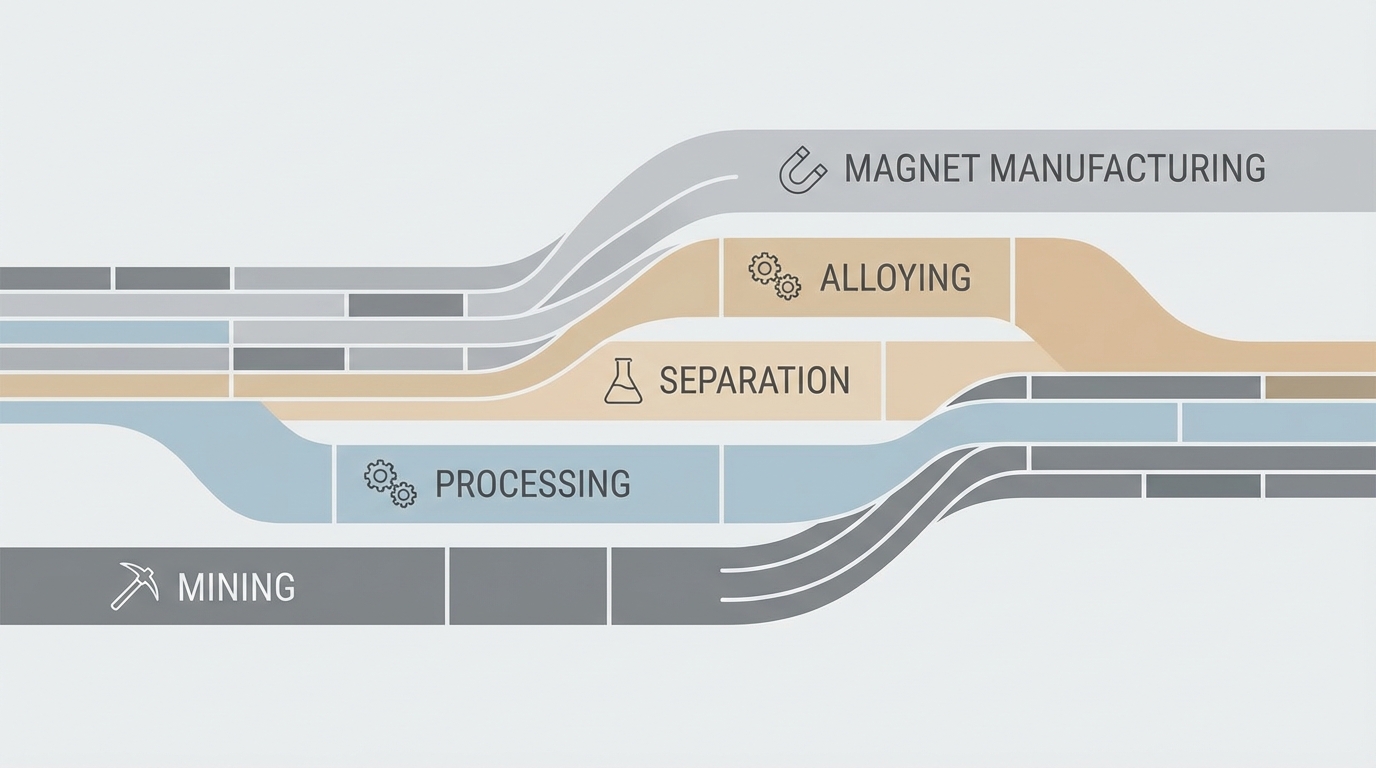
    Comparing NdFeB and SmCo magnet chemistries and performance tradeoffs.
    Comparing NdFeB and SmCo magnet chemistries and performance tradeoffs.

    The cost implications are two‑sided:

    • Dy/Tb consumption per magnet can fall significantly compared to bulk‑doped grades, reducing exposure to HRE price volatility.
    • Processing time and complexity increase, with longer furnace cycles, tighter atmosphere control, and more complex quality assurance to ensure uniform diffusion depth.

    Industrial experience shows that poor control of Dy/Tb diffusion can lead to significant within‑batch coercivity variance. Magnets on the same production line can deviate beyond acceptable tolerance bands if diffusion profiles vary with part geometry, furnace loading, or surface condition. That, in turn, complicates motor and generator design assumptions about minimum coercivity under worst‑case temperature and demagnetization load.

    5.3 SmCo and Other Alternatives in the Midstream Flow

    SmCo magnets follow distinct midstream paths: samarium and cobalt are alloyed and processed via powder metallurgy or hot‑pressing routes; no Dy/Tb is required. This cleanly removes HRE risk but introduces dependence on cobalt supply and exposes programs to higher material cost and somewhat lower magnet energy product.

    Emerging alternatives include hot‑deformed NdFeB with refined grain sizes that raise coercivity without Dy/Tb, and experimentation with rare‑earth‑lean or rare‑earth‑free systems (e.g., MnBi, Fe‑N, advanced alnico variants). However, these remain niche or developmental for large‑scale traction and wind use. For the next decade, NdFeB and SmCo will likely remain the workhorses, with Dy/Tb management as a central variable in NdFeB deployment.

    6. 2024–2025 Dy/Tb Market and Policy Landscape

    Government and industry reports through late 2024 describe a magnet market where NdFeB demand has grown strongly on the back of electric vehicles and wind turbines, with high‑temperature grades representing a substantial fraction of that total tonnage. Estimates in several supply‑chain studies place Dy demand in the low‑thousands of tonnes per year and Tb in the mid‑hundreds, with mine output slightly lower for both, implying structural deficits bridged by stock draws, recycling, and demand management.

    Several structural features dominate the risk profile:

    • Chinese processing dominance – Although hard‑rock projects are emerging elsewhere, a large majority of Dy/Tb separation capacity remains in China, built around ionic‑clay feed and enhanced by imported clays from Myanmar. Environmental campaigns and export licensing adjustments have direct, rapid effects on global availability.
    • Policy instruments in consuming regions – The United StatesInflation Reduction Act includes incentives for magnets produced with non‑Chinese supply chains. The European Union’s Critical Raw Materials Act targets domestic and allied extraction and processing quotas by 2030. Japan continues to operate strategic stockpiles and structured offtakes with non‑Chinese producers.
    • Price volatility and contract structures – Spot prices for Dy/Tb oxides have seen sharp moves following export quota announcements or disruptions in Myanmar. Large magnet producers and OEMs increasingly rely on multi‑year offtake contracts and index‑linked pricing to stabilize industrial planning.

    These dynamics directly influence where and how Dy/Tb‑efficient technologies such as GBD or Dy‑free microstructural designs are adopted. **The more constrained Dy/Tb becomes at the mine and separation level, the more valuable each incremental percent of coercivity gained per unit HRE within the magnet plant.**

    7. Engineering and Design Responses: Reducing or Repositioning Dy/Tb

    7.1 Magnet‑Level Mitigation

    At the magnet level, several strategies are in active industrial use or development to reduce dependence on Dy/Tb while preserving performance:

    • Grain boundary diffusion optimization – Wider adoption of diffusion‑based coercivity enhancement reduces total Dy/Tb tonnage per magnet. Process innovations include optimized Dy/Tb carrier alloys, multi‑step diffusion cycles, and grain‑boundary engineering with additive elements (e.g., Cu, Al) to open diffusion pathways.
    • Grain size refinement – Hot‑deformed NdFeB, with nano‑scale grains, achieves higher intrinsic coercivity from microstructure alone. This can partially or completely offset Dy in some applications but requires sophisticated hot‑working and texture control.
    • Selective Tb usage – In designs where mass and temperature margin are critical, some programs favor smaller Tb additions instead of larger Dy additions, exploiting Tb’s stronger anisotropy impact per atom at the cost of using a scarcer element.
    • Coatings and corrosion management – High‑Dy/Tb grades can be more vulnerable to specific corrosion modes; robust Ni‑Cu‑Ni or epoxy coatings and strict control of porosity and inclusions in the sintered body help preserve long‑term coercivity.

    Each of these magnet‑level responses involves tradeoffs: longer cycle times, higher process complexity, more demanding quality assurance, or increased exposure to other critical inputs (e.g., copper for grain‑boundary phases).

    7.2 Machine‑Level Mitigation

    Motors, generators, and actuators offer another layer of flexibility. Design choices can reduce Dy/Tb intensity even if magnets remain NdFeB‑based:

    • Thermal management – Improved rotor cooling, reduced hotspot formation, and better thermal interfaces keep magnet temperatures below coercivity‑critical thresholds. This allows use of lower‑Dy grades at the same reliability level.
    • Motor topology – Interior permanent magnet (IPM) motors distribute flux differently and can be designed with demagnetization‑resilient geometries, permitting lower HRE content than surface‑mounted designs for equivalent torque and overload profiles.
    • Hybrid and reluctance‑assisted designs – Some traction motors blend reluctance torque with PM torque, reducing magnet content per kW. This does not remove Dy/Tb risk but lowers the total kilograms of Dy/Tb per vehicle or turbine.
    • SmCo substitution in critical zones – In high‑risk aerospace or defense components, SmCo magnets can replace NdFeB entirely or in the most thermally stressed regions, removing Dy/Tb dependence in those subsystems.

    Machine‑level mitigations shift tradeoffs into other domains: cooling system complexity, control algorithms, rotor and stator manufacturing, and in some cases reliance on cobalt or larger machine size. The benefit is flexibility in tuning Dy/Tb usage to the most critical elements of the fleet.

    7.3 Recycling and Secondary Supply

    Recycling is an increasingly important complement to primary Dy/Tb supply. Two main routes are relevant:

    • Direct reuse / re‑manufacturing – Recovery of magnets from end‑of‑life hard drives, motors, and generators; demagnetization, re‑machining, or re‑processing into new shapes. Dy/Tb remains embodied in the magnet, though performance can degrade after multiple cycles.
    • Hydrometallurgical recovery – Shredded magnets are leached in acids, impurities are removed, and rare‑earth elements are separated via solvent extraction into individual oxides, including Dy and Tb. These oxides then re‑enter the standard midstream flows.

    Industrial projects in Europe, Japan, and North America have demonstrated technically viable flowsheets for magnet‑to‑magnet or magnet‑to‑oxide recycling. The main constraints remain collection logistics, product heterogeneity, and the economics of competing with primary supply. Nevertheless, recycling offers a structurally different risk profile: urban mines are geographically closer to end‑use industries and less exposed to the same geopolitical chokepoints as primary HRE deposits.

    8. Failure Modes and Edge Cases in a Dy/Tb‑Constrained World

    Dy/Tb risk is often framed in tonnage and price terms, but the most consequential failures arise when material, process, and design assumptions misalign. Several patterns recur in industrial experience and technical case studies.

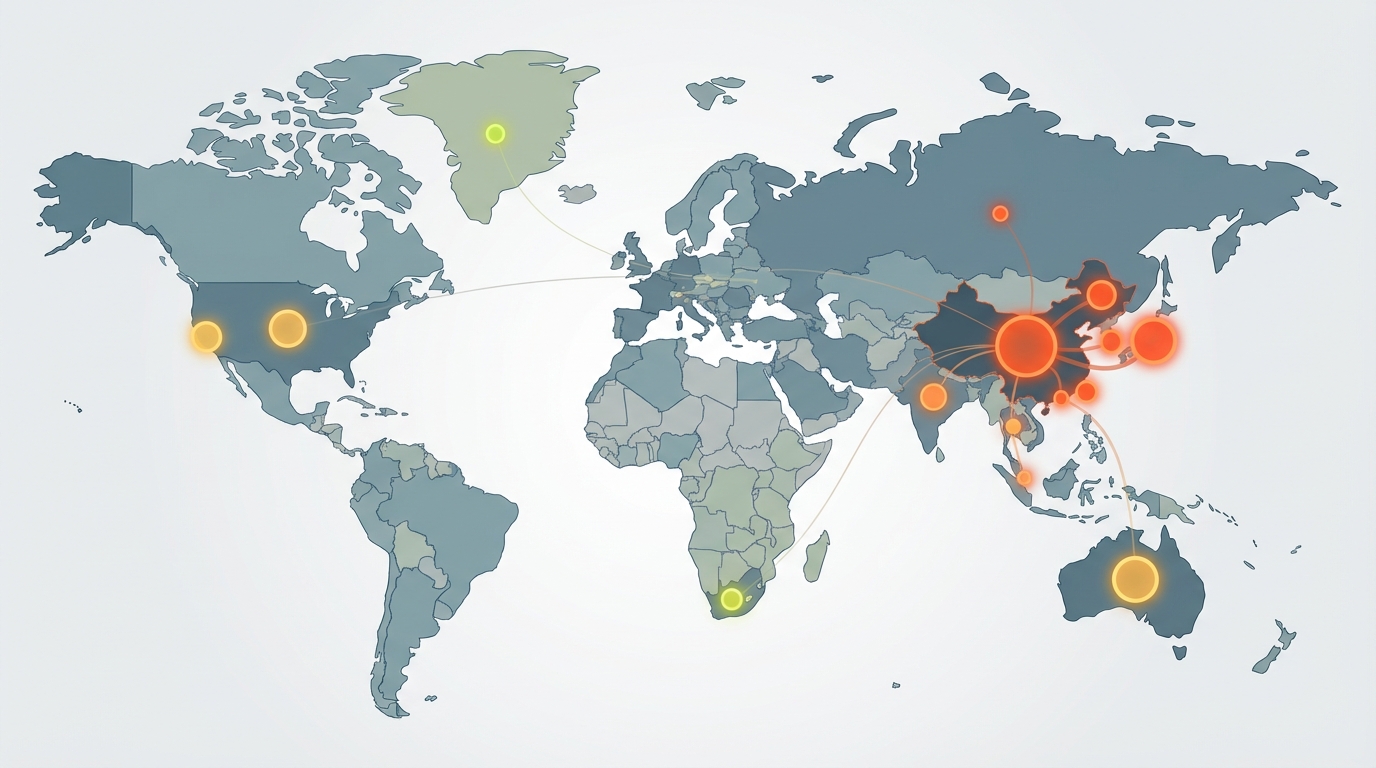
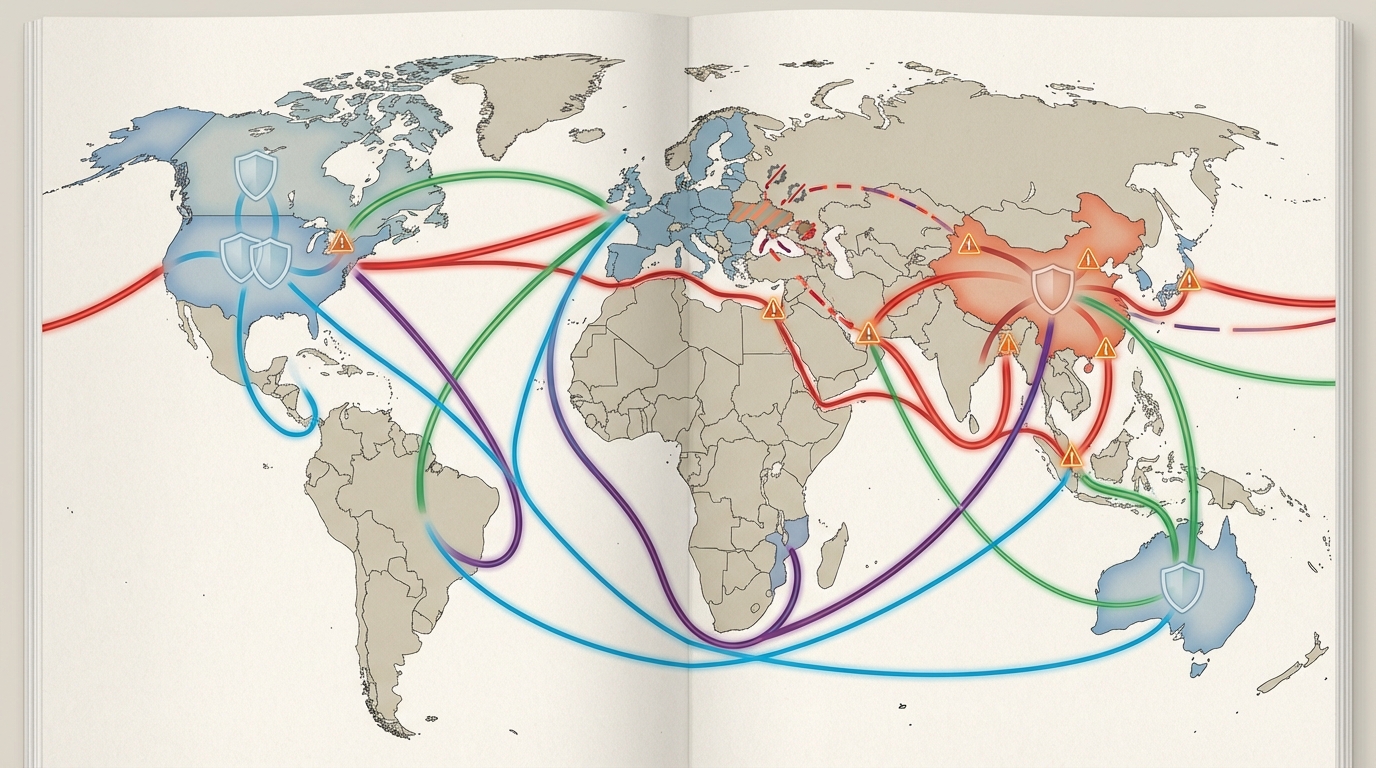
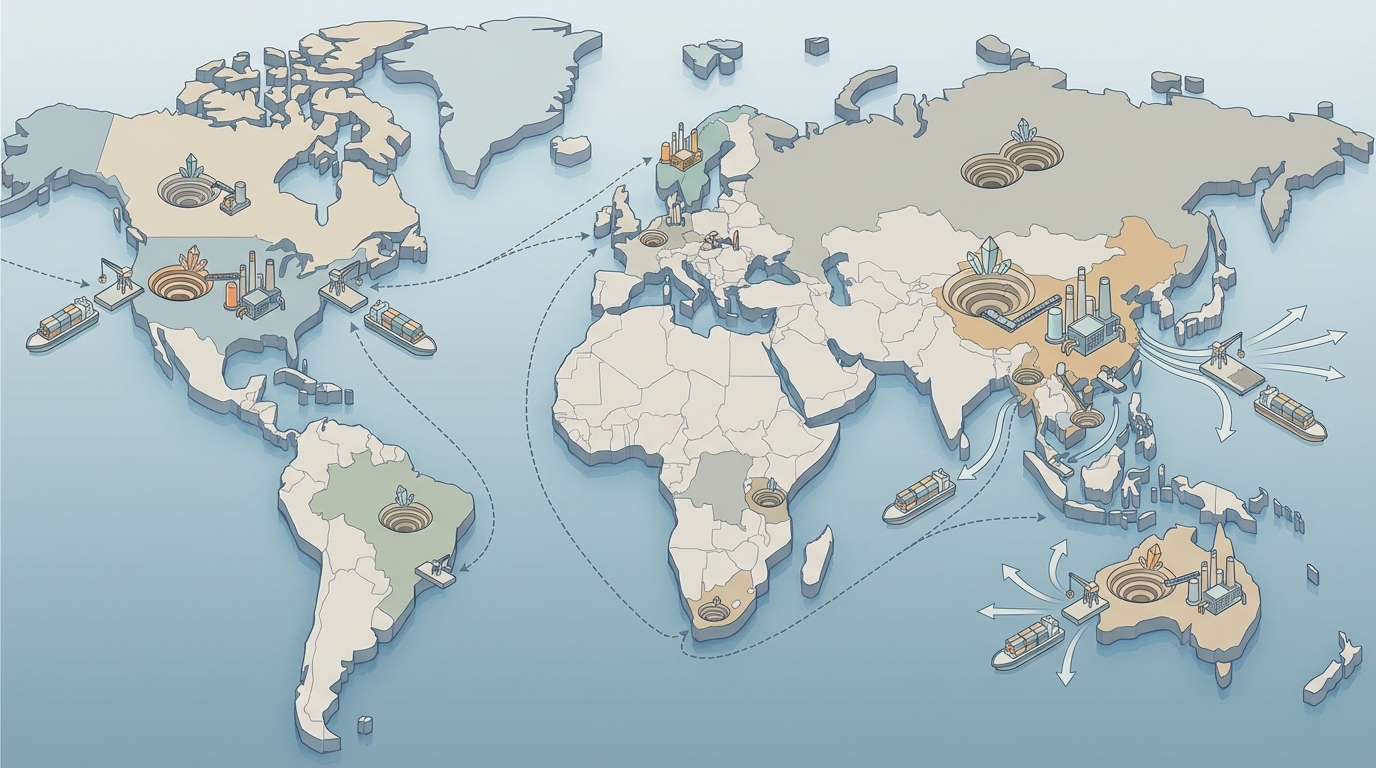
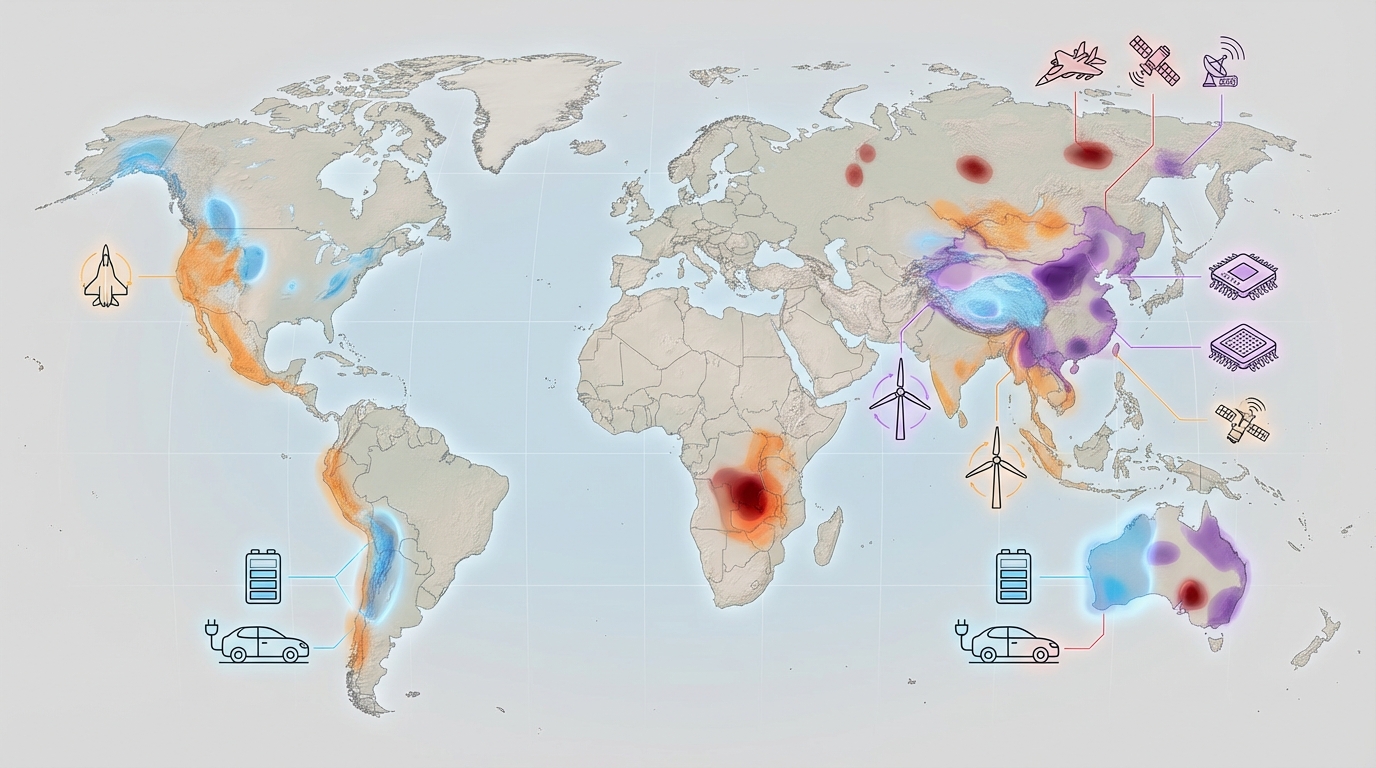
    Global distribution of key dysprosium and terbium mining and processing sites.
    Global distribution of key dysprosium and terbium mining and processing sites.

    8.1 Partial Demagnetization in High‑Stress Machines

    If coercivity margins are thinner than anticipated – because Dy/Tb content is slightly low, distribution is inhomogeneous, or operating temperatures are higher than modeled – machines can suffer partial, irreversible demagnetization during overload or fault events. The immediate outcome is not necessarily catastrophic failure; more commonly, torque or efficiency loss emerges over time and is difficult to diagnose without detailed magnetic characterization.

    GBD magnets are particularly sensitive to diffusion depth and surface coverage. Edges and corners can receive less Dy/Tb, becoming demagnetization “weak spots”. Motors built with such magnets may pass initial testing but age faster under pulsed or cyclic overload, especially in applications where ambient conditions are less controlled (e.g., heavy‑duty EVs, off‑highway equipment, or nacelles with variable thermal paths).

    8.2 Supply‑Chain Disruptions Propagating into Design Decisions

    Disruptions in Myanmar ionic‑clay exports or Chinese production curtailments, as seen in recent years, have forced magnet makers to temporarily adjust Dy/Tb content or shift customers to different grades. In some cases, this has led to re‑rating of machine performance envelopes, including derating of turbine generators or traction motors in certain duty cycles.

    Such short‑term adjustments illustrate a deeper structural issue: magnet grade selection and Dy/Tb content are often locked into long validation cycles. Once a platform is qualified, changing Dy/Tb levels typically requires fresh testing and approvals. Supply shocks arriving mid‑platform can therefore create a gap between what the supply chain can deliver and what the platform specification demands.

    8.3 Quality and Traceability Gaps

    In a constrained Dy/Tb market, blending of different feedstocks, substitution between Dy and Tb, or variable recycling input streams can all introduce composition variability. If analytical controls (ICP‑MS assays, XRD phase analysis, coercivity mapping) are not robust, magnets may drift outside narrow specification windows without detection at incoming inspection.

    From an operational perspective, this transforms a macro‑supply risk into a micro‑quality risk: failures occur not because Dy/Tb is unavailable, but because its distribution and spec compliance are imperfectly controlled. That is especially acute in safety‑critical systems (flight controls, braking actuators, guidance fins) where magnet performance margins are tight and failure modes are binary.

    9. How Industrial Teams Are Structuring Dy/Tb Risk Analysis

    Across OEMs and tier‑one magnet users, internal workflows tend to converge on a multi‑layer analysis of Dy/Tb exposure rather than a single “price risk” metric. Typical frameworks bring together materials science, procurement, and regulatory teams around several recurring pillars.

    • Material characterization – Detailed rare‑earth oxide and metal purity assays, including Dy/Tb and trace contaminants, to ensure consistency with magnet‑grade specifications.
    • Composition mapping – Verification of Nd:Dy:Tb ratios at batch and sub‑batch level, including checks on diffusion profiles for GBD magnets, often with statistical acceptance criteria for coercivity spread.
    • Thermal performance validation – Coercivity and remanence measurement across temperature and demagnetizing field conditions representative of real duty cycles, frequently aligned with ASTM or IEC methods.
    • Supply‑chain traceability – Mapping Dy/Tb flows from mine or recycling facility through separation plants, metal makers, and magnet plants, identifying single points of failure and high‑risk jurisdictions.
    • Jurisdictional and policy analysis – Screening for export controls, sanctions exposure, and qualifications under incentives such as the US IRA or EU CRMA, given their growing weight in procurement decisions.
    • Cost and exposure modeling – Scenario analysis under different Dy/Tb price levels and availability assumptions, including the impact of switching between Dy and Tb in certain grades or adopting Dy‑efficient technologies.
    • Contingency and substitution planning – Structured evaluation of SmCo swaps, lower‑Dy grades, redesigned cooling or motor topologies, and incremental recycling as potential responses to severe Dy/Tb constraints.

    The common thread is that Dy/Tb is treated not just as a line item in the bill of materials, but as a strategic material input whose physical, regulatory, and geopolitical properties require continuous monitoring and cross‑functional management.

    10. Synthesis: Structural Tradeoffs and the Road Ahead

    The technical core of the Dy/Tb story is straightforward: a few percent of heavy rare earth in NdFeB magnets determine whether critical machines retain magnetization headroom at elevated temperature. The industrial reality is less straightforward: that Dy/Tb comes from a narrow band of deposits and refineries concentrated in specific jurisdictions, processed through capital‑intensive and environmentally sensitive facilities.

    Engineering responses – grain‑boundary diffusion, Dy‑free microstructures, refined motor designs, and selective SmCo deployment – are steadily improving the efficiency with which Dy/Tb is used. Recycling is beginning to add secondary supply. New HRE‑focused mines and multi‑element projects are working through permitting and financing to provide alternative feedstocks. Yet each of these options redistributes tradeoffs rather than eliminating them, whether into process complexity, cobalt exposure, capital intensity, or permitting timelines.

    From Materials Dispatch’s perspective, Dy/Tb risk is becoming a system property rather than a simple commodity concern. Platform designers, magnet makers, and policy makers are all interacting through the same constrained nodes: ionic‑clay operations, HRE separation capacity, and qualification cycles for advanced magnet grades. The decisive signals in the coming years are likely to come from incremental shifts – a new separation plant reaching nameplate capacity, a regulatory tightening on ionic‑clay leaching, a traction motor platform qualified on Dy‑free hot‑deformed NdFeB, or a strategic offtake that anchors an HRE‑rich hard‑rock project. Monitoring these weak signals, and mapping their impact across the upstream‑midstream‑downstream chain, will be central to understanding how the Dy/Tb constraint evolves.

    Note on Materials Dispatch methodology – This analysis integrates technical literature on magnet physics and processing, public supply‑chain assessments from agencies such as the US Department of Energy and USGS, commercial market data from specialist consultancies, and systematic monitoring of policy moves in key jurisdictions (including Chinese export licensing, US IRA implementation, and EU CRMA measures). Cross‑referencing these sources against end‑use technical specifications for EV, wind, and defense platforms enables an integrated view of how Dy/Tb risk propagates through the entire magnet value chain.

  • How to map your company’s exposure to strategic materials in 10 steps: Latest Developments and

    How to map your company’s exposure to strategic materials in 10 steps: Latest Developments and

    In advanced manufacturing, battery, and aerospace programs, several disruptions since 2020 have shown how little visibility many organisations have into their dependence on strategic materials. When export controls on gallium and germanium tightened, and when individual mines in the Democratic Republic of Congo or South Africa paused operations, procurement teams often discovered only at that point how deeply embedded those materials were in components and subsystems. The 10-step framework below reflects approaches seen in practice for mapping exposure across rare earth elements (REEs), battery metals, and precious and platinum-group metals.

    The emphasis is on method rather than prescription: how teams have scoped exposure, traced dependencies down to Tier 3 and beyond, scored risks, and translated findings into governance structures compatible with regimes such as U.S. Executive Order 14017, the EU Battery Regulation, and the Uyghur Forced Labor Prevention Act (UFLPA).

    Operational signals and tradeoffs to track

    • Key tradeoff: Granular Tier 3+ mapping increases resilience but often extends timelines; many programmes balance depth of tracing against speed of initial risk scanning.
    • Frequent failure mode: Exclusive reliance on Tier 1 self-reporting, with no independent cross-check against logistics data, customs records, or third-party audits.
    • High-signal indicators: New export quotas, sanctions, or environmental enforcement actions in countries that dominate a given material (e.g., China for REE separation, DRC for cobalt).
    • Compliance trigger: Any indication that material flows intersect UFLPA-designated regions or entities, or fall under emerging EU Battery Regulation recycled-content thresholds.
    • Structural vulnerability: Concentration of refining or chemical conversion in a single jurisdiction even where mining is geographically diversified.

    Prerequisites and context for a 10-step exposure map

    Before the formal “steps” begin, many organisations converge on a few enabling conditions. Contract reviews often surface clauses dealing with material provenance, force majeure tied to sanctions or tariffs, and audit rights extending beyond Tier 1. In critical minerals programmes, certificates of analysis (CoA) specifying grade and purity – for example, neodymium-praseodymium (NdPr) oxide at >99.5% purity – appear frequently as reference documents for both engineering and compliance teams.

    Due diligence baselines tend to draw on existing industry schemes. For 3TG (tin, tantalum, tungsten, gold), the Responsible Minerals Initiative (RMI) Chain-of-Custody and smelter/refiner audit protocols are commonly leveraged and then extended to lithium, nickel, or cobalt via schemes such as the Initiative for Responsible Mining Assurance (IRMA). In parallel, regulatory drivers create their own data expectations: EO 14017 has pushed U.S. defence-adjacent companies to inventory critical minerals usage; the EU Battery Regulation introduces recycled-content and carbon-footprint disclosure obligations; UFLPA screens routes touching Xinjiang-linked mining or processing, including some REE and polysilicon assets.

    Operationally, cross-functional teams are typical: procurement, legal, engineering, logistics, and sustainability working from a shared data model. General observations from multi-tier mapping exercises indicate that complete maps for complex product portfolios often require three to six months, with Tier 3 data access consuming 60-90 days and geopolitical scenario modelling another 30–45 days. Common obstacles include siloed data systems and inconsistent supplier identifiers across ERPs and compliance tools.

    Step 1 – Define strategic materials scope and internal demand

    The first methodological step in most programmes is a clear definition of which materials are treated as “strategic” and the internal demand baseline for each. Many teams cross-reference the U.S. Geological Survey Critical Minerals List and comparable EU lists against bills of materials (BOMs) and process specifications. Materials are typically logged not only by element (e.g., dysprosium, lithium, palladium) but also by form and grade – such as battery-grade lithium carbonate (>99.5% Li2CO3) versus technical-grade carbonate.

    Frameworks like the Risk Assessment and Mitigation Framework for Strategic Materials (RAMF-SM) often treat this as the “derived demand” phase: mapping how many tonnes of a given material are implied by planned EV battery output, turbine production, or semiconductor wafer starts. In one aerospace example, turbine coating programmes quantified demand for high-purity platinum sponge in the low single-digit tonnes per year, almost entirely linked to South African and Russian supply, immediately flagging concentration risk.

    A recurrent bottleneck at this stage is reconciling engineering documentation with procurement data: part numbers, material codes, and supplier SKUs frequently misalign. Without this reconciliation, later exposure metrics rest on fragile foundations.

    Step 2 – Map the inbound supply chain to Tier 3 and beyond

    Once critical materials and demand are defined, attention typically shifts to mapping the physical and contractual path from mine to component. Value-chain mapping approaches, such as those popularised in consulting toolkits, are used to list each node: mine, concentrator, refinery, chemical converter, alloy producer, component manufacturer, and final assembly.

    Examples observed in practice include tracing NdPr from Lynas Rare Earths’ Mt Weld operation in Australia through its Malaysian separation plant and onward to magnet makers in Japan or Europe. Another recurrent case involves cobalt flows from Glencore’s Mutanda mine in the DRC, through Chinese refiners, into cathode active materials used by cell manufacturers. In both examples, mining is only one part of the story; exposure is frequently dominated by the jurisdiction hosting separation or refining, with China’s share of REE separation capacity and cobalt refining capacity acting as a structural risk factor.

    Illustration of a multi-tier global supply chain for strategic materials.
    Illustration of a multi-tier global supply chain for strategic materials.

    Where suppliers are unwilling or unable to disclose full Tier 3+ details, teams often triangulate using customs data, public sustainability reports, and RMI or IRMA audit disclosures. A major failure mode at this stage is accepting generic statements such as “sourced responsibly” without verifying the actual facility list.

    Step 3 – Classify suppliers and routes by risk tier

    With an initial map in place, many organisations then assign high/medium/low risk tiers to suppliers, sites, and trade routes. Typical criteria include: impact on revenue or mission if disrupted, likelihood of disruption (geopolitics, ESG controversies, natural hazards), and current level of preparedness or redundancy.

    For instance, a lithium hydroxide supplier sourcing material from Albemarle’s Greenbushes deposit via a single export port prone to industrial action may be rated higher risk than a PGM recycler such as Umicore with multiple plants and diversified feedstock. Cobalt units refined in regions with acute child-labour scrutiny often receive heightened attention because a single NGO report or regulatory action can render material unusable for sensitive end-customers.

    Simple risk matrices-likelihood multiplied by impact, adjusted for preparedness-are frequently employed. The important pattern is consistency: the same criteria applied across all materials, so that lithium, indium, and palladium exposures can be compared on a like-for-like basis.

    Step 4 – Assess material-specific global supply vulnerabilities

    The next layer adds an external lens: how fragile is the global supply picture for each material, independent of one company’s footprint? Here, concentration of mining or refining, projected deficits, and exposure to export controls are central.

    Public analyses have pointed to potential lithium deficits on the order of 150,000–200,000 tonnes LCE around 2025 in some scenarios, driven by delayed Andean brine expansions and slower-than-expected conversion capacity. Gallium and germanium have been subject to Chinese export licensing requirements, raising concerns for defence and high-end electronics programmes reliant on those inputs. For silver, large single assets such as Newmont’s Peñasquito mine in Mexico illustrate how localised disputes over water or taxation can temporarily remove a significant share of supply from the market.

    At this stage, exposure mapping exercises often overlay internal demand against such macro-vulnerability profiles to identify which materials warrant deeper mitigation analysis, even if current sourcing appears stable.

    Conceptual risk matrix for strategic materials exposure.
    Conceptual risk matrix for strategic materials exposure.

    Step 5 – Quantify demand versus “safe” supply

    RAMF-SM and similar frameworks distinguish between total global supply and “safe” supply – volumes coming from jurisdictions and operators that meet specified political, ESG, and compliance criteria. Organisations frequently construct a simple equation: shortfall = internal demand – accessible safe supply.

    One defence-sector case often cited involves dysprosium, essential for high-temperature permanent magnets. When demand for a programme was matched against non-Chinese dysprosium supply, a substantial percentage gap appeared, signalling that, under certain export-control scenarios, programme output would be constrained by access to this single element.

    Such quantified shortfalls become the backbone of later mitigation scenarios, even though exact numbers are subject to uncertainty around project start dates, recovery rates, and policy shifts.

    Step 6 – Evaluate mitigation pathways: substitution, diversification, efficiency

    Once gaps are visible, material-by-material mitigation feasibility is analysed. Substitution assessments look at technical alternatives (for example, partial substitution of palladium with platinum in autocatalysts, or increased use of LFP chemistries that reduce cobalt dependence in batteries). Diversification explores whether credible additional “safe” sources exist-such as emerging projects like Piedmont Lithium’s Carolina operations or expansions at MP Materials’ Mountain Pass site.

    Engineering constraints are critical here. For some applications, switching from NdFeB magnets to ferrite or from indium-tin-oxide to alternative transparent conductors implies performance tradeoffs or lengthy requalification cycles. Several electronics programmes have found that substituting indium requires 12 months or more of testing and customer validation, effectively ruling it out as an emergency lever.

    Recycling and material efficiency are also evaluated. PGM recycling plants in Europe and North America, for instance, can alleviate primary supply constraints but are themselves constrained by scrap availability and regulatory approvals.

    Step 7 – Score and prioritise risks across materials and products

    With mitigation options characterised, most organisations then re-score each material and key supplier to create a prioritised risk register. Tools from Failure Modes and Effects Analysis (FMEA) are commonly adapted: for each critical material, teams list failure modes (export ban, mine flood, ESG-driven customer rejection, sudden regulatory restriction) and assign severity, occurrence, and detectability scores.

    Cobalt linked to high-risk jurisdictions, gallium subject to export control, and single-source palladium from assets like Nornickel’s Russian operations often feature near the top of such lists. The output is not a plan but a ranking: which material-supplier combinations create systemic exposure and therefore deserve more detailed contingency work.

    Governance and monitoring setup for strategic materials risk management.
    Governance and monitoring setup for strategic materials risk management.

    Step 8 – Document risk treatment approaches

    At this point, treatment approaches are usually grouped into four descriptive buckets observed in supply-chain risk literature: accept, mitigate, avoid, and transfer. For some low-volume, easily stockpiled materials, organisations consciously accept exposure. For others, mitigation may involve qualifying a second refining route, shifting to a supplier in a different jurisdiction, or engaging in long-term collaboration with existing suppliers to improve ESG and compliance performance.

    In high-risk contexts, some companies have chosen to avoid particular processing hubs entirely—for example, stipulating that REE separation be performed outside China, even if ore originates elsewhere. Risk transfer tools such as political-risk or marine insurance are occasionally used to manage logistics-related events (for instance, Red Sea disruptions affecting concentrate shipments), although these instruments do not address the underlying physical scarcity of material.

    Another observed practice is the use of blended provenance certificates, where recycled and primary material streams are commingled. While such approaches can keep production flowing and improve average ESG performance, they can also cloud traceability and complicate UFLPA or EU due-diligence demonstrations.

    Step 9 – Establish monitoring, indicators, and governance

    Exposure mapping is rarely treated as a one-off exercise. Organisations that have embedded it successfully tend to create standing governance structures: supply risk councils, dashboards that track exposure metrics, and defined triggers for management attention. Digital tools range from basic spreadsheets to specialised platforms integrating shipment data, ESG scores, and regulatory alerts.

    Typical indicators include: percentage of volume for a given material processed in a single country; share of supply routed through sanctions-exposed logistics corridors; and exposure to entities appearing on UFLPA or other restricted lists. Monitoring expansion projects—such as MP Materials’ announced capacity increases or new refining projects in Australia and Europe—also helps calibrate how “safe” supply might evolve over a three- to five-year horizon.

    Step 10 – Review, report, and iterate

    The final step in the cycle involves formal review and reporting. Annual or semi-annual updates are common, with material exposure maps feeding into board-level risk reviews, sustainability reports, and, where relevant, defence or automotive regulatory submissions. Experience across several sectors suggests that exposures can shift quickly: a single new export restriction, tailings incident, or ESG scandal can reconfigure the risk profile of an entire material category.

    In adapted applications of RAMF-SM and similar frameworks, some organisations have reported reductions in quantified exposure on the order of 30–50% within 12 months, primarily by diversifying “safe” sources, advancing recycling programmes, or reconfiguring product designs for lower dependence on the scarcest inputs. Those figures are highly context-specific, yet they illustrate the potential impact of systematically mapping and acting on strategic material exposures rather than treating them as a static background condition.

    Across electronics, batteries, aerospace, and defence, a recurring pattern emerges: the most consequential insights often arise not from exotic modelling, but from the basic work of connecting internal BOM-level demand to real-world mines, smelters, and trade routes. The 10-step framework above captures how that work has been structured in practice, and which signals have tended to distinguish manageable concentration from systemic strategic vulnerability.

  • Why stockpiling alone won’t save oems in the next materials shock

    Why stockpiling alone won’t save oems in the next materials shock

    Why this debate matters for OEMs now

    Materials Dispatch approaches critical materials not as an abstract geopolitical topic, but as a daily operational constraint for automotive, defense, electronics, and industrial OEMs. Over the last decade, the firm has watched multiple supply shocks – from the 2010 rare earths dispute and COVID-era logistics breakdowns to Russia-related disruptions in nickel, palladium, and neon – translate directly into halted production lines, emergency sourcing at any quality, and bruising internal audits on risk governance.

    In that context, stockpiling has become the instinctive response. Boards ask for buffer days of inventory; procurement teams build “strategic reserves”; public agencies launch shared storage schemes. The reflex is understandable: inventories are visible, easy to explain, and can be booked as a concrete risk-management line item. Yet recent policy moves – Chinese export controls on gallium, germanium, and graphite, tightening sanctions regimes, emerging EU cyber and ESG rules on mining, and talk of new tariffs on refined metals – have made one conclusion inescapable for this publication: stockpiling alone is structurally misaligned with the way the next shock is likely to unfold.

    The next materials crisis will be driven less by sheer tonnage scarcity and more by policy decisions on where refining happens, who is allowed to export, and which upstream assets can keep operating under regulatory and cyber pressure. Stockpiles can buy time; they cannot fix that geometry.

    Key points

    • Stockpiling provides a tactical buffer but does not address structural exposure to concentrated refining, export controls, and regulatory shutdown risks.
    • Critical materials refining remains heavily centered in China for rare earths, battery inputs, and several strategic metals, limiting the effectiveness of any downstream inventory buffer.
    • Public and private stockpile schemes increasingly intersect with tariffs, export controls, and cybersecurity rules, creating complex compliance and replenishment obligations.
    • Diversified non-Chinese mining and refining projects, along with magnet, battery, and wiring redesign, could materially reshape exposure, but timelines are measured in years, not quarters.
    • Interpreting upcoming policy milestones and project FIDs correctly is likely to matter more than any single warehouse volume in determining OEM resilience.

    FACTS: Structural exposure, stockpiling responses, and the emerging project map

    Concentrated refining and structural tightness

    Several converging facts define the baseline. First, refining and separation for many strategic and energy-transition materials are geographically concentrated. For key rare earth oxides used in permanent magnets, China has controlled the dominant share of global separation capacity for years. Similar patterns hold for segments of the graphite, lithium chemicals, and cobalt refining chains. For OEMs that rely on neodymium-iron-boron magnets, high-purity graphite, or cobalt-bearing battery chemistries, the “single point of refining” problem is already visible in supplier mapping exercises.

    Second, multiple technical agencies and industry groups have flagged potential medium-term deficits in refined copper and certain battery materials in North America and Europe, driven by electrification, data center buildout, and defense demand. In copper, projections for the mid-2020s point to a refined deficit in the United States measured in the hundreds of thousands of tonnes on an annual basis if new smelting and refining capacity does not accelerate. For rare earths, various analyses have highlighted a potential mismatch between projected demand for neodymium and dysprosium in EV motors and wind turbines and committed non-Chinese capacity.

    Third, policy tools have shifted decisively from rhetoric to implementation. China has implemented export controls on gallium, germanium, and certain graphite products, explicitly linking export permissions to national security concerns. The United States, European Union, Japan, and others have deployed sanctions, tariffs, and industrial subsidies directly targeted at reshaping critical materials supply chains. EU rules such as the Carbon Border Adjustment Mechanism (CBAM) and the NIS2 Directive extend climate and cyber obligations upstream into metals and mining, including operators of rare earth and battery-metal facilities.

    How stockpiling has been structured so far

    Stockpiling is not new. The United States has operated some form of strategic materials stockpile since the mid-20th century, and Japan’s post-2010 rare earth strategy prominently featured government-coordinated inventories. OEMs in automotive and defense have, over the last decade, built their own refined metal and component buffers, typically measured in weeks or a few months of normal consumption.

    Recent years have added new institutional forms. Public–private vehicles have emerged where commodity traders, OEMs, and export credit agencies co-finance shared pools of strategic metals. These schemes typically define a list of eligible materials (often aligned with national “critical minerals” lists), set trigger conditions for drawdowns (for example, formal export bans or sustained benchmark-price spikes), and allocate replenishment obligations among participating parties. From a governance standpoint, they sit somewhere between a traditional national stockpile and a syndicated revolving inventory facility.

    On the corporate side, risk committees and procurement teams have pushed suppliers to hold more inventory, sometimes funded through prepayments or take-or-pay frameworks. In many OEMs observed by Materials Dispatch, this has led to parallel inventory chains: conventional just-in-time flows for routine operations, and a “shadow” layer of safety stock in warehouses, bonded facilities, or supplier premises, often in multiple jurisdictions to hedge customs and sanctions exposure.

    Global OEM critical minerals supply chains face converging geopolitical and policy risks.
    Global OEM critical minerals supply chains face converging geopolitical and policy risks.

    Policy and regulatory context around the next shock

    Several regulatory threads intersect with critical materials stockpiling:

    • Export controls and sanctions. China’s moves on gallium, germanium, and graphite demonstrated that export permits can be turned into tactical levers. Western sanctions on Russian metals (including certain alumina, copper products, and PGMs) have likewise shown how quickly a product can shift from fungible to constrained in specific markets.
    • Tariffs and trade remedies. The United States and European Union have used anti-dumping duties and targeted tariffs on aluminum, steel, and some downstream products. Discussions have expanded to refined copper and semi-finished goods, with some policy scenarios for the latter half of the decade contemplating higher tariffs on refined imports that could incentivize pre-emptive stockpiling.
    • Cyber and operational resilience rules. The EU NIS2 Directive broadens cybersecurity obligations to a wide list of “essential and important entities”, including parts of the mining and metals value chain. This introduces mandatory risk assessments, incident reporting, and network segregation for operational technology (OT) in mines, refineries, and processing plants, with national transposition deadlines around 2024–2025.
    • Climate and ESG-linked trade instruments. CBAM and similar mechanisms intend to reprice carbon-intensive imports, including some steel and potentially other metals, over time. ESG-focused taxonomies and due-diligence laws are pushing OEMs to map supply chains down to mine sites, raising the bar for any stockpile sourced from opaque or high-emission operations.

    These instruments create an environment in which access to material is governed not only by mine output, but also by which jurisdictions are allowed to move which products, under what conditions, and with what data trails.

    Key non-Chinese projects reshaping the landscape

    Alongside stockpiling, a wave of projects outside China is attempting to rebalance supply for rare earths, lithium, and select strategic metals. As of late 2024, several clusters stand out:

    • North American rare earths and magnet materials. MP Materials’ Mountain Pass operation in California has resumed large-scale rare earth production, with an ongoing build-out of separation and magnet-making capacity. In Canada and the United States, Energy Fuels (White Mesa), Texas Mineral Resources (Round Top), and other players are pursuing rare earth recovery from monazite, polymetallic deposits, and recycling streams, often with Department of Defense or Department of Energy support.
    • Australian and Angolan rare earth chains. Lynas’ Mt Weld mine and Kalgoorlie processing plant, Iluka’s Eneabba rare earth refinery, Arafura’s Nolans project, Northern Minerals’ Browns Range, and Pensana’s Longonjo–Saltend combination form the core of a non-Chinese rare earth separation pathway spanning Australia, Angola, and the UK. Several of these projects focus on high-value magnet elements such as neodymium and dysprosium.
    • Battery raw materials in the Americas. In lithium, Albemarle’s Silver Peak brine operations and Lithium Americas’ Thacker Pass project in Nevada have become focal points for U.S. supply, supported by loan guarantees and offtake commitments from major automakers. In parallel, recycling-focused facilities (for example, magnet and motor recycling in Canada and Europe) seek to recover neodymium and other critical inputs from end-of-life products.
    • Recycling and circular flows. Neo Performance Materials and other specialized processors are building capacity to take scrap magnets, motors, and batteries from North America, Europe, and East Asia, converting them into separated rare earth oxides or alloys suitable for new magnet production. These facilities are typically smaller by tonnage than greenfield mines but can contribute disproportionately to supply security because they are located inside allied jurisdictions and rely on urban scrap rather than imported ore.

    Public discourse around these projects generally emphasizes offtake agreements with OEMs, government-backed financing, and the link to national security or electrification goals. For Materials Dispatch, they also represent the practical limits of what stockpiling can achieve: no amount of warehouse inventory in Europe or North America can substitute for absent or underdeveloped refining and separation capacity in these regions.

    INTERPRETATION: Why stockpiling alone will underperform in the next shock

    Stockpiles merely delay the impact of policy and refining shocks

    From Materials Dispatch’s standpoint, the core weakness of a stockpile-centric view is simple: it assumes that a future disruption will look like a temporary logistics issue or short-lived price spike. That assumption is increasingly out of step with reality. When a government introduces an export licensing regime for a critical input, or when a cyber incident disables a major refinery under tightened regulatory scrutiny, the disruption is not a two-week event. It is a structural regime change.

    In that context, stockpiles function as a time-limited grace period. They allow OEMs to keep assembling vehicles, aircraft, or electronics for a few months while policy, legal, and technical teams scramble. But if refining capacity remains concentrated and alternative supply paths are not already qualified, the buffer simply postpones the moment when production has to slow or stop. This is what Materials Dispatch means when describing stockpiling as a band-aid on a hemorrhaging chain: it covers the wound, it does not address the underlying cause.

    The 2023–2024 experience with gallium and germanium export controls already hinted at this dynamic. Downstream users with inventories were initially insulated; as export licenses tightened, the market split between those who had pre-qualified non-Chinese sources or could redesign components, and those who were left bidding within a shrinking, policy-constrained pool. The next shock in rare earths, graphite, or refined copper would likely follow a similar pattern.

    Capital-intensive non-Chinese mining and refining projects are essential to reduce dependence on stockpiles.
    Capital-intensive non-Chinese mining and refining projects are essential to reduce dependence on stockpiles.

    The operational drag of parallel inventory chains

    From a supply-chain operations perspective, large stockpiles introduce non-trivial friction. Maintaining separate inventories for steel, aluminum, copper, and rare earth–bearing components already results in duplicated freight, insurance, and warehousing flows. Layering strategic stockpiles on top of just-in-time operations effectively doubles quality-control regimes, audit trails, and ESG documentation requirements for the same tonne of material.

    In audits observed by Materials Dispatch, OEMs that built extensive critical-minerals buffers often discovered that, in practice, the reserves were treated as untouchable except in extreme emergencies. Plant managers hesitated to draw them down because replenishment terms were uncertain, or because the materials had been procured under different specifications or ESG criteria than day-to-day supplies. In several cases, parallel inventory chains drove up working capital and complexity far more than they improved real-world resilience.

    There is also a degradation dimension that stockpiling enthusiasts tend to downplay. For many metals, declining ore grades, evolving process technologies, and tighter product specifications mean that material produced today is not perfectly fungible with material that will be required five or ten years from now. Holding large volumes of undifferentiated raw oxides or concentrates can therefore lock OEMs into older specifications just as defense and EV platforms move to new magnet chemistries or higher-voltage battery designs.

    Diversified projects and long-term agreements as structural mitigants

    If stockpiles address timing, diversified projects address topology. Non-Chinese rare earth projects in Australia, North America, and Africa; lithium brine and hard-rock developments in the Americas; magnet and battery recycling plants in Europe and Canada – collectively, these assets reshape where physical and political bottlenecks sit in the chain. When separation and alloying occur under regulatory regimes aligned with downstream OEMs, export controls and sanctions have less leverage, and logistics rerouting becomes more feasible.

    In practice, many of these projects hinge on long-term supply and processing agreements with OEMs or tier-one suppliers. These contracts often help secure project financing and underpin final investment decisions. They also lock in technical collaboration on specifications, quality-control regimes, and ESG reporting. From a resilience standpoint, the critical feature is not that offtake agreements exist, but that they connect physical assets in jurisdictions less prone to sudden export curbs with end-use platforms that can absorb that material at scale.

    that said, such diversification comes with its own constraints. Project development timelines are long, permitting is politically contested, and ESG expectations are rising. Several of the flagship rare earth and lithium projects outside China have faced legal challenges from local communities, environmental groups, or competing land users. That means OEMs and policymakers trying to use project pipelines as a hedge against future shocks need to accept that delays, redesigns, and partial scale-backs are intrinsic features, not exceptions.

    Design-led mitigation: material substitution and efficiency

    Materials Dispatch’s analysis of procurement crises over the past decade repeatedly converges on one conclusion: the only truly durable hedge is design. The rare earth episode of 2010–2012 triggered a wave of motor and magnet redesign work, leading to lower dysprosium content in traction motors and increased use of ferrite or hybrid magnet configurations where performance allowed. Copper tightness has already pushed several EV and industrial platforms toward aluminum for certain busbars and wiring harnesses, trading conductivity and handling complexity for reduced dependence on copper smelting bottlenecks.

    Stockpiling, diversification, and design substitution offer distinct tradeoffs in resilience, cost, and timing.
    Stockpiling, diversification, and design substitution offer distinct tradeoffs in resilience, cost, and timing.

    Similar dynamics are now emerging in batteries. Solid-state and high-manganese chemistries are being pursued partly to reduce reliance on cobalt and nickel. Even where these technologies remain in the pilot or pre-commercial phase, the direction of travel is significant for critical materials planning: if new designs can tolerate a wider range of input chemistries and specifications, they inherently weaken the grip of any single refining node or export regime.

    The trade-off is time. Serious design changes – whether a new magnet recipe for an aircraft actuator or an aluminum-intensive harness for an EV platform – typically require 6–18 months of R&D, prototyping, supplier qualification, and regulatory or customer recertification. From the vantage point of mid-2020s policy risk, that is still faster than building a new refinery or mine from scratch, but far slower than ordering another tranche of stockpiled oxide. This time mismatch is precisely why stockpiles appear attractive politically and corporately, even as they leave the fundamental concentration risk untouched.

    Policy-timed risk: why 2025–2027 matters

    Many of the regulatory levers that affect critical materials are on staggered timelines clustered around the mid-2020s. EU member states are transposing NIS2 into national law, with enforcement likely to tighten around 2025–2026 for mining and processing assets. CBAM is moving from transitional reporting to actual financial adjustments. Trade authorities in the United States and Europe continue to investigate refined metal imports, with scenarios circulating in policy circles that include higher tariffs on refined copper and other semi-finished products later in the decade.

    In parallel, resource-rich states are experimenting with their own levers, from export licensing on graphite in China to changing royalty and processing rules in countries such as Indonesia, Chile, or African jurisdictions hosting rare earth and battery-metal projects. Each such change can, in principle, trigger stockpile drawdowns if it crosses predefined thresholds in public–private “vault” schemes or corporate risk frameworks.

    The uncomfortable implication is that stockpiles created under one tariff, sanction, and ESG regime may have to be replenished under a very different one. If a government or OEM releases inventory in response to an export ban, and the ban persists or is broadened, replenishment could occur at higher prices, under stricter ESG rules, and with fewer eligible suppliers. In that scenario, stockpiling has not removed risk; it has time-shifted and, in some cases, amplified it.

    WHAT TO WATCH

    • New or expanded export controls on refining-intensive inputs. Announcements from major producers on graphite, rare earths, gallium, germanium, or battery precursors are likely to determine how quickly existing stockpiles are drawn down and how tight replenishment windows become.
    • Tariff and trade-remedy investigations on refined metals. Probes into refined copper, aluminum, or semi-finished products in the United States, EU, or key allies could trigger anticipatory stockpiling surges and reshape the economics of holding inventory versus backing new refining capacity.
    • Final investment decisions and commissioning milestones for non-Chinese projects. The timing of FIDs and first production at rare earth projects such as Nolans, Eneabba, Browns Range, Round Top, and at lithium assets like Thacker Pass, will be critical signals for when diversification can move from slideware to physical tonnes.
    • Implementation of NIS2 and similar cyber rules in mining and refining. Early enforcement actions, incident reports, or mandated shutdowns at mines and processing plants will reveal how much operational risk is added by new cybersecurity regimes, and how much that erodes the value of distant stockpiles.
    • OEM design and platform announcements. Public commitments by automakers, aerospace primes, and defense contractors to shift magnet chemistries, wiring materials, or battery architectures away from constrained inputs will indicate how rapidly design-led mitigation is progressing relative to stockpiling.
    • Terms and governance of any shared “vault” or strategic reserve schemes. The specific trigger conditions, replenishment rules, and ESG/cyber requirements written into multi-party stockpile vehicles will determine whether these function as stabilizers or as amplifiers of future shocks.

    Note on Materials Dispatch methodology Materials Dispatch combines continuous text monitoring of government and regulatory announcements with project-level tracking of mines, refineries, and recycling plants, and close reading of OEM and tier-one technical specifications. The analysis above reflects that triangulation rather than reliance on any single dataset, and remains explicitly bounded by stated policy texts and publicly disclosed project status.

    Conclusion

    Stockpiles will remain part of the critical materials toolkit; boards, ministries, and procurement leaders are unlikely to abandon the psychological comfort of physical reserves. Yet the structure of current and emerging shocks – driven by refining concentration, export policy, cybersecurity obligations, and ESG-linked trade instruments – means that inventory buffers alone are poorly matched to the real risk profile.

    In the reading of Materials Dispatch, the decisive fault lines in the next materials shock will run through where refining occurs, which jurisdictions control export valves, and how flexibly end-use designs can accommodate alternative materials and sources. Stockpiling can buy months; diversified projects and design changes can reshape decades. The coming period will reward close, active monitoring of regulatory and industrial weak signals that determine which of these pathways dominates.

  • Why oem boards need a dedicated materials risk dashboard

    Why oem boards need a dedicated materials risk dashboard

    Why OEM Boards Need a Dedicated Materials Risk Dashboard: The Governance Imperative

    Materials Dispatch treats materials risk dashboards as governance infrastructure, not analytics decoration. Strategic metals supply shocks in the last decade have repeatedly shredded production plans, forced emergency redesigns, and raised hard questions in boardrooms about who actually had line of sight on critical inputs. The conclusion from multiple procurement cycles and post‑mortem reviews is blunt: without a dedicated materials risk dashboard, board oversight of strategic metals is largely aspirational.

    Executive Highlights

    • The change: Governance regimes (SEC disclosure, EU CSRD, upcoming critical minerals reporting) increasingly treat supply‑chain resilience for strategic metals as a board‑level responsibility, while market volatility in 2024-2025 has exposed gaps in existing tools.
    • Scope: Rare earths, battery metals (lithium, cobalt, nickel), and precious/PGM metals remain heavily concentrated in a few jurisdictions and assets, with China controlling an estimated ~90% of NdPr magnet capacity and analyses projecting material deficits for both NdPr and lithium by 2025.
    • Coverage gap: Most OEMs operate with fragmented spreadsheets and static risk dashboards that overlook material‑specific exposure, leaving boards blind to early indicators of export controls, mine outages, or sanctions affecting strategic metals.
    • Operational translation: A dedicated materials risk dashboard would typically combine heat maps for 15-20 critical materials, a structured risk register per material, and bow‑tie style causal maps from mine to end‑use component, anchored in ERP/BOM and external data.
    • Limits: Dashboards do not remove geopolitical or geological risk; their value depends on data quality, board engagement, and integration into decision frameworks. They are a governance instrument, not an automatic hedge.

    Context: Why Materials Dispatch Focuses on Dashboards Now

    Over the last ten years, Materials Dispatch has watched three patterns repeat across automotive, aerospace, defense, and electronics OEMs:

    • First, boards approve multi‑billion platform bets premised on secure access to a handful of strategic metals, often without a consolidated view of how exposed those metals are to single assets, single jurisdictions, or regulatory choke points.
    • Second, when disruption hits-whether from Chinese export policy, South African power failures, or instability in the Democratic Republic of Congo-the board’s materials briefing typically arrives late, via a patchwork of procurement, engineering, and sustainability slide decks.
    • Third, quantification of exposure is weak: risk is framed in narrative terms (“high dependence on China”) rather than in clear metrics (share of NdFeB magnet demand tied to Chinese separation capacity; percentage of cathode demand reliant on cobalt refined in high‑risk jurisdictions).

    Materials Dispatch has seen entire procurement budgets redirected in a single quarter after a strategic metals surprise, with board members candidly admitting they had not appreciated how concentrated key inputs were. That is the governance gap a dedicated materials risk dashboard is meant to narrow.

    FACTS: Governance Frameworks and Strategic Metals Market Structure

    This section isolates factual elements: regulatory mechanics, the concentration profile of key materials, and documented disruption patterns.

    Governance and disclosure expectations

    Several regulatory and quasi‑regulatory frameworks have raised the bar for board‑level oversight of supply‑chain risk:

    • U.S. securities disclosure: SEC disclosure rules require listed companies to report material risks and events that could affect financial condition or operations. For OEMs, substantial disruptions in supply of critical inputs can become disclosure events when they affect production, contracts, or revenue.
    • EU Corporate Sustainability Reporting Directive (CSRD): CSRD mandates extensive reporting on sustainability‑related risks and impacts, including those stemming from the value chain. For materials, this encompasses environmental and human‑rights risks in mining and refining, as well as resilience of supply.
    • EU Battery Regulation: The EU Battery Regulation introduces “battery passports” and due‑diligence obligations on raw materials used in batteries, requiring traceability and risk assessment along the chain, explicitly linking governance to lithium, cobalt, nickel, and related inputs.
    • Critical mineral reporting initiatives: U.S. agencies, including the Department of Energy and others, have advanced critical minerals lists and reporting frameworks. While corporate reporting obligations are still evolving, the direction of travel is toward more granular visibility on critical input sourcing.
    • Supply chain risk standards: Standards such as NIST SP 800‑161r1, although framed around cybersecurity and ICT supply chains, codify the expectation that boards and executives oversee systemic supply‑chain risks using structured processes and metrics.

    None of these frameworks explicitly prescribes a “materials risk dashboard.” They do, however, collectively define an expectation: critical supply‑chain risks are board business, not a background operational detail.

    Concentration in strategic metals

    For the metals most relevant to EVs, clean energy, aerospace, and defense, supply is structurally concentrated:

    • Rare earth elements (REEs), especially NdPr: Industry analyses prior to 2024 from firms such as Adamas Intelligence and Wood Mackenzie estimated that China controlled on the order of 90% of global production of neodymium‑praseodymium (NdPr) used in permanent magnets, after accounting for both mining and separation capacity. Non‑Chinese supply is anchored by MP Materials’ Mountain Pass operation in the U.S. and Lynas Rare Earths’ Mt Weld operation in Australia, but these combined capacities remain well below Chinese levels.
    • Projected NdPr deficit: The same analyses projected a global deficit of around 20,000 tonnes of NdPr‑equivalent by the mid‑2020s under then‑current demand trajectories, driven by EV traction motors, wind turbines, and high‑end industrial applications.
    • Lithium: Benchmarking work by specialist consultancies ahead of 2024 suggested that lithium carbonate equivalent (LCE) demand was likely to exceed supply by approximately 200,000 tonnes around 2025 in base‑case EV adoption scenarios, even accounting for announced projects. Production is highly concentrated in Chilean brines (e.g., SQM in Salar de Atacama) and Australian hard‑rock mines, with conversion capacity heavily weighted toward China.
    • Cobalt: More than half of mined cobalt originates in the Democratic Republic of Congo, with significant refining capacity situated in China. This creates a dual concentration: geographic and processing‑chain.
    • PGMs (platinum, palladium, rhodium): Supply is dominated by South African and Russian producers. Norilsk Nickel in Russia and South African operations such as Amplats and Implats account for a large share of global PGM output, feeding autocatalysts and electronics.

    These concentration patterns are not new, but board‑level tools to visualise and track them in relation to individual OEM exposure remain underdeveloped.

    Recent regulatory and geopolitical shocks

    Several episodes illustrate how policy or geopolitical moves in a single jurisdiction can ripple through strategic metals supply:

    • Chinese export controls: China’s 2023 export licensing requirements for gallium and germanium, followed by expanded controls on certain graphite products, demonstrated the state’s willingness to use materials policy as a strategic instrument. Industry debates have since focused on whether rare earth magnets or other critical materials might be next.
    • Antimony export curbs and price shock: In 2024, Chinese antimony export licensing and tighter controls were associated with a sharp spike in antimony prices. Market commentary described moves from roughly $12,000 per tonne to around $38,000 per tonne in a short window. This briefing does not address pricing strategies or contracting, but notes the episode as an indicator of volatility and concentration risk.
    • Instability in antimony and cobalt supply regions: Security and political developments in Myanmar (antimony) and the DRC (cobalt) have led to intermittent production interruptions and uncertainty about future output, as reported by mining and commodity outlets.
    • Energy and labour constraints in PGM hubs: South African mining operations have repeatedly faced power rationing and labour actions, affecting PGM production. Russian operations have grappled with sanctions risk and logistics constraints.

    These are not abstract “macro” developments; they map directly onto OEM bill of materials and platform roadmaps when the metals involved sit in magnets, cathodes, catalysts, or high‑reliability electronics.

    Board-level materials risk dashboard for strategic metals oversight.
    Board-level materials risk dashboard for strategic metals oversight.

    State of materials risk information inside OEMs

    Across automotive, aerospace, and electronics OEMs observed by Materials Dispatch, several common information patterns emerge:

    • Critical materials dependencies often sit deep in multi‑tier supply chains (e.g., rare earth magnets in outsourced drive units; PGM coatings in purchased chips), with limited traceability beyond the first tier.
    • Enterprise risk dashboards focus heavily on financial, cyber, and compliance risks; materials risk appears, if at all, as a qualitative entry (“raw material volatility”) without material‑specific metrics.
    • Procurement teams may track key commodity trends, but typically on spreadsheets or vendor systems that are not integrated into board reporting packs.
    • Incident reporting (strikes, environmental shutdowns, export restrictions) is monitored by individual teams or regional offices, rarely fused into a single view of “strategic metals risk” across the portfolio.

    That is the factual baseline against which the dashboard discussion takes place.

    INTERPRETATION: Why a Dedicated Materials Risk Dashboard Changes Board Governance

    This section sets out a reading of those facts: what a materials risk dashboard would do, why boards of OEMs increasingly gravitate toward such tools, and where the limits lie. The reasoning is conditional and does not constitute prescriptive guidance.

    From diffuse data to fiduciary accountability

    If board members carry explicit responsibility for overseeing supply‑chain risks that can halt production or derail strategic programs, relying on scattered spreadsheets and ad‑hoc briefings looks increasingly hard to defend. In that light, a dedicated materials risk dashboard functions less as an analytical “nice to have” and more as the basic instrumentation for discharging fiduciary duty on a high‑risk domain.

    Several directors and risk officers interviewed by Materials Dispatch over recent years have converged on similar language: without a structured, continuously updated view of exposure to strategic metals, board discussions around electrification, autonomous systems, or defense platforms risk operating on partial information. Some have gone as far as to call such dashboards “non‑negotiable for strategic criticality.” That is not a legal standard, but it is a revealing sentiment from those in the governance hot seat.

    What a board‑level materials risk dashboard would typically contain

    Based on existing enterprise risk dashboards and materials‑specific pilots reviewed by Materials Dispatch, a credible board‑facing materials dashboard would usually combine at least three elements:

    • Critical materials heat map: A matrix of 15-20 materials (rare earths, lithium, nickel, cobalt, graphite, PGMs, titanium, tungsten, high‑purity alumina, etc.) scored on dimensions such as supply concentration, geopolitical risk, substitution difficulty, and share of corporate revenue dependent on each material. For example, NdPr magnets for EV drivetrains and defense systems would likely sit in the highest‑criticality quadrant, given China’s ~90% share of NdPr capacity and limited near‑term substitution options.
    • Risk register by material: For each high‑criticality material, a structured record of key assets (mines, refiners, processors), jurisdictions, and suppliers, with associated risk indicators. Indicators might include export control exposure, sanctions risk, environmental enforcement history, labour disruption frequency, and ESG controversies, without drifting into commercial pricing or contracting specifics.
    • Bow‑tie style causal maps: Visuals that trace how threats (e.g., new Chinese export restrictions on rare earth magnets; power shortages in South African PGM operations; instability in DRC cobalt regions) could propagate through specific supply paths into OEM plants, Program A/B/C, and ultimately into delayed vehicle or aircraft deliveries.

    In practice, these elements rely on integration between internal systems (ERP, purchasing, engineering BOMs, compliance reporting) and external datasets (USGS, customs data, specialist market and ESG intelligence). Boards that receive this as a standing item can interrogate exposure, challenge assumptions, and connect strategic decisions-such as platform launches or plant siting—to materials reality.

    Conceptual design of a dedicated materials risk dashboard.
    Conceptual design of a dedicated materials risk dashboard.

    Case lens 1: Rare earth magnets and EV/defense exposure

    Rare earth permanent magnets sit at the heart of EV traction motors, wind turbine generators, and many defense systems. With Chinese capacity dominating NdPr production and separation, and non‑Chinese supply limited to a small number of operations (notably MP Materials’ Mountain Pass and Lynas’ Mt Weld), the system exhibits clear single‑point‑of‑failure characteristics.

    In Materials Dispatch’s reading, a proper materials dashboard would have flagged three signals early in the last cycle:

    • Escalating discussion in Beijing and international media about tightening controls on strategic technologies and related materials, following the gallium, germanium, and graphite moves.
    • Slow ramp‑up and permitting challenges at non‑Chinese REE projects, indicating that diversification was advancing but still fragile.
    • Growing demand from EV, wind, and defense segments converging on the same NdFeB magnet supply base, pushing the projected NdPr deficit into view.

    Boards seeing these signals in an integrated dashboard—overlaid with their own magnet suppliers, platform plans, and regional mix—would be positioned to ask harder questions about design choices (magnet vs. induction motors), regional sourcing balance, and contingency planning. The absence of such visibility has been visible in recent production slowdowns and re‑sourcing scrambles reported across the EV and defense landscape.

    Case lens 2: Battery metals as a cross‑sector choke point

    Lithium and cobalt have shifted from specialist chemicals to cross‑sector chokepoints. Automotive OEMs, stationary storage providers, consumer electronics companies, and defense actors increasingly compete for the same battery‑grade raw materials and processing capacity.

    Analysts’ projections of a ~200,000 tonne LCE supply‑demand gap around 2025, combined with geographic concentration in Chilean brine fields, Australian spodumene mines, and Chinese converters, translate into a straightforward governance question: how exposed is each OEM’s product roadmap to a shortage or disruption at a handful of assets or ports?

    Similarly, cobalt dependence on the DRC, with refining weighted toward China, introduces both ESG and geopolitical dimensions. The DRC has seen repeated reporting of artisanal mining encroachment, security incidents, and community‑company tensions. A board‑level materials dashboard that maps cobalt content from DRC mines through Chinese refiners into specific cathode and cell suppliers would make these linkages explicit, allowing directors to read ESG risk and physical supply risk in one frame.

    Case lens 3: PGMs and electronics – hidden dependencies

    Platinum group metals (PGMs) and gold are textbook “hidden” dependencies: small in unit volume, critical in function. Autocatalysts rely on platinum and palladium; many high‑reliability electronic components depend on PGM and gold plating for corrosion resistance and conductivity. South African operations and Russian producers like Nornickel dominate the supply base.

    Global strategic metals supply chain with integrated risk indicators.
    Global strategic metals supply chain with integrated risk indicators.

    Energy shortages and labour disputes in South Africa, combined with evolving sanctions and logistics constraints affecting Russian metals, have repeatedly constrained PGM flows. Yet many OEM boards first encounter PGM supply as a line item under “cost headwinds” rather than as a structured resilience question: how many programs, in which regions, rely on PGMs from high‑risk sources, and what technical or sourcing alternatives exist?

    A materials dashboard that connects PGM exposure to specific plants, programs, and suppliers could reframe those conversations from reactive margin management to forward‑looking resilience governance, particularly as emissions regulations and electrification trajectories reshape PGM demand patterns.

    Implementation realities, trade‑offs, and failure modes

    Experience with enterprise risk dashboards across sectors suggests several practical realities that also apply to materials dashboards:

    • Data integration is the hard part: Extracting materials exposure from ERP and BOM systems, especially where multiple generations of IT coexist, is technically demanding. Multi‑tier supplier data is often incomplete. Without disciplined data governance, dashboards risk being visually impressive but analytically hollow.
    • Board engagement determines value: Where boards treat the dashboard as a compliance artefact, it quickly degrades into a static slide in quarterly packs. Where directors actively interrogate scenarios—“What if China added rare earth magnets to its control list?”; “What if DRC exports fell sharply for a year?”—the tool becomes a genuine governance instrument.
    • Risk of false comfort: Over‑precise scoring, especially where underlying data is thin, can create an illusion of control. Materials Dispatch has seen dashboards where criticality metrics imply fine‑grained precision that simply does not exist in upstream data.
    • Trade‑offs visible, not resolved: Dashboards can illuminate the tension between concentration risk and commercial terms, or between ESG performance and supply security. They do not resolve those tensions. Boards remain responsible for explicit choices: accepting certain exposures, redesigning products, or re‑phasing programs.

    In short, a dedicated materials risk dashboard can strengthen governance if it is grounded in realistic data, embedded into board routines, and recognised as an input into judgement rather than a substitute for it.

    WHAT TO WATCH: Signals Around Materials Dashboards and Strategic Metals

    Several weak and strong signals will indicate how far OEM governance is moving toward structured materials risk oversight:

    • Regulatory moves on critical minerals reporting: Any tightening of national or regional reporting requirements for critical mineral sourcing, especially where explicitly linked to board accountability, would increase pressure for dashboard‑style tools.
    • Expansion of export controls and sanctions: Additional Chinese export controls on strategic materials (for example, rare earth magnets or battery precursors), new sanctions affecting Russian or other producers, or tighter environmental/export regimes in producer countries will test which boards have pre‑modelled these scenarios.
    • OEM disclosures referencing materials dashboards: References in 10‑K/20‑F filings, CSRD reports, or sustainability reports to “materials risk dashboards”, “critical materials heat maps”, or similar constructs would signal that boards are formalising this capability.
    • Insurance and ratings scrutiny: If credit rating agencies or insurers begin to factor explicit critical‑materials governance into ratings or underwriting, the board‑level salience of dashboards will increase sharply.
    • Procurement and engineering integration: Evidence that OEMs are embedding materials risk metrics into platform gate reviews, sourcing councils, and capex decisions would indicate that dashboards are not just reporting tools but operational inputs.

    Conclusion

    Strategic metals risk has moved from the margins of OEM governance into its centre. Concentrated supply, intensifying geopolitical use of materials policy, and tightening disclosure regimes collectively mean that board oversight of rare earths, battery metals, and PGMs now sits on the same plane as cyber, financial, and regulatory risk. In that setting, a dedicated materials risk dashboard is less a technology choice than a question of whether boards intend to see, in structured form, where the supply‑chain weak points actually are.

    Dashboards will not avert export controls, mine accidents, or social conflict at remote sites. They can, however, expose where corporate strategy leans most heavily on such fragile foundations, and where mitigation options genuinely exist. Materials Dispatch will continue active monitoring of regulatory and industrial weak signals shaping how OEMs formalise materials risk dashboards in the coming years.

    Note on Materials Dispatch methodology Materials Dispatch analyses strategic metals governance by cross‑referencing official texts and guidance from regulators and standard‑setters, specialised market reporting on supply disruptions and concentration, and the technical specifications of end‑use applications in automotive, aerospace, defense, and electronics. This triangulation is used to assess where regulatory language, market realities, and engineering constraints align or diverge in shaping materials risk dashboards for OEM boards.

  • Tech deep dive: by‑product dependency and the ‘tyranny of companion metals’

    Tech deep dive: by‑product dependency and the ‘tyranny of companion metals’

    **Gallium and germanium are structurally constrained by their status as by‑product metals tied to aluminum and zinc processing, not by their own demand. As recycling, environmental constraints, and Chinese export controls reshape host-metal flows, the result is a rigid supply ceiling for critical defense and semiconductor inputs that process optimization alone cannot easily overcome.**

    Context: Companion Metals and a Structural Supply-Demand Mismatch

    Gallium and germanium occupy a paradoxical position in modern materials systems. They are absolutely central for compound semiconductors, fiber optics, infrared optics, and high-frequency radar electronics, yet their mining does not exist in the conventional sense. Instead, both are produced almost entirely as by-products of unrelated bulk metals: gallium from the aluminum value chain, germanium predominantly from zinc smelting residues, with additional contributions from coal and copper streams.

    This structural dependence is what industry analysts have termed the “tyranny of companion metals.” In this regime, host metal economics, energy prices, and refining configurations determine how much gallium and germanium become available, regardless of how fast demand grows for 5G front-end modules, high-efficiency solar cells, or thermal imagers. The evidence from recent disruptions is blunt: host smelter maintenance shutdowns, zinc mine closures, or shifts toward high recycling rates can remove more gallium or germanium from the system than years of process optimization can add back.

    Recent Chinese export controls on gallium and germanium have exposed just how asymmetric this system has become. China’s concentration of the key recovery circuits, combined with its dominance in both aluminum refining and zinc smelting, has turned an already rigid by-product supply into a lever of trade and security policy. This deep dive unpacks the underlying process routes, the critical leverage points, and the operational trade-offs that matter for industrial resilience between 2024 and 2025.

    Technical Anatomy of the Tyranny: How Gallium and Germanium Are Actually Produced

    Gallium: Trapped in Bayer Liquor and Red Mud

    Primary gallium is not mined as a discrete ore. Instead, it occurs at tens of ppm in bauxite and in some zinc residues. Industrial bauxite feed to alumina refineries typically carries gallium in the approximate range of 20-80 ppm. During the Bayer process, bauxite is digested in concentrated sodium hydroxide solution at elevated temperatures, commonly cited in technical literature around 140-250 °C. Aluminum dissolves into sodium aluminate liquor, while a portion of the gallium follows the same chemistry and goes into solution.

    Because Bayer circuits recycle the sodium aluminate liquor repeatedly, gallium accumulates in the circulating solution. Industry reports describe steady-state concentrations on the order of 100-300 ppm gallium in the liquor after several cycles, even though the incoming bauxite itself remains at tens of ppm. This liquor then feeds two parallel branches:

    • Primary alumina production: precipitation of aluminum hydroxide and calcination to alumina (Al2O3), feeding aluminum smelters. This is the core value driver.
    • Gallium extraction circuit: a side-stream of Bayer liquor is processed by solvent extraction or ion-exchange to selectively load gallium, followed by stripping and electrowinning or cementation to produce crude gallium metal, which is then refined to 4N–6N purity levels.

    Significant gallium remains in the insoluble residue, the red mud, which also contains iron oxides, titanium, rare earths, and other minor elements. Technical assessments suggest that even in optimized circuits, a substantial portion of contained gallium reports to this residue, where recovery is technically feasible but capital- and reagent-intensive. This is a critical chokepoint: red mud storage is already an environmental and regulatory liability for alumina refineries, so building another layer of hydrometallurgical processing on top of it faces both capex and permitting friction.

    The second, smaller industrial route for gallium uses zinc smelter residues. Gallium can be present in zinc leach residues and flue dusts, and some Chinese complexes have built hydromet circuits that extract gallium alongside germanium and indium. These streams, that said, are a minority share compared with Bayer-based gallium and remain tightly bound to zinc throughput and residue composition.

    The key dependency emerges clearly at this process level. Gallium production capacity is functionally proportional to:

    • The volume of primary alumina processed via Bayer, not total aluminum production.
    • The decision of each refinery to operate and maintain a gallium side-circuit, with its additional capital, reagent consumption, and waste obligations.
    • The extent to which red mud and zinc residues are treated as resource or liability within each jurisdiction’s environmental regime.

    As secondary (recycled) aluminum share rises, more aluminum is produced without passing through Bayer digestion at all. Secondary aluminum carries negligible gallium in feed (often cited at <1 ppm), so every tonne of scrap that replaces primary aluminum quietly removes an increment of potential gallium feedstock. This is the paradoxical dynamic that underpins the tyranny for gallium: each climate-driven success in aluminum recycling, without compensating residue processing, tends to tighten gallium availability.

    Germanium: Riding on Zinc, Coal, and Copper Circuits

    Germanium displays a similar structural dependency, but with different host metals. Germanium is typically found in sphalerite (ZnS) concentrates, in some copper ores, and in coal seams. In modern industrial practice, a large share of primary germanium comes from zinc smelter residues, with additional contributions from coal combustion fly ash and, to a lesser degree, copper refining intermediates.

    In a representative zinc pathway, zinc concentrates carrying roughly 50–200 ppm germanium are roasted in fluidized-bed furnaces at around 900–1100 °C to produce zinc oxide calcine. This calcine is then leached in sulfuric acid. Iron and some impurities are precipitated as jarosite or goethite residues, while zinc goes into solution and is eventually electrowon to metal. Germanium partitions strongly into these iron-rich residues, often as GeO2 or related species.

    • Residue collection: jarosite/goethite residues and some flue dusts are collected and thickened.
    • Germanium leaching: residues are leached under controlled conditions to dissolve germanium while minimizing iron dissolution.
    • Chlorination: the leach solution or intermediate solid is treated with chlorine or chlorinating agents to form volatile GeCl4.
    • Purification via distillation: GeCl4 is purified by distillation to high chemical purity.
    • Hydrolysis and reduction: GeCl4 is hydrolyzed to GeO2, then reduced with hydrogen or carbon to germanium metal, which can be zone-refined to 5N+ purity for optical and semiconductor applications.

    Coal fly ash provides an additional germanium source where lignite or hard coal deposits are unusually enriched. Ash leaching flowsheets can resemble zinc-residue circuits, but with more variable feed chemistry and more stringent ash-handling and leachate-control requirements. These plants tend to be highly site-specific and sensitive to both power-sector regulation and ash logistics.

    Operationally, zinc smelter throughput, concentrate grades, and residue management strategies set the upper bound on germanium availability. A four-week zinc smelter maintenance shutdown eliminates a block of potential germanium supply that cannot easily be backfilled. Even if germanium prices rise sharply, the smelter’s operational decisions are still dominated by zinc margins, power contracts, and environmental obligations. This is the essence of the companion‑metal constraint.

    Companion Metal Economics vs Demand-Driven Growth

    From a conventional resource perspective, higher prices would usually incentivize new mines, higher throughput, and substitution only at the margin. By-product metals invert this logic. For gallium and germanium, volumes are overwhelmingly dictated by the scale and configuration of aluminum and zinc industries, which are themselves driven by construction, transport, and general industrial demand rather than by high-tech applications.

    Demand for gallium has accelerated with GaAs and GaN devices in RF electronics, datacenter power electronics, LED backlighting, and high-brightness lighting. Germanium demand is similarly pulled by infrared optics, fiber optic systems, and multijunction solar cells using germanium substrates. Yet the host industries are under different pressures: decarbonization in aluminum, energy and carbon-cost exposure for zinc smelters, and ongoing consolidation in both sectors.

    Companion metals emerging as by‑products in global mining supply chains
    Companion metals emerging as by‑products in global mining supply chains

    Evidence from market analyses has shown that as aluminum recycling ratios increase into the tens of percent on a global basis, the tonnage of bauxite processed via Bayer that carries gallium declines. At the same time, environmental and safety pressure around red mud storage has pushed refineries to minimize auxiliary processing on residues. The net effect is that even substantial price rises for gallium translate into only modest, delayed increases in recovery rates, because the limiting variable is the decision to build and operate additional extraction stages on a caustic, high-volume waste stream.

    Germanium supply exhibits comparable rigidity. Zinc mine closures, ore-grade declines, and regional power-cost shocks can reduce smelter output in relatively short periods. Where germanium circuits are integrated, they idle when zinc plants idle. Where they are not integrated, adding them requires capex, permitting, and sometimes changes in residue classification from “waste” to “by-product,” which can trigger a different regulatory regime. This is why market data have repeatedly shown that germanium supply tracks zinc output far more closely than it tracks germanium prices.

    A concise way to frame the structural issue is that gallium and germanium operate under a dual constraint: host‑metal throughput and processing configuration. Prices and demand for the minor metal sit downstream of these factors rather than setting them, which is the core of the “tyranny” terminology used in the literature.

    China’s Dominance and the Emerging Supply-Security Map

    China has, over several decades, built an integrated position across bauxite/alumina, aluminum smelting, zinc smelting, and the hydrometallurgical know‑how to recover minor elements such as gallium, germanium, indium, and cadmium from process streams and residues. Publicly available statistics from USGS and other agencies, as well as industry analysis, have repeatedly highlighted that China accounts for a very large share of refined gallium and a majority share of refined germanium.

    This dominance is not solely the result of resource endowment. It reflects systematic investments in by-product recovery circuits at alumina refineries and zinc smelters, plus the co-location of high-purity refining plants. Facilities in Shandong and Liaoning, for example, have become reference points for high-purity gallium production from Bayer liquor and zinc residues. Chinese operators have also pioneered the use of advanced organic extractants and tailored ion-exchange resins to increase yields from low-concentration liquors, improving recovery rates without requiring drastic process redesign of the host refinery.

    On the germanium side, Yunnan-based plants linked to large zinc smelters and coal operations account for a significant portion of world refined germanium oxide and metal. These complexes integrate roasting, leaching, residue handling, chlorination, and zone refining under one industrial umbrella, allowing efficient feedback between the base-metal and minor-metal circuits.

    Recent Chinese export controls on gallium and germanium, implemented through licensing regimes, have introduced deliberate friction into this already concentrated system. Industry reports have documented steep declines in export volumes following the controls, with non-Chinese consumers drawing down inventories and accelerating qualifying projects in other jurisdictions. However, non-Chinese capacity remains fragmented and typically smaller in scale:

    • North America: Efforts around zinc smelter complexes (such as projects at Teck’s Trail operations in Canada and proposed gallium/germanium recovery at Nyrstar’s Clarksville smelter in the United States) prioritize integrated residue recovery tied to domestic concentrate supply.
    • Europe: Facilities like Portovesme in Italy have built germanium circuits, while emerging projects in Belgium and other EU member states aim to expand high-purity germanium oxide and blanks production, often tied to optics and space-applications value chains.
    • Japan: Dowa’s Kosaka smelter and other facilities have focused heavily on scrap and electronic waste recycling for gallium, indium, and germanium, leveraging high collection rates and stringent traceability requirements to offset limited domestic primary feed.
    • United States specialty refiners: Companies such as 5N Plus focus on upgrading germanium-containing scraps and imported intermediates to ultra-high-purity material for solar and semiconductor applications, reinforcing supply security for defense programs but constrained by feed availability.

    Many of these facilities rely, directly or indirectly, on imported intermediates that still trace back to Chinese or Russian concentrates and residues. As a result, the geopolitical geometry of gallium and germanium is not simply about primary mining but about the topology of processing rights, export regimes, and the willingness of host states to underwrite residue-treatment infrastructure.

    Technical Levers: Residue Circuits, Scrap, and Process Innovation

    Within the constraints of companion-metal status, several technical levers can influence effective availability of gallium and germanium. These levers operate mainly at the level of process intensification, residue utilization, and recycling.

    1. Red Mud, Jarosite, and Goethite Residue Utilization

    Red mud from alumina refineries and jarosite/goethite residues from zinc smelters represent some of the most important latent resources for gallium and germanium. Both residue types are chemically challenging: highly alkaline in the case of red mud, strongly acidic and iron-rich in the case of jarosite/goethite. They also attract intense environmental scrutiny because of storage volumes, dam‑safety issues, and long-term stability.

    Highlighting companion metals within the broader periodic table of elements
    Highlighting companion metals within the broader periodic table of elements

    Technical options for extracting minor metals from these residues include:

    • Selective leaching with controlled pH and redox to dissolve gallium or germanium while minimizing co‑dissolution of iron and other impurities.
    • Solvent extraction (SX) using specialized chelating agents (e.g., hydroxyoximes, β-diketones, or proprietary extractants like Kelex-type reagents) tailored for low-concentration gallium in strongly alkaline media.
    • Ion exchange (IX) with resins engineered to selectively bind Ga(III) or Ge(IV) species, often used downstream of SX stages to polish solutions to semiconductor-grade specifications.
    • Integrated residue valorization where extraction of gallium, germanium, and potentially rare earth elements is combined with production of construction materials or pigments to offset residue-management costs.

    From an operational standpoint, the capex drivers are additional leach tanks, SX/IX equipment, and residue-repulping infrastructure, while opex is driven by reagent consumption, energy for heating and agitation, and waste neutralization. The key trade-off is between higher recovery rates and higher unit costs on a metal that does not control plant revenue. Where governments classify gallium and germanium as critical minerals, grant or loan programs targeted at residue circuits effectively become instruments of industrial resilience policy rather than classical project finance.

    2. Coal Fly Ash and Power-Sector Integration

    Germanium-enriched coal deposits and associated fly ash streams offer another lever, particularly in regions where power plants already handle ash as a regulated waste. Flowsheets here typically involve:

    • Fly ash collection and classification, sometimes with pre-concentration of germanium-bearing fractions.
    • Acidic leaching to dissolve germanium and certain other elements.
    • SX/IX or precipitation to separate germanium from competing ions.
    • Conversion to GeO2 and onward to metal.

    However, coal-phase-out policies and shifts towards gas or renewables reduce the long-term predictability of fly ash feed. As seen in some European and North American pilot efforts, the timelines for monetizing germanium from ash often collide with policy timelines for decarbonizing power systems, which introduces strategy risk for operators considering such circuits as part of critical-materials planning.

    3. Scrap and E-Waste Recycling

    Recycling of gallium- and germanium-bearing products has emerged as an important buffer. Japanese and European operators, in particular, have developed complex hydromet circuits for LED scrap, GaAs wafer offcuts, epitaxial wafer scrap, CIGS solar cell scrap, IR optics, and fiber preform residues. These inputs exhibit much higher metal concentrations than ores or residues and can be treated in smaller, more flexible facilities.

    Typical process sequences include mechanical separation, oxidative or acidic leaching, selective precipitation, SX/IX, and high-purity refining. Scrap-based supply is highly attractive in purity and carbon footprint terms, but fundamentally constrained by collection rates, product lifetimes, and scrap logistics. Industry analyses have often found that even highly efficient scrap systems can only cover a minority share of gallium or germanium demand, particularly in rapidly growing end markets where in-use stock is still building.

    4. Process Intensification and Purity Upgrades

    At the high-purity end of the chain, the technical hurdle is less about recovering more tonnes and more about achieving semiconductor- and optics-grade purities at acceptable cost and yield. Zone refining, vapor-phase epitaxy compatibility, and ultra-low impurity thresholds (often <10 ppm for certain contaminants) define the downstream specification space.

    Germanium, in particular, often requires multiple refining passes and precise control of oxygen and metallic impurities before it can serve as a substrate for multijunction solar cells or as a material for high-end IR optics. The additional refining steps add a significant cost increment on top of the already constrained primary production, amplifying the impact of any disruption or feed-quality shift in upstream circuits.

    Failure Modes, Scenarios, and Structural Trade-Offs

    Understanding failure modes in gallium and germanium supply chains requires looking beyond the minor-metal circuits themselves to the behavior of host-aluminum and host‑zinc systems, as well as to regulatory and geopolitical layers.

    Host Metal Disruptions and Maintenance Cycles

    Short-term outages in gallium or germanium availability often originate from routine maintenance or unplanned downtime at alumina refineries or zinc smelters. A refinery that shuts down digestion or precipitation for several weeks halts any associated gallium side-circuit. Similarly, a zinc smelter undergoing relining, power-plant maintenance, or labor disputes delivers no jarosite or goethite residues for germanium extraction during that period.

    Because these minor-metal circuits have very limited capacity to source alternative feed on short notice, the system behaves like a set of rigid nodes: each smelter-refinery complex is either delivering by-product-rich residues or not. In many cases, gallium or germanium recovery plants are physically co-located with the host refinery and cannot economically run on imported residues alone, further reducing flexibility.

    Recycling Success vs Primary By-Product Availability

    Another systemic failure mode is the unintended consequence of successful host-metal recycling or efficiency gains. As secondary aluminum share climbs, fewer tonnes of bauxite are digested through Bayer circuits, and gallium-bearing liquor volumes contract. If gallium side-circuits are not added to new or expanded alumina refineries to compensate, the aggregate gallium feed shrinks despite higher overall aluminum output.

    A similar though more nuanced effect can occur in zinc. Process improvements that decrease residue generation per tonne of zinc, or environmental policies that incentivize alternative residue treatment paths that do not include germanium recovery, effectively reduce the accessible germanium pool even if zinc volumes remain stable. In both cases, environmental and climate objectives pull in one direction, while critical-material security pulls in another. Without deliberate alignment, the by-product metals become collateral damage of otherwise rational policy choices.

    The tension between primary metal production and companion metals demand for clean technologies
    The tension between primary metal production and companion metals demand for clean technologies

    Regulatory and Geopolitical Constraints

    China’s licensing system for gallium and germanium exports illustrates how regulatory levers can amplify the underlying companion-metal rigidity. With a large share of global high-purity refining capacity located inside one jurisdiction, any additional friction on export flows-administrative delays, license denials, or informal guidance favoring domestic users-can rapidly translate into bottlenecks for defense, telecom, and optics supply chains elsewhere.

    Sanctions regimes, such as those applied to certain Russian entities involved in germanium production, add another layer. Even where technical capacity exists, access to that capacity may be constrained by compliance considerations, insurance, shipping routes, or banking channels. Non-Chinese, non-Russian facilities in North America, Europe, and Japan thus take on outsized importance for industrial resilience, despite often operating at smaller scale and with more expensive feedstock.

    The interplay between environmental regulation and by-product recovery is equally significant. Stricter red-mud dam standards, tailings governance for jarosite and goethite, and carbon-border adjustment mechanisms all influence whether and where residue-based gallium and germanium circuits are viable. In some cases, compliance frameworks explicitly recognize critical-minerals recovery as a positive factor; in others, they treat any additional chemical processing as a further liability, which can discourage projects even where technical feasibility is high.

    Historical Analogues: Lessons from Indium, PGMs, and Cobalt

    The challenges observed in gallium and germanium are not unique. Other minor metals have already demonstrated how companion status can constrain supply in ways that simple price-volume models fail to capture.

    Indium is a well-known by-product of zinc processing, much like germanium. During LCD boom periods, indium demand surged far faster than zinc output, leading to tight markets and accelerated efforts to recover indium from smelter residues and ITO (indium tin oxide) sputtering scrap. However, the ceiling on primary indium production remained fundamentally tied to zinc smelting capacity and the willingness of smelters to install and operate recovery circuits. Only when recycling and process improvements matured did the system stabilize.

    Platinum group metals (PGMs) highlight a related phenomenon in the context of nickel and copper mining. In several regions, PGMs are primarily recovered as by-products of nickel or copper operations. When nickel demand weakens or ore grades change, PGM output can decline even in periods of robust automotive or industrial demand for catalysts, with supply adjustments lagging years behind price signals due to the long lead times for mine expansions or new shafts.

    Cobalt, while not purely a by-product, exhibits partial companion-metal behavior in copper and nickel mines in Central Africa and elsewhere. Changes in copper project pipelines or geopolitical conditions in a few key jurisdictions have repeatedly affected cobalt availability for battery manufacturers, demonstrating the vulnerability that arises when a critical material is largely produced as a side-effect of another commodity’s economics.

    These analogues underscore a central insight: once a metal is structurally positioned as a by-product or companion, moving it to a demand-driven supply regime is extremely difficult. It typically requires either the discovery of economically viable primary deposits, a fundamental shift in process technology that enables more flexible extraction from residues or wastes, or dramatic policy interventions that reshape host-metal sector behavior. Gallium and germanium, with their occurrence at tens of ppm in host materials and reliance on complex hydrometallurgical circuits, sit firmly in this category.

    Operational Implications and Concluding Synthesis

    The gallium and germanium story, viewed through the lens of by-product dependency and the tyranny of companion metals, is ultimately about system design rather than single-node optimization. Advanced extractants, better ion-exchange resins, and improved refining practices do matter, but they operate within a framework constrained by host-metal throughput, residue classifications, recycling dynamics, and increasingly assertive geopolitics.

    For operators, policymakers, and downstream technology manufacturers, three structural realities stand out. First, primary availability of gallium and germanium is set by decisions in the aluminum and zinc sectors that are often made with no direct reference to minor metals, yet these decisions echo through defense, semiconductor, and optics supply chains. Second, environmental and climate policies that accelerate recycling or tighten residue standards can unintentionally compress the by-product feedstock base unless they are explicitly coupled with residue-processing initiatives. Third, the geographic concentration of sophisticated residue and high-purity refining circuits in a small number of jurisdictions, particularly China, multiplies the strategic impact of any change in export, energy, or industrial policy.

    Materials Dispatch’s assessment is that gallium and germanium have moved from being obscure side streams to becoming litmus tests for how effectively industrial systems can integrate critical-materials thinking into bulk-metal, power, and environmental decision-making. The future trajectory will be determined less by single headline projects and more by cumulative choices on Bayer liquor side-streams, jarosite management, fly ash policy, and scrap-collection infrastructure. The firm is actively monitoring weak signals across export-control regimes, residue-processing technologies, aluminum and zinc recycling trends, and defense-sector material specifications that will indicate whether this tyranny of companion metals is being mitigated or deepened.

    Note on Materials Dispatch methodology Materials Dispatch integrates continuous monitoring of regulatory texts and trade measures, including Chinese export-control communications, with systematic review of geological and process data from entities such as the USGS and peer-reviewed hydrometallurgical studies. This is cross‑referenced with end-use technical specifications in semiconductors, optics, and defense systems to identify where by-product constraints intersect with performance-critical materials requirements.

  • Reviewing sheep creek: can montana really deliver non-chinese gallium?: Latest Developments and

    Reviewing sheep creek: can montana really deliver non-chinese gallium?: Latest Developments and

    Context and Critical Findings on Sheep Creek

    The Sheep Creek project in Ravalli County, southwest Montana, has moved rapidly from a little-known rare earths prospect to one of the most cited US candidates for non-Chinese gallium supply. Operated by US Critical Materials Corp. (USCM), the project combines unusually high gallium grades with high rare earth element (REE) grades in a carbonatite system on US Forest Service land. Earlier coverage framed the story under the headline “reviewing sheep creek: can montana really deliver non-chinese gallium?” This assessment revisits that question from an operational continuity and supply chain risk perspective, rather than a resource-promotion standpoint.

    Over multiple quarters of monitoring technical disclosures, lab verifications, and regional stakeholder reactions, several critical findings have emerged. First, independent assays from Activation Laboratories and Idaho National Laboratory (INL) confirm gallium values that are well above the levels typically associated with economic byproduct recovery, alongside rare earth grades that position the system among the highest-grade carbonatite-hosted deposits reported in North America. Second, the project remains at a very early stage: surface sampling and mapping dominate the dataset, with no public indication of a compliant resource estimate or sustained drilling program. Third, the land status-within the Bitterroot National Forest-introduces a complex permitting pathway and visible local opposition, which directly affects timeline and continuity risk.

    In parallel, China’s dominance of refined gallium supply and recent export restrictions create a strategic backdrop in which even early-stage US projects attract disproportionate attention. From an operational continuity perspective, however, high grades alone do not equate to a near-term, reliable alternative supply source. The gap between surface assays and a producing, resilient gallium-REE operation involves technical flowsheet development, federal permitting, infrastructure build-out, and long-term ESG performance in a sensitive watershed. Each of these steps introduces potential disruption points that are at least as material as the geology itself.

    Project Background and Geological Profile

    Sheep Creek spans more than 200 lode claims in the Bitterroot National Forest, covering several thousand acres in Ravalli County. Since around 2021, USCM geologists have mapped and sampled over 60 carbonatite dikes, locally up to roughly 3 meters wide and traceable for hundreds of meters along strike. These dikes host a package of light rare earths (including neodymium and praseodymium), with additional critical elements such as niobium, scandium, strontium, and barium. Gallium enrichment appears closely associated with the REE-bearing carbonatites.

    Reported assays present a striking picture. Company releases and subsequent commentary cite surface samples with:

    • Average gallium values around 90 ppm across dozens of analyses, with higher-grade zones in the 180-385 ppm range and individual samples reported up to 1,370 ppm.
    • Total rare earth element (TREE) grades up to 20.1% in standout samples, with broader averages near 9% TREE in key zones.
    • Neodymium-praseodymium (NdPr) contents reported around 2.4% in the highest-grade material.

    These numbers, as cited in public communications and technical summaries, significantly exceed the roughly 50 ppm gallium levels commonly referenced for profitable byproduct recovery from bauxite or zinc circuits. Importantly for permitting and processing, several sources emphasize comparatively low thorium content in the Sheep Creek mineralization, which differentiates it from monazite- or thorium-rich REE deposits where radiological compliance and waste handling can become dominant operational challenges.

    From an operational risk standpoint, the geological setting carries both strengths and uncertainties. Carbonatite-hosted REE deposits such as Mountain Pass in California have an established processing precedent, suggesting that the broad class of mineralization is not exotic from a metallurgical perspective. However, Sheep Creek’s current dataset is heavily weighted toward surface grab and channel samples. Without a grid of drill holes, down-dip continuity, grade distribution, and tonnage remain conceptual. That is a central risk inflection point: continuity of grade at depth and across thicker mineable widths will determine whether the reported surface numbers translate into a sustainable orebody or remain localized high-grade showings.

    Grade Verification and Processing Implications

    A key strength of the Sheep Creek story to date is independent grade verification. Activation Laboratories (Actlabs) and Idaho National Laboratory have both been cited as confirming high TREE and gallium values in representative samples. Under a Cooperative Research and Development Agreement (CRADA), INL has applied advanced analytical techniques to check both REE and gallium content as well as potential deleterious elements. Reported analyses from this work include gallium values in the 250-350 ppm range for selected samples and REE grades in line with company claims.

    Geological visualization of the Sheep Creek area in southwest Montana, showing carbonatite dikes hosting gallium and rare earth elements.
    Geological visualization of the Sheep Creek area in southwest Montana, showing carbonatite dikes hosting gallium and rare earth elements.

    For operational continuity, verified grades affect several elements of the risk profile:

    • Processing route options. High REE and gallium grades in carbonatite suggest that flotation followed by acid leaching and solvent extraction could be viable, drawing on flowsheet analogues from other REE operations. Low thorium content, if confirmed across the deposit, simplifies waste classification and tailings design.
    • Co-product strategy. The co-occurrence of REEs and gallium allows a multi-product plant concept where REE concentrates and gallium streams are recovered from the same ore. This can support operational resilience by diversifying revenue streams, though it also requires more complex separation infrastructure.
    • Mass balance and scale. High gallium grades potentially allow meaningful production from relatively modest ore tonnages compared with lower-grade byproduct sources. That, in turn, can reduce mining footprint, haulage intensity, and exposure to some environmental impacts-if those grades prove laterally and vertically consistent.

    USCM has publicly aligned with GreenMet in Utah and is collaborating with INL to design and test a gallium extraction process. Early statements characterize an “environmentally sound” flowsheet concept, with Phase I CRADA efforts focused on verification and Phase II aimed at separation and recovery optimisation. From a risk perspective, Sheep Creek’s gallium story is therefore tightly coupled to the success of a yet-to-be-proven processing flowsheet. Any delays, technical setbacks, or reagent supply issues affecting that flowsheet would directly impact the ability to translate grades into reliable output.

    Project Stage and Execution Capacity

    Despite the strong assay narrative, Sheep Creek remains an exploration-stage project without a defined resource under frameworks such as NI 43-101 or JORC. To date, public information points to mapping, surface sampling, and limited trenching, with no large-scale drilling program disclosed. There is also no published pre-feasibility or feasibility study, and no formally announced production timeline.

    From an operational continuity lens, that early stage amplifies several uncertainties:

    • Resource definition risk. Surface-focused datasets inherently risk grade overestimation due to exposure bias. A drilling campaign capable of delivering tens to hundreds of holes would be needed to constrain tonnage, variability, and geotechnical parameters relevant for mine design.
    • Organizational and financing capacity. USCM is described as a privately held, Utah-based critical minerals company. Transitioning from exploration to construction-grade project execution requires a different organizational footprint, including engineering, environmental, and operational teams, as well as access to substantial capital. Public materials reference potential support under US Department of Defense (DoD) and Department of Energy (DOE) critical minerals programs, but no definitive large-scale funding packages have been announced.
    • Partner and offtake structure. The alliance with GreenMet and the CRADA with INL are positive signals for technical alignment, yet the long-term operating model—integrated mine-to-metal vs. mine-focused with toll processing—remains open. That structural choice will influence both operational control and exposure to external processing bottlenecks.

    In comparison with more advanced REE projects on private or state land, Sheep Creek therefore sits at the earlier, higher-uncertainty end of the development spectrum. The upside is substantial technical promise; the trade-off is greater schedule and execution risk.

    Logistics, Infrastructure, and Continuity Constraints

    Operational continuity is often constrained less by ore grades than by logistics. Sheep Creek is located in a relatively remote portion of Ravalli County, accessed via forest roads within the Bitterroot range. At the exploration stage, this remoteness is manageable with light vehicles and small equipment. For a full-scale operation, however, the following logistics elements become central:

    • Road access and seasonal reliability. Haulage of ore, concentrates, or reagents through mountainous terrain is sensitive to winter conditions, landslides, and forest fire closures. Road upgrades, snow management, and risk mitigation for extreme weather are likely prerequisites for year-round operations.
    • Power supply. No dedicated high-capacity power infrastructure currently serves a mine at Sheep Creek. A processing plant, particularly one involving grinding, flotation, and hydrometallurgy, would require significant electrical power. That implies either grid extensions, potential substation investments, or some combination of diesel and renewable generation—all subject to permitting and reliability considerations.
    • Transport to processing hubs. Public indications suggest that early-stage processing trials could involve links to facilities in Idaho (INL) and Utah (GreenMet). In an operating scenario, bulk shipment of concentrate or partially processed intermediates would depend on road and possibly rail connections out of western Montana to more industrialized hubs. Any disruption along these corridors—strikes, accidents, or infrastructure damage—would have immediate implications for continuity of supply.

    These infrastructure factors are manageable but non-trivial. In contrast to coastal or rail-adjacent operations, Sheep Creek’s inland, forested setting adds a layer of logistical complexity that has to be resolved before any long-term supply commitments become credible.

    Conceptual visualization of the gallium supply chain from mining and processing to advanced electronics and defense applications.
    Conceptual visualization of the gallium supply chain from mining and processing to advanced electronics and defense applications.

    Regulatory, Environmental, and Social License Risks

    The land tenure context at Sheep Creek may be the single largest driver of schedule risk. The claims lie within the Bitterroot National Forest under US Forest Service (USFS) jurisdiction. Even for exploration, this has already drawn attention from local communities and environmental groups, with particular concern around potential impacts on water quality, fisheries, wildlife, and recreation in the West Fork drainage.

    Several structural elements shape the regulatory path:

    • NEPA review. Any move from small-scale exploration to full mining operations on USFS land typically triggers an Environmental Impact Statement (EIS) under the National Environmental Policy Act (NEPA). Historical experience on other USFS mining projects suggests multi-year timelines, with numerous opportunities for legal challenge and administrative delay.
    • Montana state requirements. State-level mine operating permits, water discharge permits, and reclamation bonding would apply in parallel. Montana policy has become more favorable to critical minerals in recent years, but water-related concerns remain politically sensitive, particularly in headwater regions.
    • Radioactivity considerations. Low thorium levels, if confirmed at scale, simplify one aspect of permitting by reducing radiological oversight requirements. That reduces the risk of the project being categorized alongside monazite-heavy operations, which often face a higher level of scrutiny.
    • Community acceptance. Media reports from 2024 and early 2025 indicate a community that is at least split on the desirability of a mine in this location. Continued opposition could manifest in appeals, litigation, or demands for more stringent conditions, any of which can impact continuity once operations are underway.

    From a supply chain standpoint, these factors translate into extended lead times before any material reaches downstream users and an elevated risk of interruptions from permit reviews or legal challenges throughout the life of the project.

    Role in Non-Chinese Gallium Supply Chains

    Sheep Creek’s prominence arises largely from the global gallium context. Public data and industry commentary cited in the earlier article indicate that China currently accounts for the overwhelming majority of refined gallium supply—often framed at around 98%—with production primarily as a byproduct of bauxite and zinc processing. In 2023 and 2024, Chinese authorities introduced export licensing regimes and quotas on gallium, leading to significantly reduced export volumes and notable price increases. Reports referenced in the prior analysis cited spot price moves from roughly $250/kg to around $650/kg over this period.

    Gallium’s importance lies in its role in gallium arsenide (GaAs) and gallium nitride (GaN) semiconductors, which underpin radar systems, 5G and advanced wireless infrastructure, LEDs, and high-efficiency power electronics often linked to data centers and electric mobility. The United States consumes a meaningful share of global gallium output—estimates in the earlier coverage indicated around 50 metric tons annually—yet has relied almost entirely on imports. Against that backdrop, a domestic deposit with reported gallium grades significantly above byproduct norms takes on outsized strategic significance.

    The earlier article positioned Sheep Creek as potentially capable of supplying a non-trivial portion of US gallium requirements, citing conceptual scenarios of 10–50 metric tons per year at scale. Those figures are indicative rather than bankable at this stage; no public mine plan, processing plant design, or reserve statement supports a definitive capacity figure. The key structural takeaway, however, is clear: if drilling and permitting ultimately support a commercial operation, Sheep Creek’s grade profile would allow domestic gallium production at a scale that materially reduces exposure to single-country supply risk.

    Key Operational Highlights and Risks

    Summarizing the project from an operational continuity and supply chain perspective highlights a set of intertwined strengths and vulnerabilities:

    Mineral exploration activity in a remote, forested mountain setting comparable to the Sheep Creek project area in Montana.
    Mineral exploration activity in a remote, forested mountain setting comparable to the Sheep Creek project area in Montana.
    • Highlight – Exceptional grades with third-party verification. Gallium and REE grades reported at Sheep Creek, and verified by external laboratories, sit well above many peer projects, offering a potential foundation for a compact but high-impact operation.
    • Highlight – Alignment with US strategic materials policy. Gallium and REEs are explicitly listed as critical materials by US agencies, and the project has already attracted federal technical collaboration through the INL CRADA framework.
    • Risk – Early-stage resource definition. Lack of a compliant resource estimate and limited subsurface data keep fundamental uncertainties high regarding tonnage, continuity, and mine design.
    • Risk – Complex federal land permitting. Location within a national forest and emerging local opposition create a multi-layered regulatory environment, with NEPA-driven schedules and potential litigation risk.
    • Risk – Dependence on a new processing flowsheet. Gallium recovery at scale hinges on successful development and industrialization of an integrated REE–gallium process, currently under laboratory and pilot-scale evaluation.

    Risk Inflection Points and Signals to Monitor

    After synthesizing the latest disclosures and stakeholder reactions, several milestones stand out as structural “risk inflection points” for Sheep Creek’s ability to become a reliable non-Chinese gallium source:

    • Completion of a substantial drilling campaign. Announcement and execution of a multi-phase drill program, followed by a first-pass resource estimate, would significantly narrow uncertainty around volume, grade distribution, and mineability.
    • Demonstration of a pilot-scale flowsheet. Results from INL and GreenMet work that move beyond bench tests to continuous or semi-continuous pilot runs, with documented gallium recoveries and impurity management, will be critical in gauging technical viability.
    • Regulatory milestones on USFS and state permits. Publication of a Notice of Intent, scoping decisions, draft EIS documents, or major state-level permit applications will signal the trajectory of the permitting timeline and the emerging shape of conditions attached to any approval.
    • Community engagement outcomes. Structured agreements or frameworks with local communities and stakeholders, or conversely, escalating opposition and legal action, will strongly influence continuity risk once construction or operations begin.
    • Clarification of downstream integration. Clearer articulation of where and how gallium will be refined—whether in-house, through dedicated domestic facilities, or via third-party partnerships—will shape exposure to external processing bottlenecks.

    Monitoring these signals over time will help define whether Sheep Creek’s trajectory is converging on a robust, multi-decade supply source or remaining constrained by permitting, technical, or social hurdles.

    Operational Continuity Outlook

    In its current state, Sheep Creek represents a high-potential but high-uncertainty node in the emerging non-Chinese gallium supply chain. The combination of exceptionally high reported gallium and REE grades, low thorium content, and alignment with US strategic materials policy gives the project a profile that stands out among domestic peers. Independently verified assays and federal laboratory engagement suggest that the geological and metallurgical story has real substance rather than being purely promotional.

    At the same time, the early development stage, reliance on surface sampling, complex permitting environment on US Forest Service land, and dependence on new processing infrastructure all represent substantial hurdles to near- or medium-term operational continuity. Even under supportive policy regimes, comparable projects in similar regulatory contexts have often required many years to progress from promising exploration results to stable production.

    In practical terms, Sheep Creek is unlikely to alter gallium supply dynamics in the immediate future. Over a longer horizon, if forthcoming drilling, flowsheet development, and permitting milestones are achieved, the project has the potential to supply a material fraction of US gallium demand as part of an integrated REE–gallium operation. The strategic value in that scenario would not lie solely in the volumes produced but also in the diversification away from a heavily concentrated, China-centric supply base.

    For stakeholders focused on secure access to gallium and high-value rare earth oxides, Sheep Creek therefore warrants close, technically grounded tracking. The emphasis, from an operational continuity perspective, is less on headline grade figures and more on the unfolding evidence around resource definition, process reliability, permitting resilience, and the durability of community and regulatory support in one of Montana’s more environmentally sensitive regions.

  • Review: processing capacity bottlenecks in europe’s critical minerals chain

    Review: processing capacity bottlenecks in europe’s critical minerals chain

    Processing is increasingly the tightest choke point in Europe’s critical minerals chain. Mining projects in and around the continent are progressing, and downstream gigafactory and magnet capacity is expanding at pace, but the midstream – refining, separation and advanced recycling – remains structurally constrained. Over the past audit cycle, monitoring of a dozen European and near-European plants highlighted a consistent theme: facilities are operating close to practical limits, and marginal disruptions at a handful of nodes can cascade through battery, magnet and catalyst supply lines.

    This review reframes that internal analysis for a public audience, focusing on operational continuity and supply chain risk rather than policy aspirations or financial angles. The emphasis is on how actual plants run, what is constraining throughput today or in the near term, and where the system looks most fragile from the perspective of European autonomy targets for lithium, nickel, cobalt, rare earths and platinum group metals (PGM).

    Scope and Analytical Lens

    The evaluation covers a set of representative assets across the chain:

    • Lithium: Keliber’s lithium hydroxide refinery in Finland, Metso-Outotec’s lithium pilot in Pori, Eramet’s Dunkirk tie-in, a Slovak lithium hydroxide project, and the Recyclus lithium recycling plant in Germany.

    • Nickel and cobalt: Umicore’s Hoboken refinery (Belgium), Terrafame’s nickel-cobalt chemicals operation (Finland), and Johnson Matthey’s precursor cathode plant in Poland.

    • Rare earths and magnet recycling: LKAB’s rare earth separation initiative in northern Sweden, Wood Group’s UK rare earth recycling pilot, and Ionic Technologies’ battery metals recycling plant in Belfast.

    • PGM recycling: Up Catalyst’s platinum and palladium recycling facility in Estonia.

    Rather than ranking them as in the original internal work, this article uses them as case studies to illustrate structural bottlenecks and “risk inflection points” – the conditions under which relatively small shocks could meaningfully disrupt flows of critical materials to European battery, hydrogen, wind and defense manufacturers.

    Lithium: Refining as the Critical Constraint

    The lithium chain illustrates most clearly how Europe’s physical infrastructure lags policy ambitions. Several new and planned plants create the appearance of progress, yet their combined capacity and vulnerability profile show that midstream remains a thin, high-risk layer.

    Keliber lithium refinery (Finland) is designed as a flagship: an integrated system linking a spodumene mine at Syväjärvi with a refinery producing battery-grade lithium hydroxide. Project documentation points to high-purity output and a direct link into Nordic battery manufacturing. During qualification discussions, operators emphasized a fairly conventional flowsheet – concentration, roasting, and soda-ash-based leaching – which reduces technological risk but introduces a different dependency: reagents and energy.

    Operational monitoring highlighted three main continuity challenges around Keliber:

    Permitting and community interface: Even with political backing and Critical Raw Materials Act (CRMA) fast-track provisions, permitting timelines stretched, influenced by water usage concerns and engagement with local communities in Finland’s north. Any tightening of environmental regulation, or breakdown in local acceptance, would be felt immediately at the processing end because the mine and refinery are tightly integrated.

    Reagent dependence: The refinery concept relies heavily on soda ash and other processing inputs that are still substantially sourced from outside Europe, with a significant China-linked component. During chemical market tightness, refinery utilization was capped below design levels when reagents became scarce or more erratic in delivery. This creates an indirect China exposure even where ore is fully European.

    Baltic logistics and geopolitics: Concentrate and reagent flows, as well as outbound lithium hydroxide, move through Baltic Sea routes and Finnish ports. Since the escalation of tensions around the Baltic and the Russia–Ukraine conflict, operators have had to factor in rerouting, insurance constraints and port congestion. The lithium plant’s effective supply radius for risk-resilient deliveries shrinks under those conditions.

    Metso-Outotec’s lithium processing pilot in Pori presents a different type of bottleneck: technology scale-up. The plant’s modular design and work on direct lithium extraction (DLE) and hard-rock processing create a pathway to more flexible European refining capacity. Yet during evaluation, DLE performance remained below target efficiency levels and electricity grid constraints restricted uptime. This combination of unproven process performance at scale and power system limitations translates into a continuity risk that is more about uncertainty than about today’s capacity shortage.

    Eramet’s lithium carbonate route into Dunkirk, based on South American brines with downstream conversion in France, shifts some of the constraint away from domestic permitting but trades it for logistics and labor reliability. Shipment windows from Argentina, port congestion and periodic strike action in France were repeatedly flagged as operational headaches. From a European autonomy standpoint, the refinery footprint is on EU soil, but continuity still hinges on non-European upstream and on stable port and labor conditions.

    The Slovak lithium hydroxide project and Recyclus’ lithium recycling plant in Germany are often viewed as part of a “second wave” of capacity. In both cases, continuity questions concentrate around infrastructure and feedstock rather than process chemistry: water rights and grid upgrades for the greenfield Slovak facility, and sufficient and predictable battery scrap volumes for the German recycler, especially as new EU scrap rules reshape material flows within and beyond the bloc.

    Viewed as a system, these facilities highlight a simple reality: European lithium refining remains quantitatively modest relative to projected demand and qualitatively exposed to reagents, grids, labor and shipping routes that sit outside operator control.

    Nickel and Cobalt: High Utilization, Narrow Headroom

    Nickel and cobalt processing in Europe is more mature than lithium but is now facing a different kind of bottleneck: plants are essentially full, and environmental and feedstock constraints limit expansion.

    Geographic distribution of key critical mineral processing facilities across Europe and adjacent UK sites.
    Geographic distribution of key critical mineral processing facilities across Europe and adjacent UK sites.

    Umicore’s Hoboken refinery in Belgium has evolved into a cornerstone for non-Chinese cobalt and nickel sulfate in Europe. Hydrometallurgical processes convert both primary feeds and recycled battery “black mass” into battery-grade sulfate salts, with ancillary recovery of minor metals. During the most recent review period, three features stood out:

    • The plant has operated at or near its effective capacity, to the point of turning away some inbound material or placing it in long queues.

    • Planned expansions encountered environmental permitting friction, particularly around air emissions, delaying the point at which additional tonnage could be made available.

    • Feedstock availability is shaped by European policies on scrap exports; tighter rules reduce leakage of valuable materials but also compress the margin for error in domestic collection systems.

    A disruption at Hoboken – whether regulatory, technical, or related to an incident – would be difficult to offset in the short term, given limited alternative cobalt sulfate processing capacity in the region and long lead times to qualify new suppliers for battery production.

    Terrafame in Finland, operating a bioleach and pressure oxidation route, has built a profile around large-volume nickel sulfate and smaller but high-quality cobalt output. Tailings management and sulfuric acid supply define the continuity risk picture. Expansion of tailings storage encountered permitting delays, and domestic sulfuric acid availability reached its own constraints. This couples the fate of the refinery to two largely separate regulatory and industrial systems: waste and chemicals. Even if ore and plant perform as expected, an unfavorable decision in either of these domains can cap or curtail production.

    Johnson Matthey’s precursor cathode materials facility in Poland operates further downstream, but its feedstock and energy profiles loop it back into the critical minerals risk map. The facility converts nickel and cobalt sulfates into NCM precursors through co-precipitation. Operators have flagged variability in upstream metal quality and coal-heavy grid power as sources of operational friction. Intermittent downtime linked to energy pricing and availability, combined with a shortage of specialised engineering talent, shows how even ostensibly “simple” conversion capacity can be harder to run continuously than headline numbers suggest.

    Rare Earths and Magnet Recycling: From Pilot to Systemically Relevant

    Rare earths (REE) and magnet recycling embody the sharpest contrast between strategic importance and current scale. Europe is still at the demonstration and early commercial stage for most REE separation assets, yet those same facilities underpin ambitions to reduce dependence on Chinese NdPr and other key magnet oxides.

    LKAB’s rare earth separation initiative in northern Sweden is a central piece of this puzzle. The project aims to recover REE from apatite-rich tailings at existing iron ore operations, moving from a demonstration plant to larger-scale separation. On paper, this approach elegantly combines waste valorisation with strategic material output. In practice, several continuity challenges emerged during on-site and remote assessments:

    Industrial-scale processing lines highlight how Europe’s refineries are operating near full capacity.
    Industrial-scale processing lines highlight how Europe’s refineries are operating near full capacity.

    Regulatory complexity around radioactive by-products: Even low-level thorium and uranium in tailings trigger stringent oversight from radiation safety authorities. Approvals for handling, storage and potential disposal routes extend timelines and add operational conditions that can affect throughput flexibility.

    Dependence on imported organic solvents and reagents: The solvent extraction circuits used for REE separation rely heavily on specialized organics, a large share of which are produced in Asia. Any tightening of export controls or transport disruption in that segment could directly throttle REE output, regardless of ore availability.

    Arctic operational conditions: Labor availability, extreme weather, and the reliability of supporting infrastructure (power, transport) in the far north introduce resilience questions that do not appear on a simple capacity sheet.

    On the recycling side, Wood Group’s magnet-focused rare earth pilot in Birmingham and Ionic Technologies’ recycling plant in Belfast demonstrate promising hydrometallurgical routes for recovering NdFeB magnet metals and battery metals from end-of-life products. However, both are currently positioned at relatively modest scales. For system-level continuity, two points are particularly relevant:

    • Post-Brexit regulatory divergence complicates scrap flows between the EU and UK. Duties and paperwork on cross-border movements of magnet scrap and black mass reduce the natural balancing function such recycling hubs might otherwise provide.

    • The relatively small absolute capacity means that, while valuable for niche and early-stage de-risking, these plants cannot yet absorb major shocks to primary REE or battery metal imports. Their risk profile today is more about technology concept continuity than about continental-scale availability.

    Platinum Group Metals: Recycling Under Energy and Feedstock Pressure

    PGM supply into Europe was heavily reshaped by sanctions and geopolitical realignment after 2022. In that context, Up Catalyst’s recycling facility in Estonia has taken on outsized importance as a regional node for platinum and palladium recovery from spent automotive catalysts and other industrial scrap.

    Process audits highlighted strong metallurgical performance, with high recovery rates for platinum and palladium through pyrometallurgical smelting combined with leaching. The limiting factors sit elsewhere in the value chain:

    Feedstock sourcing: The plant leans significantly on scrap generated in core automotive manufacturing countries such as Germany. Proposed and implemented EU scrap regulations, especially around aluminum and mixed metal exports, have knock-on effects for how catalytic converters and mixed PGM-bearing scrap move within Europe. If collection and sorting systems do not adapt, the Estonian facility can find itself running below its nominal capability simply because material is stranded or diverted.

    Energy price volatility: The energy-intensive nature of PGM smelting means that spikes in regional power and gas prices translate rapidly into operational decisions. Episodes of elevated energy costs in the Baltic region forced closer scrutiny of run schedules and, in some cases, trimming of throughput.

    This combination – structurally important output, but sensitivities to both upstream scrap systems and energy markets – places PGM recycling firmly in the category of assets where “hidden” externalities can undermine processing continuity without any failure in core metallurgical operations.

    Cross-Cutting Bottlenecks and Critical Findings

    Comparing these assets across commodities reveals a set of recurring structural bottlenecks. These are less about any single plant and more about how Europe has configured its critical minerals midstream to date.

    • High utilization with minimal surge capacity – Many lithium, nickel, cobalt and PGM plants already operate close to their practical ceilings, leaving little room to absorb disruption elsewhere.
    • Regulatory and permitting drag – Environmental, radiation and tailings regulations extend lead times for both greenfield and brownfield expansions, often beyond policy “fast-track” targets.
    • Feedstock and reagent fragility – Even where ores are European, reagents, sulfuric acid, organic solvents and scrap streams frequently depend on non-European suppliers or on fragile intra-EU logistics.
    • Grid and energy exposure – Plants in coal-heavy or constrained grids face downtime and carbon pricing risks, while smelters and hydromet plants are especially sensitive to power price volatility.
    • Regulatory fragmentation (EU vs. UK, national vs. EU) – Divergent scrap, waste and product rules complicate cross-border balancing of material flows.

    These factors shape the operational reality far more than headline capacity announcements. A 15,000-tonne-per-year refinery that runs at 70% utilization due to reagent shortages and permitting conditions is effectively smaller – and more fragile – than it appears on policy scorecards.

    Risk Inflection Points: What Could Tighten or Loosen the System

    From a continuity perspective, several developments act as “risk inflection points” – thresholds beyond which the character of supply risk shifts materially, either for better or worse.

    The critical minerals value chain, with processing capacity as the central bottleneck between raw inputs and strategic end uses.
    The critical minerals value chain, with processing capacity as the central bottleneck between raw inputs and strategic end uses.

    1. CRMA implementation performance
    The Critical Raw Materials Act sets indicative timelines for permitting and aims to align national authorities around common goals. Where local regulators have aligned with those targets, expansions and new processing facilities have moved more predictably, reducing uncertainty. Where interpretation has been stricter, or where public opposition intensified, delays extended into multi-year territory. If, in practice, the fast-track provisions remain aspirational, the present state of tight processing capacity is likely to persist well into the next decade.

    2. Chinese export controls on processing inputs and intermediates
    The public discussion around Chinese export controls has focused on gallium, germanium and certain rare earths. For European processors, an equally consequential issue lies in less visible inputs: extractants, organic solvents, specialty reagents and certain intermediate compounds. A tightening of controls on any of these can quietly curtail operational rates at European separation plants even if raw ore imports remain stable.

    3. European scrap and waste regulation
    The trajectory of EU rules on scrap exports and waste classification will define the volume and quality of material available to recyclers such as Umicore, Up Catalyst, Recyclus and the REE recycling pilots. If regulation effectively channels more high-quality scrap into domestic recycling loops, these plants can play a greater role in relieving midstream bottlenecks. If, instead, compliance burdens and classification uncertainties cause material to be stockpiled, exported in less visible forms or under-sorted, the recycling pillar of critical minerals strategy will underperform its potential.

    4. Grid decarbonisation and reinforcement
    For facilities in Poland, Slovakia, parts of Germany and the Baltics, grid evolution will directly influence uptime and expansion prospects. Cleaner, more stable grids reduce both operational risk and regulatory pressure tied to carbon intensity. Delays in grid reinforcement, by contrast, are already manifesting as constraints on new plant connections or caps on draw, especially for hydrometallurgical and high-temperature processes.

    5. Labor and skills availability
    Several operators reported difficulty in recruiting and retaining specialised process engineers, solvent extraction specialists, and high-voltage maintenance teams. This is most acute in remote regions such as northern Sweden and parts of Finland, but is increasingly felt in more central locations as competition for talent intensifies. Insufficient skilled staffing can transform what appears to be a capital or permit-constrained problem into a human capital bottleneck.

    Operational Signals to Monitor

    Over the course of monitoring these facilities, certain indicators proved particularly useful in gauging the robustness or fragility of Europe’s critical minerals processing chain:

    • The gap between nameplate and actual utilisation at key lithium, nickel, cobalt and PGM plants.
    • Changes in lead times and acceptance criteria for feedstock at major refiners and recyclers.
    • Regulatory milestones: permit renewals, environmental consent modifications, and public inquiries affecting expansions.
    • Shifts in sourcing for critical reagents and solvents, including any visible moves to diversify away from single-country dependencies.
    • Evidence of successful scale-up from demonstration to commercial capacities in REE separation and advanced recycling technologies.

    These signals often move before more visible indicators such as plant shutdowns or public capacity announcements. For example, lengthening qualification queues at a cobalt sulfate refinery or increasing variability in product quality at a new lithium plant typically emerge months before any formal notice of constrained supply reaches downstream manufacturers.

    Conclusion: A Thin Midstream Under Strategic Strain

    The facilities examined here represent some of Europe’s most advanced and strategically significant processing assets for lithium, nickel, cobalt, REE and PGMs. In isolation, many of them are technically sophisticated and well-run. Collectively, they form a midstream that is still thin, highly utilised and exposed to a web of external dependencies – on imported reagents, on fragile logistics corridors, on complex permitting processes, and on grids and labor markets in transition.

    Against the backdrop of European targets for domestic extraction, processing and recycling by 2030, this analysis suggests that the bottleneck has shifted decisively toward processing capacity and its enabling systems. New refineries, separators and recyclers are emerging, but their contribution to real-world supply security depends less on headline capacity figures than on the quiet details of operational continuity: whether tailings dams are approved on time, whether a single solvent supplier in Asia has an outage, whether a port strike extends dwell times from days into weeks.

    For supply chain planners in batteries, magnets, catalysts and defense materials, the central operational insight is that Europe’s critical minerals chain currently behaves as a network with several single or near-single points of failure in the midstream. Monitoring the health of these nodes – and of the regulatory and logistical ecosystems around them – remains essential to understanding how resilient, or fragile, European access to critical materials will be through the rest of this decade.

  • How to evaluate a strategic materials offtake agreement

    How to evaluate a strategic materials offtake agreement

    Strategic materials offtake agreements increasingly anchor supply chains for batteries, defense systems, catalysts, and high-performance alloys. In 2024-2025 this became especially visible in graphite, where analysts projected a supply deficit of over 200,000 tpa, and in rare earths, where production remained heavily concentrated in China at around 90% of global output. Against this backdrop, volume terms in offtake contracts now function as both a technical procurement issue and a geopolitical risk lever.

    The framework below describes how practitioners have been dissecting offtake agreements in graphite, rare earths, and PGMs, using real examples such as NMG’s Matawinie graphite arrangements, government-supported deals with Lynas Rare Earths and Iluka Resources, and defense-linked PGM supply from Anglo American Platinum. The emphasis is on volume deliverability, not on legal drafting or financial return.

    Key Operational Watchpoints

    • Core tradeoffs: Large take-or-pay commitments versus flexibility; early anchoring of volumes versus ramp-up uncertainty; concentration in a single project versus diversified but smaller parcels.
    • Frequent failure modes: Nameplate capacity treated as guaranteed; ramp-up curves that prove too steep; political or ESG events that alter exportability; product specifications that diverge from downstream needs.
    • Signals to track: Delays in Independent Expert certification and COD; changes in reserve or resource classification; new export controls or sanctions affecting the producing jurisdiction; repeated revisions to project timelines.
    • Documentation gaps: Ambiguous definitions of “committed volume”; unclear treatment of shortfalls; missing links between volume, quality, and processing route.

    Phase 1 – Establishing a Factual Baseline Before Reading the Fine Print

    In practice, the most reliable evaluations have begun long before line-by-line contract review. Teams first assemble a factual baseline that connects the draft offtake to a specific project, ore body, and regulatory context. Three elements recur in recent critical-minerals deals.

    1. Documentation set and independent confirmation. For greenfield or expansion projects, serious offtakes have tended to reference:

    • A term sheet or long-form offtake draft clarifying volume definitions, product specifications, and conditions precedent.
    • A project technical and business plan, usually aligned with recognised resource frameworks such as UNFC or JORC.
    • An Independent Expert report used for financing and for “commercial operation date” (COD) certification. Frontier’s publicly available offtake template makes this explicit by conditioning early-year volumes on an Independent Expert confirming feasibility and COD.

    One recurring discovery has been that term sheets circulated in markets or media often assume COD has been reached, while the Independent Expert opinion still treats the project as contingent. Without aligning these two, any interpretation of “committed” volume becomes shaky.

    2. Project status and classification. EU Critical Raw Materials Act (CRMA) guidance, for example, associates eligibility for “Strategic Project” status with a certain maturity of resources and permitting. When offtake volumes are premised on such status, analysts have checked whether the underlying project is still in exploration, in construction, or actually producing. In several 2024-2025 reviews, the simple act of mapping contract start dates against realistic construction timelines materially changed perceived risk.

    3. Counterparty and compliance landscape. Recent frameworks such as the USAustralia cooperation on critical minerals, and strategic partnerships with producing states like the DRC, have added an extra layer: some offtakes are implicitly or explicitly designed to align with government industrial policy. That has two effects on volume analysis: governments may underwrite a portion of volumes (as seen in NMG’s graphite take-or-pay with the Canadian government), and counterparties may face heightened sanctions and ESG scrutiny, particularly around cobalt, REEs, or conflict-linked PGMs.

    Phase 2 – Interpreting “Committed” Volumes Versus Nameplate Capacity

    Once the baseline is clear, attention tends to shift to how the contract translates plant capacity into promised tonnes or ounces. The most robust analyses separate at least three layers: nameplate capacity, committed volume, and take-or-pay volume.

    Nameplate vs. contracted volume. Nameplate is the engineering design target; in early years it is typically aspirational. A number of rare earth and graphite projects, including expansions by Lynas Rare Earths and Iluka Resources, have publicly acknowledged that actual ramp-up often trails design capacity. Sophisticated offtakes reflect this by committing to a subset of nameplate, sometimes increasing over time.

    Take-or-pay as a de-risking signal. The NMG Matawinie case is illustrative: the project has communicated a 30,000 tpa graphite concentrate capacity, with the Canadian government committing to a 15,000 tpa take-or-pay portion. In practice, analysts have treated that guaranteed tranche as a stronger indicator of deliverability than the balance, because financing, government policy, and project scheduling all converge around it.

    Discovery in practice. During 2024 reviews, multiple teams found that headline announcements cited “up to” volumes that quietly depended on conditions precedent, such as additional financing or downstream plant construction. Only the take-or-pay segment, once unconditional, behaved like a firm supply pillar; the rest was closer to an option on future output.

    Phase 3 – Ramp-Up Curves, Flexibility Bands, and Optionality

    Strategic materials plants seldom jump from zero to steady-state production in a single year. Of particular interest in graphite, rare earth, and PGM contracts has been the way offtakes encode this ramp-up and how much flexibility surrounds the volume profile.

    Conceptual supply chain for strategic materials offtake agreements, from mine to end user.
    Conceptual supply chain for strategic materials offtake agreements, from mine to end user.

    Ramp-up profiles. General observation across battery-materials projects is that the first years cover commissioning, learning-curve effects, and sometimes debottlenecking. Contracts influenced by templates such as Frontier’s often specify lower initial volumes with step-ups tied to operating milestones or independent verification. When agreements instead assume immediate full-capacity deliveries, practitioners have frequently treated that as a red flag, particularly for complex flowsheets (e.g., rare earth separation or active anode material conversion).

    Volume bands and tolerance. A common structural choice has been whether annual volumes are fixed numbers or expressed as ranges (for example, a base quantity with an allowed under- or over-delivery band). During sanctions-related disruptions in Russian PGMs, contracts with narrow bands struggled; those with more elasticity sometimes rebalanced volumes without triggering formal disputes. This experience has informed newer deals, where ± percentage bands around target volumes appear more frequently.

    ROFO/ROFR and excess volumes. Right-of-first-offer (ROFO) and right-of-first-refusal (ROFR) clauses govern access to output beyond committed volumes. In several government-backed rare earth and graphite agreements, offtakers such as the US Department of Defense or allied OEMs secured ROFO rights over any excess, turning offtakes into a platform for future scaling rather than a static allocation. When these rights are absent, excess production is more likely to be diverted into higher-priced or lower-compliance markets.

    Phase 4 – How Pricing Structures Interact with Volume Behaviour

    Although the focus here is volume, pricing structure strongly influences how parties behave under stress. Recent market conditions illustrate this: large flake graphite has traded in the roughly USD 500–700 per tonne range, while palladium has hovered around USD 900 per ounce amid sanctions-driven tightness.

    Fixed versus indexed frameworks. Some offtakes, including parts of NMG’s arrangements, reference regional benchmark pricing for specified graphite purities. Others, especially in PGMs, rely on global exchange or index prices. When market prices surge sharply above contracted formulas, empirical observation has been that producers face stronger incentives to invoke force majeure or divert uncommitted volumes. Conversely, in periods of price weakness, buyers with large take-or-pay tonnages carry more inventory risk but often retain priority supply.

    Volume tiers and price differentiation. Another practical feature has been tiered pricing linked to committed volume levels: a core tranche at one formula, with optional or excess volumes subject to different terms. Analysts comparing graphite and rare earth offtakes have noted that such tiers effectively create an internal hierarchy of volume reliability, with the most economically attractive tranche for the producer sometimes being the least secure for the downstream user.

    Methodological framework for evaluating volume terms in strategic materials offtake agreements.
    Methodological framework for evaluating volume terms in strategic materials offtake agreements.

    Phase 5 – Risk‑Adjusting Volumes for Geopolitical and Operational Disruption

    A growing share of analytical effort now goes into converting contractual volumes into “risk-adjusted” tonnes or ounces. This has been particularly visible in markets where supply is geographically concentrated or politically exposed.

    Jurisdictional overlay. With roughly 90% of rare earth production located in China and a significant share of cobalt originating from the DRC, offtakes tied to non-Chinese or allied jurisdictions (Canada, Australia, parts of Southern Africa) have acquired strategic weight. Agreements with Lynas Rare Earths and Iluka Resources, for example, have frequently been framed by policymakers as diversification tools as much as commercial contracts. In graphite, NMG’s Canadian project has played a similar role for North American supply chains under tightening Chinese export controls.

    Force majeure and sanctions language. Following sanctions on Russian entities affecting PGMs, legal teams adjusted force majeure definitions to clarify whether sanctions, export licences, and similar measures excuse non-delivery. From a volume perspective, broader clauses mean that a nominally “committed” tonnage may evaporate precisely when most needed. Narrower definitions, while harder to negotiate, have sometimes translated into higher confidence in the risk-adjusted volume.

    Operational bottlenecks and single points of failure. In many offtakes, the bottleneck is not the mine but the midstream processing step: rare earth separation plants, anode material facilities, or PGM refineries. Where a single plant services multiple mines and offtakes, analysts have assigned a discount factor to volumes on the assumption that any outage would ripple across the entire portfolio. This was evident in several 2024 case studies where refinery downtime, rather than mine underperformance, drove delivery shortfalls.

    Phase 6 – Translating Contract Volumes into Supply‑Chain Metrics

    Once risk-adjusted, volumes need to be expressed in terms that supply-chain, policy, and ESG teams can act upon. In practice, three families of metrics have proved especially useful.

    Coverage of internal demand. Industrial buyers, from battery manufacturers such as Panasonic to automotive and defense OEMs, frequently map committed volumes against expected material demand under their own production plans. For example, a 15,000 tpa graphite take-or-pay tranche might be assessed as covering a defined share of an anode plant’s projected flake consumption. This translation highlights whether a single offtake is a marginal contribution or a central pillar.

    Diversity and concentration indices. Many teams borrow portfolio concepts to track concentration: the share of total secured volume by jurisdiction, by supplier, or by processing route. Deals anchored in Canada and Australia with NMG, Lynas, Iluka, or similar operators have often been valued as reducing concentration in single high-risk jurisdictions, even when total tonnage is modest.

    Comparative visualization of different strategic materials offtake profiles.
    Comparative visualization of different strategic materials offtake profiles.

    Technology and specification fit. Offtake volumes only translate into usable supply if product grade and impurities match downstream technology. In PGMs sourced from Anglo American Platinum, for instance, catalyst and hydrogen applications have placed tight constraints on allowable impurities, effectively shrinking “usable volume” relative to headline ounces. Rare earth magnet supply shows similar behaviour: NdPr oxide tonnes are not equivalent to magnet alloy tonnes without a compatible processing ecosystem.

    Phase 7 – Monitoring, Red Flags, and Iterative Reassessment

    Offtake evaluation does not end at signature. Ongoing monitoring of volume performance and external context has become a defining feature of resilient supply-chain practice.

    Delivery performance and ramp-up tracking. Common practice is to compare scheduled versus actual deliveries, especially during the first years after COD. Repeated under-delivery, even within allowed tolerance bands, has frequently preceded more serious issues such as technical redesigns or refinancing events. Conversely, stable early deliveries have often validated more optimistic ramp-up assumptions.

    Regulatory and geopolitical shifts. New export quotas, revisions to environmental permits, or evolving sanctions regimes can rapidly change the meaning of “committed” volume. Analysts following EU CRMA implementation and US national-security reviews of critical minerals have seen offtake counterparties reclassify contracts or seek amendments in response to policy changes.

    Audit trails and traceability. With instruments such as the EU’s Carbon Border Adjustment Mechanism and emerging due-diligence rules, traceability has started to influence volume risk. Where offtakes lack credible documentation on origin and processing, some downstream users have found that a portion of contract volume effectively becomes unusable for compliant products, even if it is physically delivered.

    Summary – What a Volume‑First Lens Reveals

    Looking at strategic materials offtake agreements through a volume-first lens separates aspirational capacity from genuinely bankable tonnes or ounces. Across graphite, rare earths, and PGMs, 2024–2025 experience has highlighted a consistent pattern:

    • Independent Expert confirmation and realistic ramp-up curves act as practical anchors for interpreting committed volumes.
    • Take-or-pay tranches, such as the 15,000 tpa supported in NMG’s Matawinie graphite project, behave differently from purely optional volumes when disruptions occur.
    • Geopolitical overlay and midstream bottlenecks can shrink contractual volumes into much smaller risk-adjusted quantities.
    • Translating tonnages into coverage, diversification, and specification-fit metrics turns legal language into operational insight.

    For journalists, policy analysts, and supply-chain specialists, this structured approach has provided a way to read past headline announcements and into the operational reality of strategic material flows, at a time when a few thousand tonnes of graphite or rare earths can shape entire industrial strategies.

  • Weekly dispatch #2: policy moves, new mines, and logistics chokepoints: Latest Developments and

    Weekly dispatch #2: policy moves, new mines, and logistics chokepoints: Latest Developments and

    Weekly Dispatch #2: Policy Shifts, New Mines, and Logistics Chokepoints

    This week’s market pivot is driven by converging policy actions and targeted capacity builds that re‑route rare earth and strategic metal supply lines through 2026-27. The White House Executive Order of 15 January 2026 tightening imports of processed critical minerals, together with Beijing’s 9 January 2026 export restrictions to Japan, materially raise compliance burdens and compress available processed HREE/NdPr volumes outside China.

    • New fact: The US EO (15 Jan 2026) creates mandatory due‑diligence and negotiating timelines for non‑Chinese processing agreements; China restricted civilian rare earth shipments to Japan on 9 Jan 2026.
    • Why it matters: Processed critical minerals (PCMDPs) face routing and licensing scrutiny; shortfalls in HREEs (dysprosium/terbium) and NdPr will persist until new refineries scale.
    • Immediate risk: Logistics delays (ports, seasonal routes, export licences) add multi‑week lead times and concentrate pressure on a handful of non‑Chinese processors.
    • Signals to watch: EO negotiation outcomes Q1 2026, G7 coordination on price floors, ramp rates at Mountain Pass, Yangibana, Nechalacho, and reported China licence approvals for export to third countries.

    Policy moves: from import controls to trade counter‑measures

    The White House’s 15 January Executive Order explicitly links trade tools to national security by pushing the Commerce Secretary to secure processing agreements with allied partners and to consider trade remedies (tariffs, import restrictions) on PCMDPs if diversification targets are not met. Implementation is front‑loaded into Q1-Q2 2026 and carries exemptions for allies that can demonstrate verifiable processing origin. Parallel actions include EU export restrictions on rare earth waste and expanded recycling targets in the UK and India.

    China’s export licensing changes – applied most recently against Japan on 9 January 2026 following diplomatic tensions – reintroduce dual‑use scrutiny into civilian shipments and extend delays seen after the April 2025 licence regime. These measures concentrate processing demand outside China while elevating the strategic value of accessible HREE separation capacity.

    Global distribution of key rare earth projects and logistics chokepoints
    Global distribution of key rare earth projects and logistics chokepoints

    New mines and processing ramps: partial offset for an acute HREE squeeze

    Several non‑Chinese projects are moving to operational or near‑operational status in 2026-27 and will be focal points for supply diversification. Notable examples with capacities cited in recent reporting include Mountain Pass (MP Materials – domestic separation and Stage II processing online in Q1 2026), Yangibana (Hastings — NdPr output targeted in mid‑2026), Nechalacho (Northwest Territories — HREE‑rich concentrate), and Wicheeda and Eldor in Canada/Quebec pursuing magnet‑ready oxides.

    These projects reduce single‑point dependence but will not fully replace China’s processing depth in the near term. Reported constraints include logistics (port and seasonal access), labour and permitting challenges, and the capital intensity of downstream refining; several projects enjoy political prioritization or finance commitments from US, EU, or allied frameworks, which accelerates timelines but does not eliminate scale‑up risk.

    From mine to magnet: the rare earth supply chain
    From mine to magnet: the rare earth supply chain

    Logistics chokepoints amplifying policy risk

    Operational bottlenecks materially deepen the policy shock. Long Beach and other US West Coast ports handle a large share of rare earth flows and reported labour/tariff frictions add 2–4 weeks to lead times. Arctic road and seasonal shipping constraints limit throughput from northern Canadian projects. Australian monsoon season constrains exports via Darwin. EU bans on scrap exports reroute secondary feedstocks and tighten recycled supply into 2026.

    Risks, trade‑offs, and compliance implications

    Immediate risks include compressed availability of processed HREEs and NdPr, heightened regulatory documentation for PCMDPs, and short‑term price volatility already reported in dysprosium and NdPr premia. Trade‑offs are visible: accelerated permitting in some allied jurisdictions shortens development lead times, while EU procedural delays extend others. The interplay of export licensing, port congestion, and project ramp rates will determine whether non‑Chinese capacity fills near‑term gaps or simply cushions the transition.

    Port congestion as a driver of rare earth supply delays
    Port congestion as a driver of rare earth supply delays

    Signals to watch

    • Q1–Q2 2026 outcomes of the US Commerce negotiations and allied exemptions under the EO;
    • G7 coordination on price‑management or offtake guarantees that would shift demand to junior developers;
    • Ramp‑up reports from Mountain Pass, Yangibana, Nechalacho and other non‑Chinese processors; shipment manifests showing processing origin;
    • Chinese licence issuance patterns for exports to third countries and any extensions of dual‑use coverage;
    • Port strike or labour developments at Long Beach, Darwin, and Durban that would add multi‑week delays.

    Materials Dispatch Signal: Policy is now the principal driver of near‑term rare earth routing. Reported project ramps create a credible diversification trajectory into 2027, but constrained refinery scale, export licensing and chokepoints preserve an elevated premium on HREE/NdPr supply and sustain compliance complexity. Quarterly tracking of EO implementation, project ramp metrics, and licence approvals will reveal whether the transition becomes structural or remains a policy‑driven premium cycle.

  • Review: strategic metals stockpiling programs (us, eu, japan, korea): Latest Developments and

    Review: strategic metals stockpiling programs (us, eu, japan, korea): Latest Developments and

    Strategic metals stockpiling has shifted from a niche defense practice to a core instrument of industrial policy and supply chain risk management. Across the United States, European Union, Japan, and South Korea, stockpile programs now sit alongside mining projects and midstream processing as critical pillars of operational continuity. An evaluation of these programs, using 2024-2026 policy developments and public disclosures, reveals four distinct models that shape how disruptions in rare earths, battery metals, and other critical materials propagate through downstream supply chains.

    Scope of Review and Critical Findings

    This review examines the operational design, execution risks, and continuity implications of the US Project Vault and National Defense Stockpile (NDS), the EU’s Critical Raw Materials Act (CRMA) framework, Japan’s JOGMEC-led stockpiling scheme, and South Korea’s KORES/MOTIE battery-metal reserves. Although each jurisdiction pursues broadly similar goals – resilience against geopolitical shocks and export controls, particularly from China – the mechanisms, triggers, and risk profiles diverge sharply.

    • Policy architecture diverges: the US leans on large-scale public capital and offtake, the EU on regulatory fast-tracking, Japan on price and purchase guarantees, and Korea on bilateral volume deals.
    • Material scope is uneven: the US targets a wide USGS-designated critical minerals list, while Korea focuses heavily on battery metals and Japan concentrates on rare earths and selected rare metals.
    • Form and location of stockpiles matter as much as size: ore vs. processed forms, domestic vs. foreign storage, and release rules create very different real-world continuity outcomes.
    • Processing bottlenecks remain systemic: several programs aim to stockpile refined or semi-finished materials, yet refining capacity – particularly for rare earths – is still geographically concentrated.
    • Governance and coordination risk is non-trivial: overlapping mandates (e.g., Project Vault vs. NDS) and complex public-private schemes can slow releases at exactly the moment continuity is most at stake.

    Across the four systems, one consistent pattern emerges: stockpiling is being asked to solve both immediate shock absorption and long-horizon industrial repositioning. This dual role creates hidden structural tradeoffs that are only visible when traced through logistics, processing stages, and release mechanics.

    United States: Project Vault and the National Defense Stockpile

    In the US, the critical materials architecture now rests on a layered structure: the long-standing National Defense Stockpile (NDS) managed by the Defense Logistics Agency (DLA), and the newer Project Vault, announced as a flagship response to mineral chokepoints. According to public commentary and policy analysis, Project Vault deploys up to $12 billion in funding, including roughly $10 billion from the US Export-Import Bank (EXIM) and additional private capital, to secure supplies of rare earths, lithium, graphite, nickel, copper, and other USGS-designated critical minerals.

    NDS, by contrast, historically holds a more limited set of materials such as cobalt, chromium, and platinum group metals, valued at under $1 billion and oriented primarily toward wartime or national emergency scenarios. Site-level DLA documentation highlights the Annual Materials Plan (AMP) and the Strategic Materials Recovery and Reuse Program as operational tools for managing acquisitions, disposals, and recycling across the federal system.

    Project Vault’s design, based on sources cited in the original analysis, targets three central operational objectives:

    • Supply shock mitigation: Stockpiling processed forms of dozens of critical minerals, with an aim to cover a single-digit percentage share of potential civilian shortfalls in emergencies. This explicitly addresses a historic NDS weakness, where holdings were often in ore or semi-processed form, requiring lengthy downstream processing.
    • Domestic capacity building: Equity stakes, loans, and long-term offtake agreements with US-based projects, including reported support for rare earths mining and magnet production, link stockpiling to the development of new midstream and downstream facilities.
    • Geopolitical decoupling: Coordination frameworks with partners such as Australia – including a stated $1 billion joint critical minerals initiative – aim to reduce reliance on Chinese supply for rare earths and other strategic materials.

    By mid-2026, open-source commentary referenced in the original article describes roughly $134 million mobilised into rare earth equity stakes and public-private partnerships. While that figure is modest relative to the program’s headline capacity, it signals early project selection and an operational bias toward rare earth value chains.

    Risk inflection points emerge where structures overlap. The presence of both NDS and Project Vault creates dual release mechanisms – one defined by defense statutes, the other by broader “economic security” criteria. Without streamlined coordination, industry-facing releases risk delay in a disruption scenario, particularly where stockpiles sit in different material forms or are tied to offtake obligations. Another structural concern is that Project Vault’s heavy use of financing tools depends on long project lead times, often several years for mining and processing facilities, which does little to solve immediate shortages even as it shapes future capacity.

    European Union: CRMA Stockpiles as Regulatory Backbone

    The EU’s Critical Raw Materials Act (CRMA), effective from 2024 with accelerated implementation through 2026, approaches stockpiling more as a regulatory scaffold than a discrete warehouse program. The CRMA sets targets that by 2030 at least 10% of the EU’s annual consumption of 34 critical raw materials should be mined domestically, 40% should be processed within the bloc, 25% should come from recycling, and around 10% of consumption should be held in strategic stocks.

    Global landscape of strategic metals stockpiling programs in advanced economies.
    Global landscape of strategic metals stockpiling programs in advanced economies.

    More than 160 “strategic project” applications reportedly entered the EU pipeline in the most recent funding rounds, spanning extraction, processing, and recycling across rare earths, lithium, cobalt, and other designated materials. The CRMA attempts to compress permitting timelines to 27 months for strategic projects, compared to historical averages often stretching towards a decade in some jurisdictions. In operational continuity terms, that permitting acceleration is as important as stockpile tonnage: without domestic refining and processing capability, any stockpiled ores or mixed concentrates would still require export for treatment, undercutting resilience.

    The EU stockpiling logic is closely integrated with industrial autonomy goals:

    • Midstream emphasis: Limited EU share of global rare earth refining (variously cited as less than 5%) drives a strong focus on processing investments, not only upstream mining.
    • Just-in-time buffers: The intent is to hold stockpiles in forms that can be fed into EU-based battery, magnet, and alloy supply chains with minimal conversion delay.
    • Allied sourcing: Partnership frameworks with the US, G7 allies, and resource states such as Australia are designed to secure non-Chinese feedstock for these strategic projects.

    From an operational risk perspective, the EU’s model trades speed in regulatory approvals for uncertainty in financing and project delivery. While the CRMA specifies volume and processing targets, it relies heavily on private and member-state capital to build real assets, many of which face community, environmental, and grid-connection constraints. Additionally, EU stockpile planning appears more tightly coupled to industrial consumption metrics than military demand, which differentiates it from the US NDS and may shape prioritisation in a simultaneous civilian and defense shock.

    Japan: JOGMEC’s Public-Private Risk-Sharing Model

    Japan’s critical minerals strategy grew out of earlier rare earth supply crises and has been refined repeatedly since 2010. The Japan Organization for Metals and Energy Security (JOGMEC) oversees a stockpiling scheme that targets roughly 60 days of net imports for about 32 minerals, with particular emphasis on rare earths, cobalt, and other rare metals vital to semiconductors, automotive components, and high-performance alloys.

    Where the US and EU foreground direct public procurement and project designation, Japan focuses on market-compatible risk sharing. Mechanisms described in policy analyses include:

    • Minimum price guarantees for certain rare metals, which stabilize cash flows for producers and encourage development of non-Chinese supply without fully displacing market signals.
    • Full purchase commitments for specified rare earth volumes over defined time windows, reducing offtake risk for new or higher-cost producers.
    • Forward contracts and insurance-like arrangements that distribute risk between government, trading houses, and industrial end-users.

    These instruments are designed to be extended or mirrored in cooperation with “like-minded” states through emerging critical minerals forums, creating a template for transnational coordination. Post-2026 export control episodes, Japan has reportedly advanced initiatives branded as coordinated private action frameworks (for instance, sometimes referred to in commentary as “Pax Silica” in the context of materials for semiconductor supply chains).

    Operationally, Japan’s approach creates resilient, but relatively lean, stockpiles: overall volumes may be smaller than US and EU ambitions, yet integration with private inventories and contractual guarantees can yield greater flexibility in certain segments, especially rare earth oxides and magnets. However, the model depends on finely tuned coordination across firms and ministries. Cross-border application – through shared ventures or linked guarantees with partners like Australia – adds another layer of governance complexity that could delay response in a rapid-onset crisis.

    Conceptual visualization of strategic stockpiles of critical minerals.
    Conceptual visualization of strategic stockpiles of critical minerals.

    South Korea: Battery-Metal-Centric Strategic Reserves

    South Korea’s strategy is more sectorally concentrated. Through the Korea Resources Corporation (KORES) and the Ministry of Trade, Industry and Energy (MOTIE), the country has articulated stockpiling goals targeted primarily at lithium, nickel, cobalt, and selected rare earths – reflecting the dominance of South Korean cell manufacturers in global EV and energy storage markets.

    Public-facing strategy documents referenced in the source material describe a target of around 90 days of reserves for key critical minerals by 2026, complemented by long-term offtake deals and bilateral frameworks. These include participation in US-led critical minerals ministerial initiatives and joint ventures in Australia for lithium and nickel supply, with one cited example of KORES securing offtake for approximately 50,000 tonnes per year of nickel from allied projects.

    In contrast to Japan’s more price-mechanism-heavy toolkit, Korea’s approach leans on:

    • Volume-focused procurement, with government-backed purchasing reportedly exceeding $500 million annually in some recent plans.
    • Refined-form holdings, particularly battery-grade lithium and high-purity nickel and cobalt, minimising processing delays between stockpile release and factory intake.
    • Bilateral security-of-supply agreements embedded in broader industrial and technology partnerships, especially with the US and resource-rich allies.

    The operational advantage lies in tight alignment with a specific industrial ecosystem: EV and battery manufacturers. The tradeoff is narrower coverage of other strategic materials such as platinum group metals or aerospace alloys. In a battery-specific disruption, Korea’s model can potentially provide high continuity for domestic manufacturers; in a broader strategic metals crisis, coverage could be more patchy.

    Cross-Program Comparison: Design, Triggers, and Structural Risks

    Looking across the four programs, several dimensions define their operational profiles and associated risk patterns.

    1. Funding scale and deployment mode
    The US Project Vault framework is characterised by a large headline budget, blending EXIM financing and private capital to support both stockpiles and project development. The EU allocates significant, but more dispersed, funding through CRMA-linked calls, often in the low billions of euros. Japan’s annual procurement and guarantee activities reportedly reach the order of a billion dollars, while Korea’s purchases and offtakes appear in the hundreds of millions of dollars range. The scale differences shape which disruptions can be absorbed – prolonged global rare earth deficits, for example, might be partially offset by US volume, while Japan’s more targeted volumes would be better aligned to niche, high-value applications.

    2. Material scope and strategic focus
    The US casts the widest net, anchored in the USGS critical minerals list and extending to copper and uranium in some interpretations. The EU CRMA defines 34 critical raw materials, calibrated to European industrial use. Japan’s list of around 32 targeted minerals focuses heavily on inputs to automotive, electronics, and precision manufacturing. Korea concentrates on battery metals. This creates different continuity profiles: a petrochemical catalyst producer may find more structural coverage in the US or EU frameworks, whereas a battery cell manufacturer aligns more naturally with Korean stockpiles.

    3. Release triggers and governance
    The NDS release mechanism is anchored in statutory definitions of national security and wartime need, while Project Vault incorporates broader “economic security” language, including market shocks and civilian supply disruptions. EU CRMA-related stockpiles are designed to react to supply disruptions relative to consumption benchmarks. Japan’s JOGMEC deploys stockpiles and guarantees in response to price collapses or shortage events, while Korea emphasises geopolitical curbs and supply embargoes as triggers.

    These differences matter operationally: a price spike triggered by export controls might prompt faster intervention under Japan’s price-linked schemes than under a program oriented primarily around physical shortfall certification. Conversely, deep war-related disruptions may be more squarely addressed through US NDS frameworks or EU emergency instruments.

    4. Market impact and feedback effects
    Analyses cited in the original article note that accumulation of stocks can introduce a “policy premium” to certain markets, with rare earth oxides, for example, reportedly experiencing double-digit percentage price increases in some 2026 scenarios, alongside an estimated global rare earths supply gap of around 20,000 tonnes. Such conditions feed back into project economics, potentially accelerating new supply but also increasing exposure for downstream manufacturers, especially those lacking direct access to stockpiling programs.

    Operational Continuity Implications for Downstream Supply Chains

    Viewed from the standpoint of plants, smelters, cathode lines, and magnet facilities rather than ministries, stockpiling programs function as both shock absorbers and market shapers.

    Comparative representation of objectives and mechanisms across the four national stockpiling programs.
    Comparative representation of objectives and mechanisms across the four national stockpiling programs.

    In the US, offtake-tied stockpiling, such as reported long-term agreements with rare earth projects, can underpin domestic magnet and alloy capacity by providing guaranteed baseline demand. However, if a large share of stocks is held at the oxide or carbonate stage, additional processing capacity still determines whether material can reach end-use specifications quickly. Where EU refining capacity for rare earths remains limited, for instance, stockpiling within the bloc but reliance on external refiners can introduce delay even when warehoused volumes look adequate on paper.

    Japan’s mixed system of public stockpiles and contractual commitments tends to prioritise grade consistency and reliability over pure volume, which aligns with industries where substitution is difficult – such as specific optical, semiconductor, or high-temperature alloy applications. For these segments, even relatively modest physical stocks combined with binding purchase commitments can provide meaningful continuity.

    South Korea’s battery-focused reserves, especially when held in refined, battery-grade form, align closely with the operational needs of cathode and cell plants. Production lines calibrated to specific specifications can draw directly on stored material with minimal reprofiling, which is not always the case for ores or technical-grade inputs. At the same time, facilities in sectors outside the EV ecosystem – for example, aerospace or medical devices – may find less structural protection from Korea’s current stockpiling mix.

    A further cross-cutting operational concern is timing. New mines and processing plants supported by US, EU, Japanese, or Korean programs typically require several years from financing decision to steady-state output. During that window, stockpiling can buy time, but only if release rules are clear, logistics chains are pre-arranged, and material is held near or within the jurisdictions where disruptions are expected to hit hardest. Where stockpiles are concentrated at a limited number of ports, depots, or contractor-operated facilities, local infrastructure resilience (power, transport, port access) becomes a hidden determinant of continuity.

    Forward Signals and Outstanding Vulnerabilities

    Because many of the described initiatives – particularly Project Vault and the CRMA implementation rounds – are still in ramp-up phases, the coming years will test how well design assumptions match operational reality. Several indicators appear especially informative for assessing robustness or fragility over time:

    • Coverage ratios: Public reporting on the percentage of domestic consumption or net imports actually covered by physical stocks (for example, the US aim to address a single-digit percentage of civilian shortfalls, Japan’s 60-day coverage goal, or Korea’s 90-day target) will clarify how deep a disruption each system can sustain.
    • Processing localisation: Changes in EU and US shares of global refining capacity for rare earths and battery metals will indicate whether stockpiled material can be quickly converted into finished products without recourse to chokepoint countries.
    • Release test cases: Early deployments of stockpiles in response to minor disruptions or price disturbances will reveal how quickly material flows from warehouse to production line, and how internal coordination frictions are managed.
    • Alliance integration: Concrete joint stockpiling or cross-access agreements within G7 critical minerals frameworks, and with suppliers such as Australia, will determine whether national stockpiles can function as a de facto distributed system or remain siloed.
    • Governance adjustments: Any restructuring of mandates – for instance, clearer role differentiation between Project Vault and the NDS, or refinements in EU CRMA emergency provisions – will directly influence operational clarity in crisis conditions.

    The emerging architecture of strategic metals stockpiling in the US, EU, Japan, and Korea does not eliminate supply risk, but it redistributes and reframes it. Mines, refineries, and downstream manufacturers now operate within an environment where governments are significant market participants, warehousing capacity, shaping offtake, and influencing price trajectories. For operational continuity planning, the critical task is to understand not only the nominal size of these stockpiles, but also their form, location, governance, and integration into real-world logistics chains.